Overview
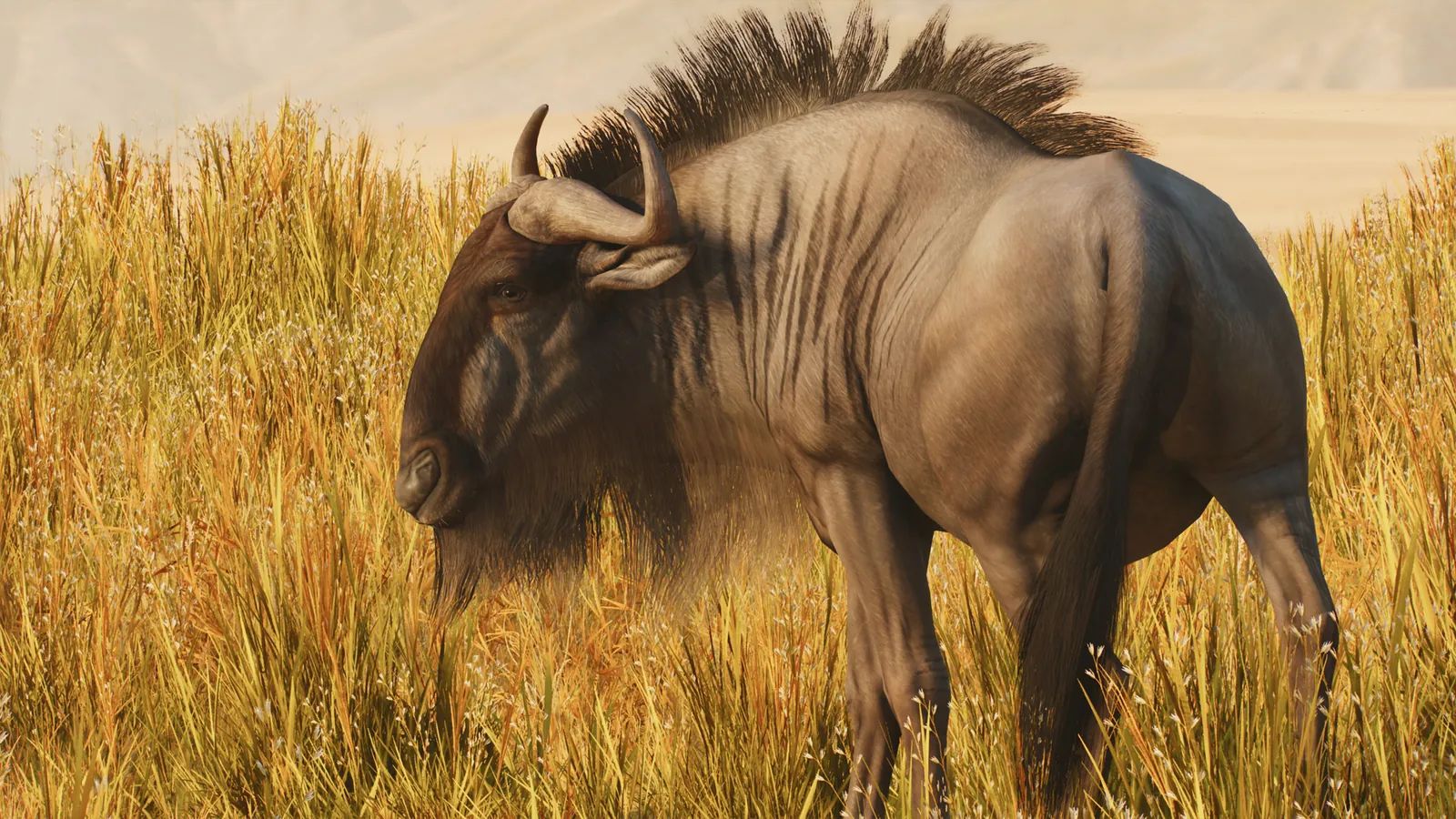
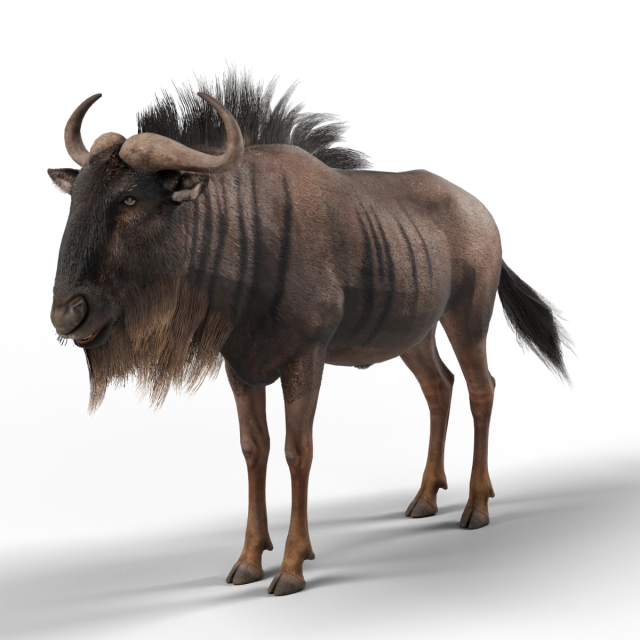
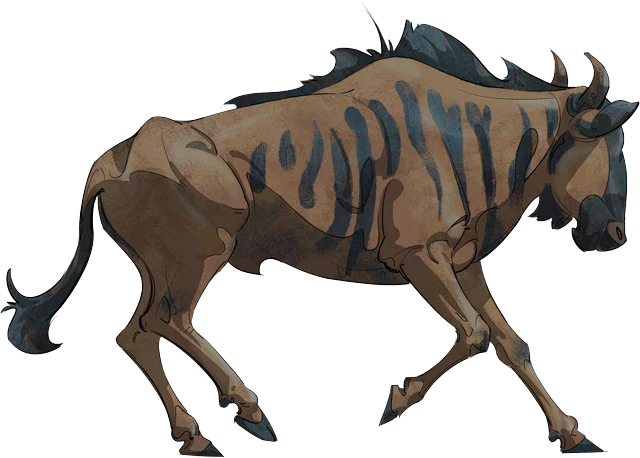
The blue wildebeest (or Connochaetes taurinus) is a large antelope native to Southern Africa. It is also known as the common or white-bearded wildebeest, or brindled gnu. They have a pale grey or brown coat with dark stripes across their neck, shoulders, and chest. Blue wildebeest have a long black tail and a long black mane, which either stands up or drapes over the neck depending on the subspecies. The beard trailing under the neck is white. The species is sexually dimorphic, with males being larger than females, but both males and females have distinctive, L-shaped horns. They stand 1.23m to 1.65m tall at the shoulder, are 1.7m to 2.4m long and weigh between 165kg and 290kg. Females on the other hand are 1.14m to 1.42m tall at the shoulder, 1.75m to 2.15m long and weigh 140kg to 260kg.
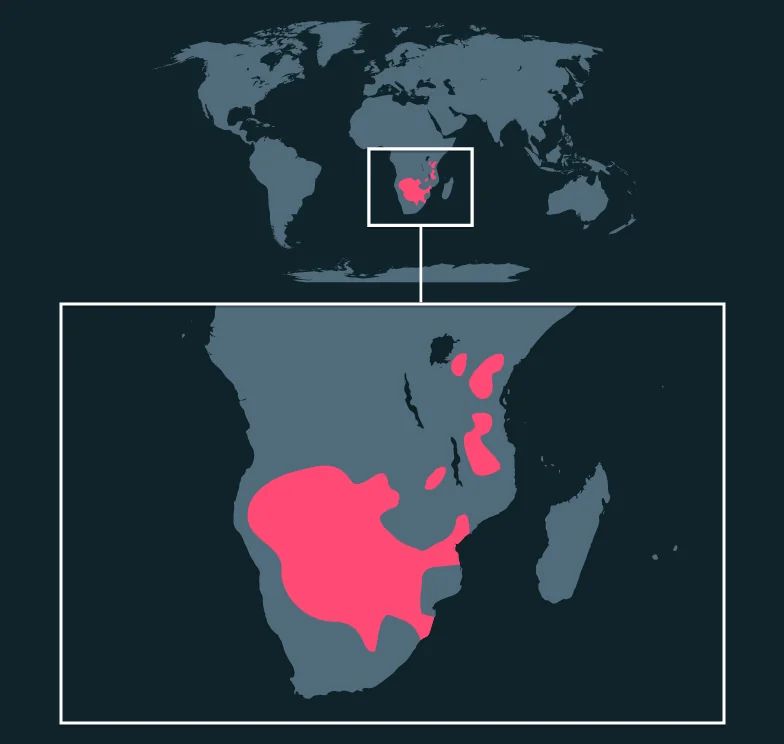
Found in Africa
Regions
Biomes

Appearance
Male
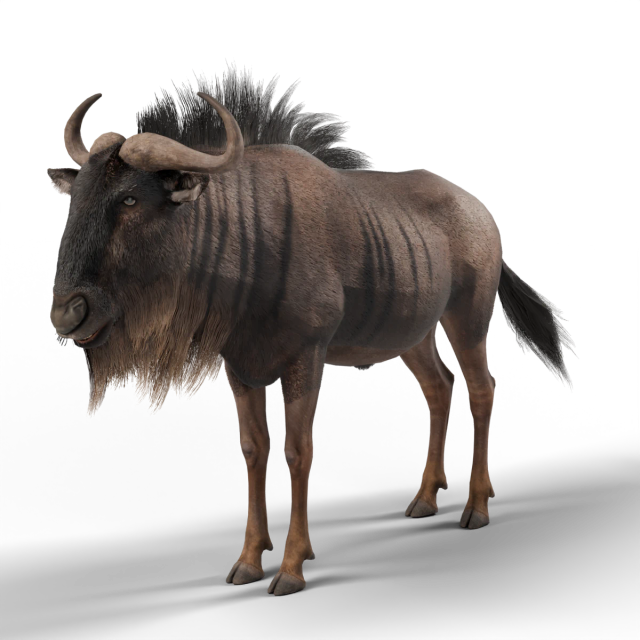
Female
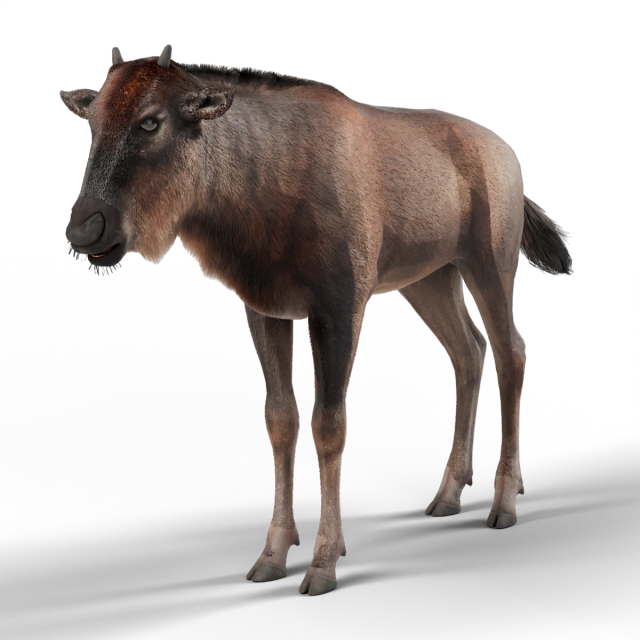
Juvenile
Colourmorphs
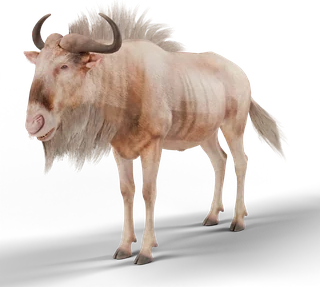 Albino male
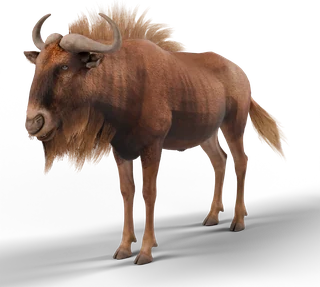 Erythristic male
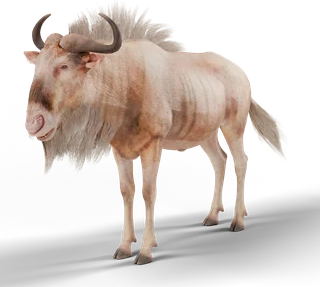 Albino female
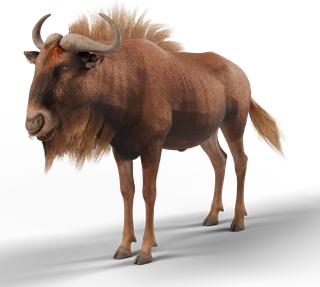 Erythristic female
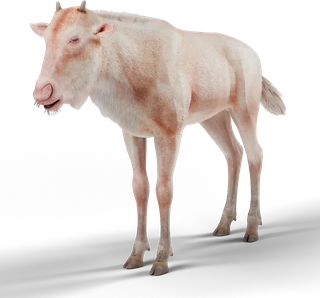 Albino juvenile
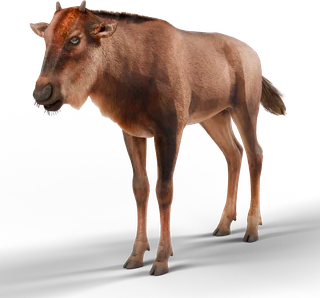 Erythristic juvenile
Size & weight
Size
Shoulder height: 1.2 to 1.4 m
Weight
Male
227.5 kg
Female
200 kg
Bars use a log scale against the heaviest animal in the Zoopedia, the Common Hippopotamus.
Measured as Shoulder height. The person stands 1.75 m tall for scale.
Habitat requirements
Barrier grade
Grade 2 of 5
Minimum height
1.25 m minimum
Climbing & water
Climb proof
Not needed
Water barrier
Not allowed
Barriers at this grade
Barrier types with resistance grade 2 or higher.









Habitat needs
Minimum area
Land
410 m² + 40 m² per extra animal
Shelter
10 m² per animal
Environment
Temperature
14 to 36°C
Plant coverage
0-30%
Enclosure
Habitat
Dislikes
Snow
Terrain
- Sand 0-20%
- Soil 20-60%
- Rock 0-20%
- Long Grass 25-80%
- Waterlogged 0-10%
- Grass 30-80%
Thriving Relationships
African Savannah: sharing a habitat with one of these species fulfils a Thriving requirement.






Diet and enrichment
Diet
- Hay
- Herbivore Pellets




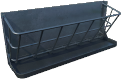
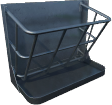
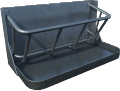


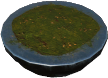


Water sources


Conservation
IUCN Red List
Least concern
Least concern
Critically endangered
Wild population
1,550,000
1,550,000 in the wild. Rank 55 of 58 species with a known count, smallest first.
Blue wildebeest are considered a species of Least Concern. However, they face various conservation challenges: habitat fragmentation due to agriculture and urban development disrupts their traditional migratory routes, compounded by climate change-influenced rainfall patterns limiting grazing and water resources. Disease transmission from domestic livestock, particularly rinderpest, has also had devastating impacts. Poaching and competition with livestock for grazing areas pose further challenges outside of protected areas. One of the most significant conservation successes was the eradication of rinderpest through coordinated veterinary campaigns. Conservation initiatives have helped protect and preserve critical habitats and migration corridors, and promoted coexistence and sustainable land use to local communities. Reintroduction and translocation efforts have reestablished populations in several areas. These combined efforts have stabilised and, in some regions, increased blue wildebeest numbers.
Zoopedia sketchbook
Social & reproduction
Keeper notes
In the wild, blue wildebeest congregate in large herds comprised of several subgroups of related females and their offspring, bachelor herds of young males and dominant bulls guarding a territory within the herd’s foraging grounds. During the breeding season, which spans over a three week period at the end of the wet season, dominant territorial bulls will track fertile females moving through and feeding in their range. While receptive females are nearby, they will barely eat or sleep. Males may also engage in so-called lekking behaviour, gathering in all-male groups to display to females with sparring and vocalisations. A male outcompeting his rivals in a lek secures mating rights to nearby females. He will then mount a receptive female and mate with her several times. She will remain close to him after mating, and he will prevent other males from approaching her. This way, he may gather a harem of females during the breeding season, although leks and harems will fragment soon after the breeding season to reform into bachelor and yearling herds again. Following a pregnancy of around 8.5 months, the female gives birth to a single calf. It will feed exclusively off her milk until it is 4 weeks old, which is when it will start eating grasses. Calves are weaned by 8 to 10 months of age, at which time the mother is likely to already be pregnant again. Soon after, the yearling will leave their mother’s female group and join a herd of other yearlings or young adults. Female blue wildebeest reach sexual maturity at 16 months old, males at 2 years old, though it may take a few years until their horns develop enough for them to defend a territory or claim victory in a lek in order to mate.
Group and breeding
Group
Group name
Herd
Group size
4-20 (up to 1 male, up to 19 females)
Male bachelor group
1-9
Female bachelor group
1-20
Offspring dispersal
Male offspring
Lifecycle and breeding
Life expectancy
16-21 years
Age of sexual maturity
2 years
Age of sexual sterility
Death
Gestation or incubation
8 months
Interbirth period
4 months
Litter size
1
Mating system
Polygynous
Mating season
Spring
Reproduction in captivity
Very Easy
Dominance
Territorial bulls, female hierarchy within herd
Research
Research levels
| Level | Unlocks | Research gate |
|---|---|---|
| Level 1 | Thriving Requirement 1: at least 5 objects or plants with the Bushes tag | |
| Level 2 | Blue Wildebeest Fact Sheet | |
| Level 3 | Thriving Requirement 2: Water Surface Area | |
| Level 4 | Thriving Requirement 3: Food Grade 2; Fertility Level 1 (+15% fertility) | Before this level: an Observation Network (Observation Platform) in Tanzania Reserve and this species released in Tanzania Reserve |
| Level 5 | Thriving Requirement 4: at least 15 objects or plants with the Grass tag | |
| Level 6 | Thriving Requirement 5: African Savannah Social Group; Fertility Level 2 (+30% fertility) |
Researched by
Vets
Researched at
Habitat or exhibit and Research Centre
Wildlife Reserve
Tanzania Reserve
Every level of this species' research, with its unlock conditions.
Release groups
Valid release groups
| Group | Type | Animals |
|---|---|---|
| Mixed Group | Mixed group | 1 to 5 males, 3 to 12 females |
| Male Bachelor Herd | Male group | 4 to 9 males |
| Female Group | Female group | 4 to 15 females |
| Solitary Bull | Solitary male | 1 male |
Release requirements
| Requirement type | Requirement |
|---|---|
| Ecosystems Required | Grassland |
Ecosystems

Release groups, reserve requirements and the roles this species fills.
Animal facts
- Blue wildebeest are so named because their coat has a blue sheen to it.
- Blue wildebeest are known to migrate over 1600 kilometres every year and cross 2 rivers to do so.
- Up to 90% of blue wildebeest offspring are all born within a 2 week birthing period.
- Blue wildebeest are often seen in herds with plains zebra. The two species don’t compete for food though, because zebras prefer long grass and wildebeest can then graze on the shorter grasses.
- Not all blue wildebeest migrate; some female groups form closely bonded resident herds and remain in the same area year round.
Taxonomy
Class
Order
Family
Genus
Species

