
Overview
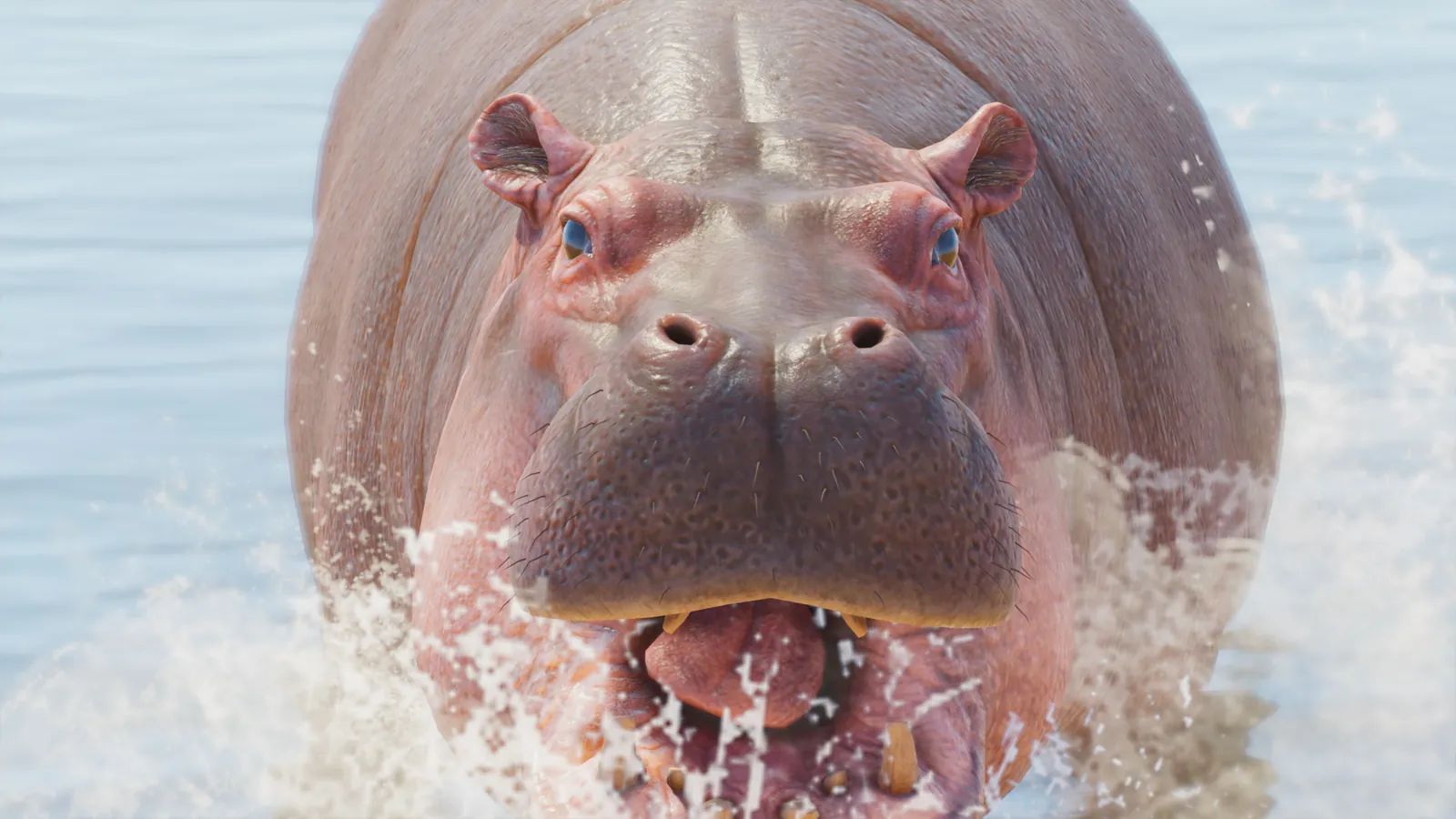
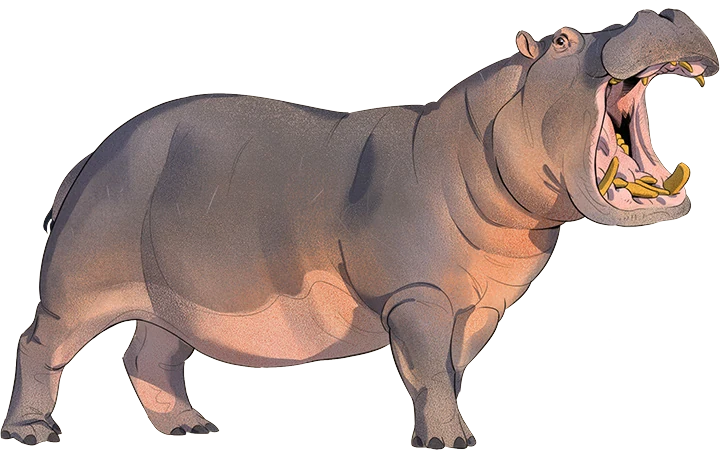
The common hippopotamus (or Hippopotamus amphibius) is a large mammal native to the rivers of Sub-Saharan Africa. They are large, water-dwelling animals with long protruding teeth, nostrils on the top of their snout, small ears and thick grey-brown skin. Males are 4m to 5m long and weigh between 1500kg and 2000kg, whereas females measure between 3.3m and 4.2m, and weigh 1000kg to 1500kg.
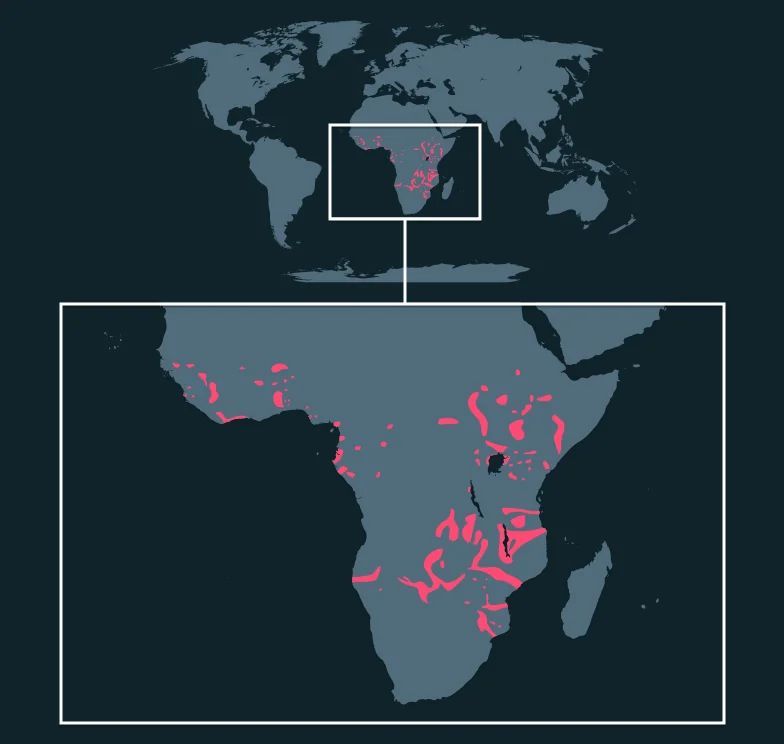
Found in Africa
Regions


Appearance
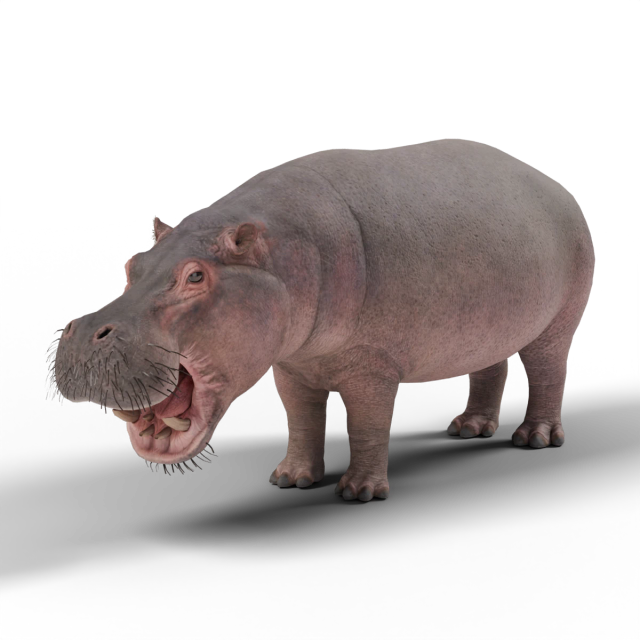
Male
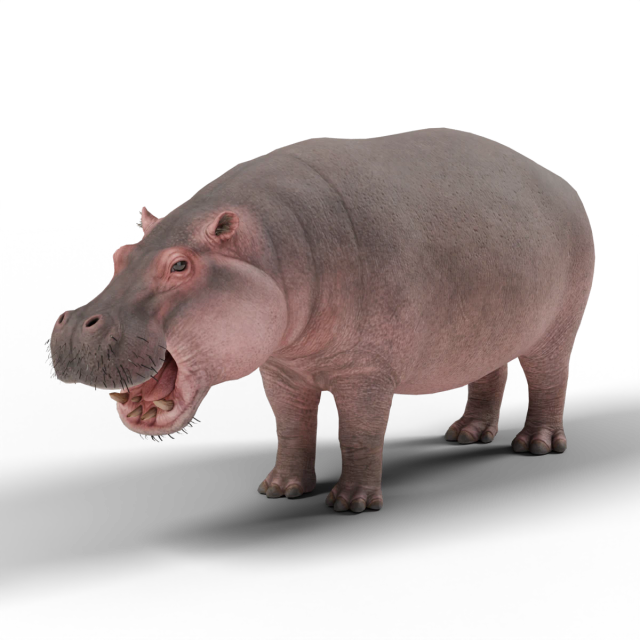
Female
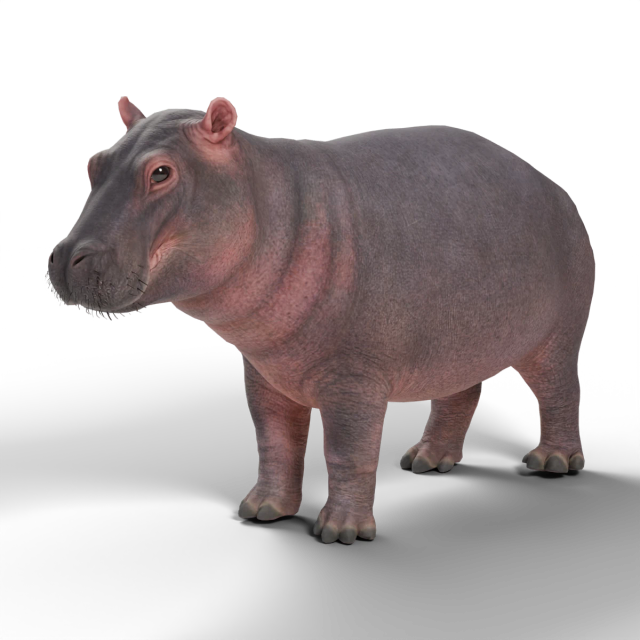
Juvenile
Colourmorphs
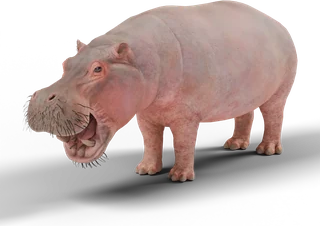 Leucistic maleLeucistic male
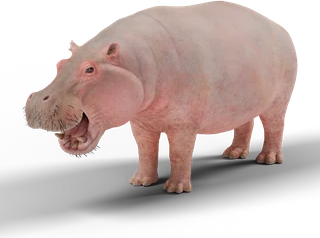 Leucistic femaleLeucistic female
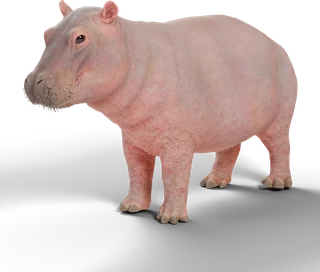 Leucistic juvenileLeucistic juvenile
Size & weight
Size
Length: 3.75 to 4.5 m
Weight
Male
1,750 kg
Female
1,250 kg
Bars use a log scale against the heaviest animal in the Zoopedia, the Common Hippopotamus.
Juvenile
Juvenile weight
125 kg
Measured as Length. The person stands 1.75 m tall for scale.
Habitat requirements
Barrier grade
Grade 4 of 5
Minimum height
2 m minimum
Climbing & water
Climb proof
Not needed
Water barrier
Not allowed
Barriers at this grade
Barrier types with resistance grade 4 or higher.



Habitat needs
Minimum area
Land
502 m² + 251 m² per extra animal
Water
502 m² + 251 m² per extra animal
Shelter
35 m² per animal
Environment
Temperature
14 to 36°C
Plant coverage
0-30%
Enclosure
Habitat
Dislikes
Snow
Terrain
- Sand 20-60%
- Soil 0-60%
- Rock 0-20%
- Waterlogged 20-60%
- Long Grass 15-60%
- Grass 20-60%
Diet and enrichment
Diet
- Young Branches and Leaves
- Hay




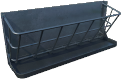
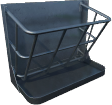
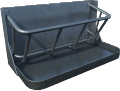


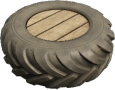






Water sources

Conservation
IUCN Red List
Vulnerable
Least concern
Critically endangered
Wild population
115,000
115,000 to 130,000, in decline in the wild. Rank 41 of 58 species with a known count, smallest first.
The common hippopotamus is currently listed as Vulnerable, and the population is in decline. Large areas of grassland for grazing are being lost through desertification and expanding urban/road development. Additionally, humans kill them to prevent crop damage, to sell their meat, hide and teeth ivory, or simply because they are seen as dangerous. Inbreeding is a risk where local groups have been reduced to below 50. Conversely, hippos in Colombia are rapidly increasing after escaping the ranch of drug kingpin Pablo Escobar. They have no natural predators, overgraze wetlands, pollute waterways, and carry diseases local fauna is vulnerable to. Currently, there are projects restoring habitats with hippos specifically in mind, expanding nature reserves to join other protected land pockets and connecting wetlands and rivers. Many areas populated by hippos are officially protected, but enforcing these protections can be difficult – some areas are not protected at all. To ensure the ongoing survival of the hippo, further conservation and action is needed.
Zoopedia sketchbook
Social & reproduction
Keeper notes
Hippos interact with each other, but do not form close groups or bonds. Mature males are semi-solitary and territorial, presiding over a stretch of river and allowing groups of females (and non-challenging males) to live there. Females will choose where to live based on the quality of the habitat, and thus there will be larger groups in better parts of the river. Hippos are known to be friendly to each other when in water, but can be aggressive towards each other when on land, especially when feeding. Hippos breed year-round, with peaks during the rainy season. Male hippos with better territory are more likely to be successful in finding a mate, due to the increase in probability that females will select their stretch of river to live in. Males detect receptive females through smell, before following and vocalising at her until she allows him to mate with her. The two mate underwater, with the female's nostrils often being the only visible part of her above the surface. 8 months after intercourse, the female hippopotamus will give birth, underwater, to a single baby, who will swim to the surface to take its first breath. The calves stay with their mother until they are sexually mature - between 5 and 7 years old, at which point they will leave to find their own area to live away from related individuals.
Group and breeding
Group
Group name
Pod
Group size
3-30 (up to 1 male, up to 29 females)
Male bachelor group
1-3
Female bachelor group
1-30
Offspring dispersal
None
Lifecycle and breeding
Life expectancy
40-55 years
Age of sexual maturity
7 years
Age of sexual sterility
40 years
Gestation or incubation
8 months
Interbirth period
16 months
Litter size
1
Mating system
Polygynous
Mating season
Aseasonal
Reproduction in captivity
Average
Dominance
Males are dominant
Research
Research levels
| Level | Unlocks | Research gate |
|---|---|---|
| Level 1 | Thriving Requirement 1: Waterfall and Metal Frame, at least 2 | |
| Level 2 | Thriving Requirement 2: at least 30 objects or plants with the Aquatic tag; Hippopotamus Fact Sheet | |
| Level 3 | Release groups and release to the wild | |
| Level 4 | Thriving Requirement 3: Food Grade 2; Fertility Level 1 (+15% fertility) | Before this level: an Observation Network (Observation Platform) in Tanzania Reserve and this species released in Tanzania Reserve |
| Level 5 | Thriving Requirement 4: Rubbing Pillar, at least 3 | |
| Level 6 | Thriving Requirement 5: Barrel Feeder - Hanging, at least 2; Fertility Level 2 (+30% fertility) |
Researched by
Vets
Researched at
Habitat or exhibit and Research Centre
Wildlife Reserve
Tanzania Reserve
Every level of this species' research, with its unlock conditions.
Release groups
Valid release groups
| Group | Type | Animals |
|---|---|---|
| Mixed Pod | Mixed group | 1 to 4 males, 6 to 10 females |
| Solitary Male | Solitary male | 1 male |
Release requirements
| Requirement type | Requirement |
|---|---|
| Ecosystems Required | Swamp |
Ecosystems

Release groups, reserve requirements and the roles this species fills.
Animal facts
- The hippopotamus' closest living relatives are whales and dolphins.
- The skin of the hippopotamus is 6cm thick and secretes a red substance that acts as sunscreen.
- Hippos can open their mouths to 150°, this is called a 'hippo yawn' and is usually an aggression display.
- Hippos have very large teeth; their canines can be 50cm long.
- Hippos spend daylight hours in the water keeping cool and travel up to 5km a night to graze on land.
Taxonomy
Class
Order
Family
Genus
Species