
Overview
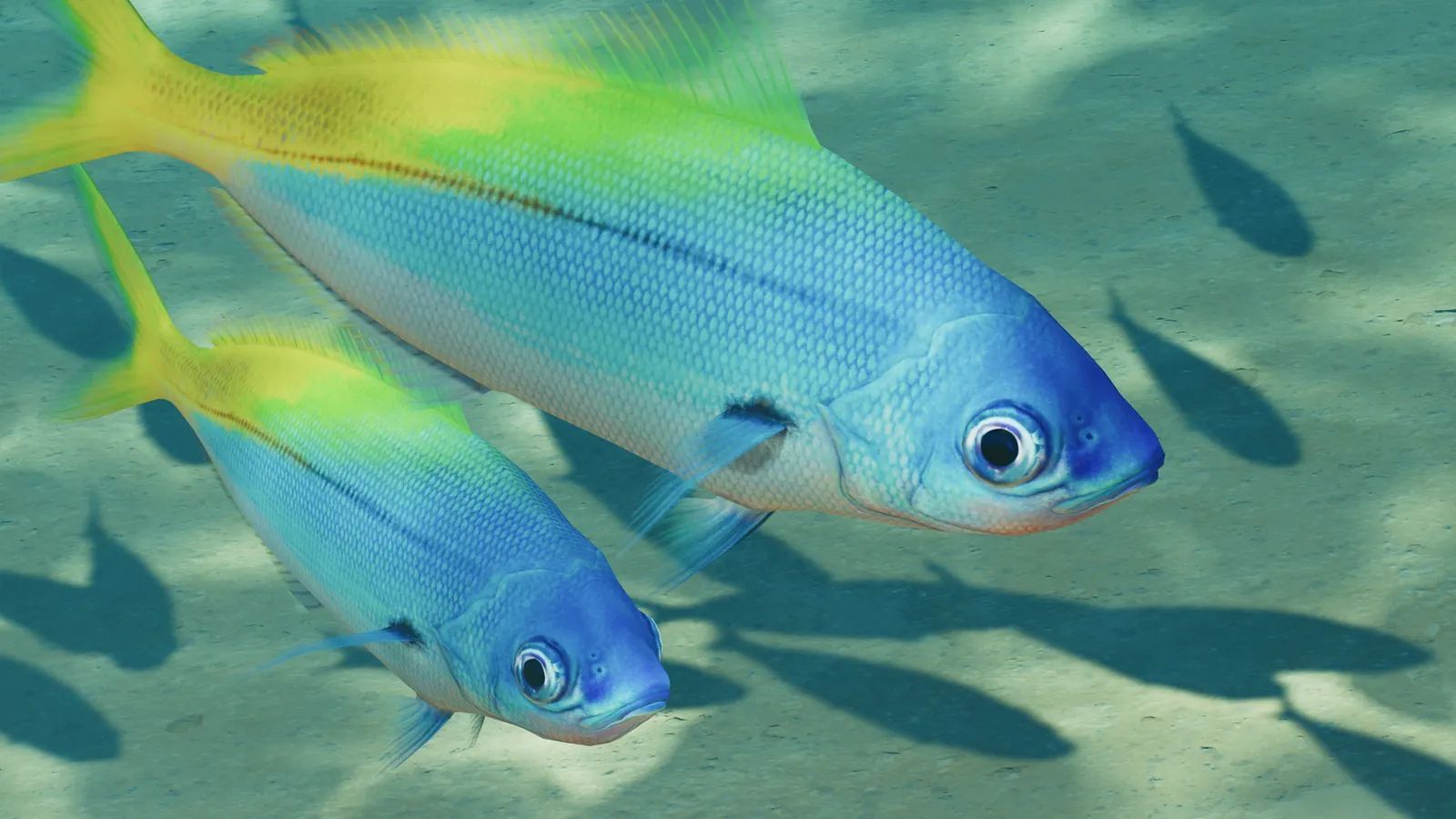
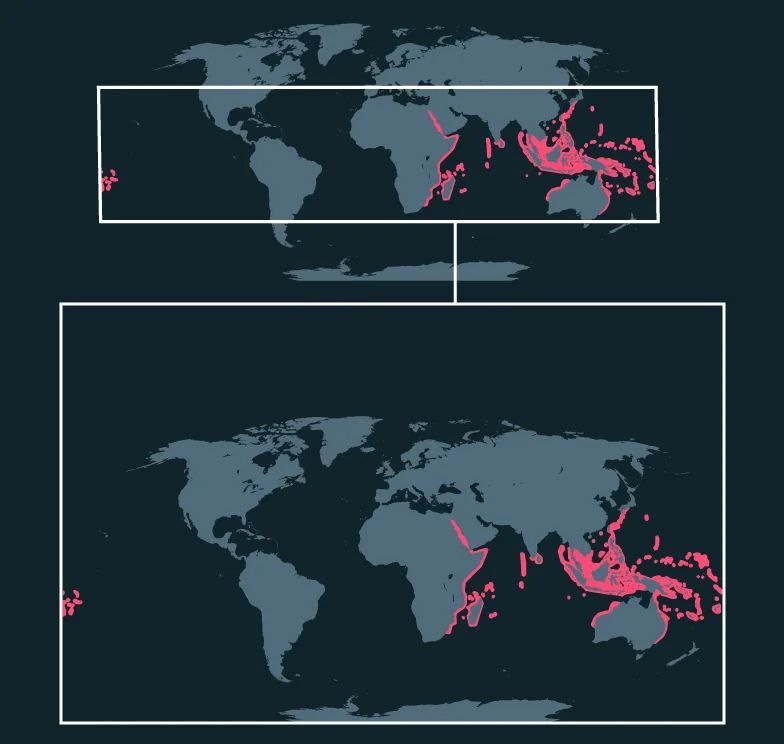
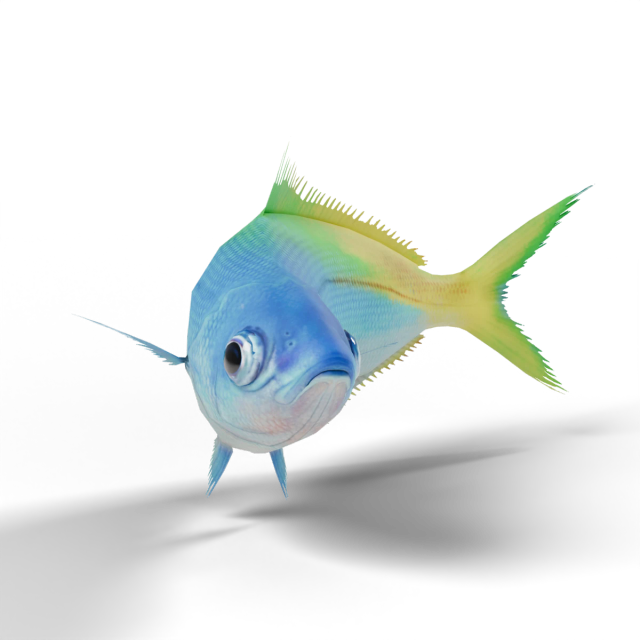
The blue and gold fusilier (or Caesio teres) is a marine fish found widely across the tropical Indo-Pacific region. It inhabits reef-associated environments, typically at depths ranging from 1m to 60m, where it forms schools in deep lagoons and along seaward reefs. They have a streamlined, thin blue body with a paler underside. A gold stripe runs from the dorsal fin to the caudal fin, which is entirely golden. The blue and gold fusilier has an average length of 25cm and exhibits no sexual dimorphism.
Found in Indo-Pacific reefs
Regions
Biomes

Appearance
Adult
Habitat needs
Minimum area
Deep water
50 m² + 15 m² per extra animal
Environment
Temperature
21 to 31°C
Plant coverage
10-40%
Water salinity
Saltwater
Enclosure
Aquarium
Exhibit types
- Small Box Exhibit
- Small Cylinder Exhibit
- Large Box Exhibit
- Large Angled Box Exhibit
- Large Cylinder Exhibit
Diet and enrichment
Diet
- Copepods
- Algae Pellets
Conservation
IUCN Red List
Least concern
Least concern
Critically endangered
The blue and gold fusilier is of Least Concern but still affected by overfishing and habitat degradation. As a schooling fish, it is highly susceptible to capture, particularly using nets and fish aggregating devices. Additionally, the health of coral reef ecosystems is declining globally due to climate change, ocean acidification, and pollution, reducing shelter and feeding grounds. Coastal development and destructive fishing practices, such as dynamite fishing, further exacerbate these threats. Fusiliers benefit from generic habitat protection efforts and sustainable fisheries management. Critical reef habitats are protected in marine protected areas, allowing reef-dependent species to spawn and grow without human interference. Catch limits and seasonal restrictions help prevent overexploitation of fish. Active reef restoration projects aim to rehabilitate damaged coral habitats. Community-based campaigns encourage local populations to adopt sustainable fishing practices with economic incentives. Collectively, these measures also help the blue and gold fusilier to continue to thrive in healthy reef ecosystems.
Zoopedia sketchbook
Social & reproduction
Keeper notes
The blue and gold fusilier is a highly social species that lives in large schools of hundreds of individuals and may mix with other fusilier species as they navigate the open waters above coral reefs. Blue and gold fusiliers mate year-round, with peaks in the warmer months. Courtship within shoals includes males displaying vibrant colouration and agile swimming patterns to impress and attract females. Spawning occurs in open waters or near coral reefs, with males and females releasing eggs and sperm simultaneously in a process termed ‘broadcast spawning’. Once fertilised, the eggs are pelagic (floating freely in the open ocean) and hatch within 24 to 48 hours into tiny, transparent larvae. They drift with the plankton, feeding on microscopic organisms and gradually developing into juvenile fusiliers over several weeks. As they grow, juveniles settle near coral reefs and form schools of their own to provide protection from predators. Blue and gold fusiliers reach sexual maturity at 1 to 2 years old.
Group and breeding
Group
Exhibit colony size
Up to 20
Shoal size
40-60
Lifecycle and breeding
Life expectancy
14 years
Age of sexual maturity
1.5 years
Mating season
Aseasonal
Research
Research levels
| Level | Unlocks | Research gate |
|---|---|---|
| Level 1 | Fertility Level 1 (+15% fertility) | |
| Level 2 | Blue and Gold Fusilier Fact Sheet | |
| Level 3 | Release groups and release to the wild | |
| Level 4 | Fertility Level 2 (+30% fertility) |
Researched by
Vets
Researched at
Habitat or exhibit and Research Centre
Every level of this species' research, with its unlock conditions.
Release groups
Valid release groups
| Group | Type | Animals |
|---|---|---|
| Mixed Shoal | Mixed group | 15 to 35 fish |
Release groups, reserve requirements and the roles this species fills.
Animal facts
- The blue and gold fusilier has a wide distribution, found from the Red Sea to French Polynesia.
- Blue and gold fusilier are caught as food and are commonly eaten in Southeast Asia.
- The blue and gold fusilier feeds primarily on zooplankton found in open water.
- Juvenile blue and gold fusiliers are an economically important bait species in the tuna fishing industry.
- Male blue and gold fusiliers engage in elaborate courtship displays, including spiral swimming to the surface.
Taxonomy
Class
Order
Family
Genus
Species



