Overview
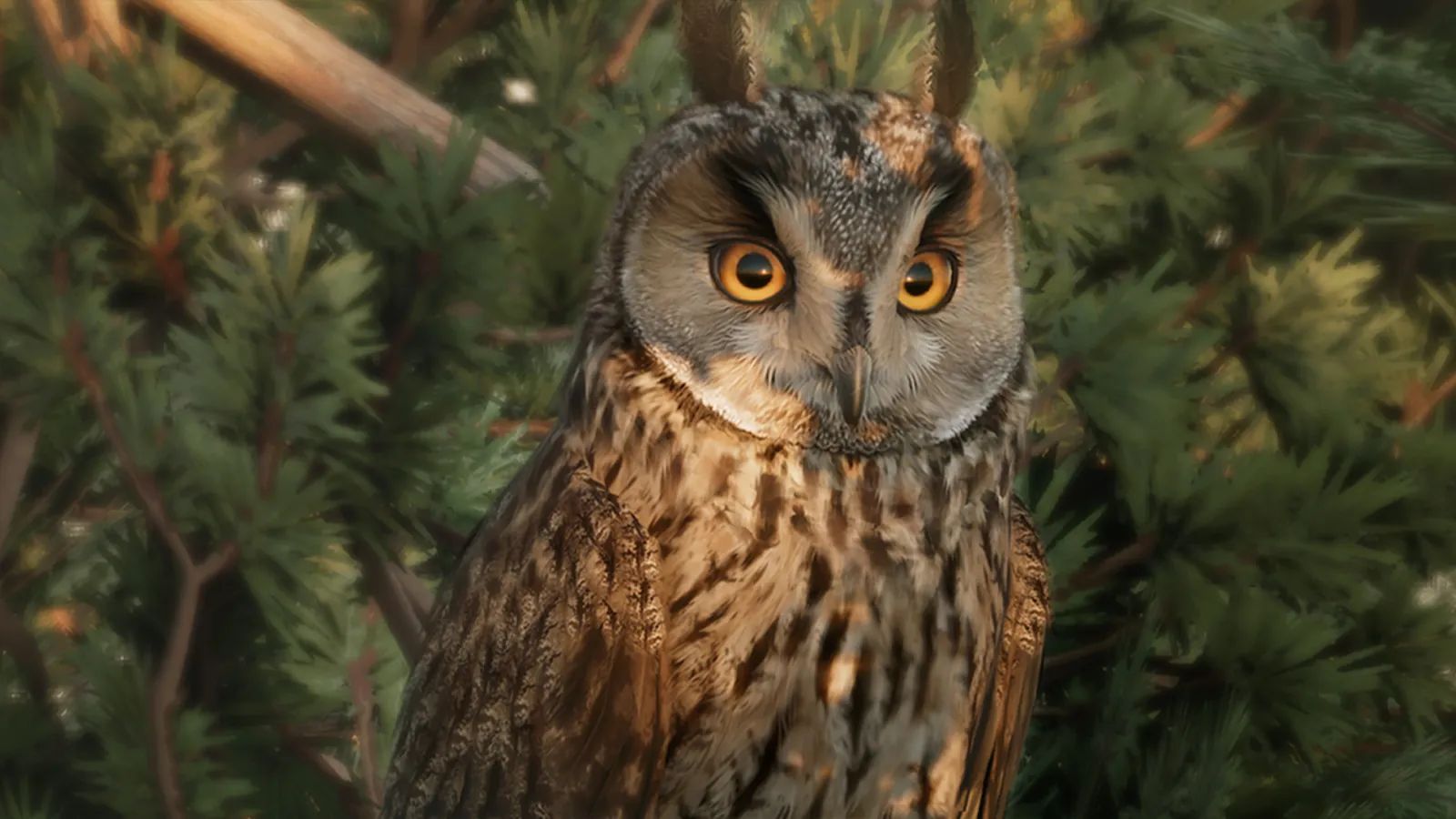
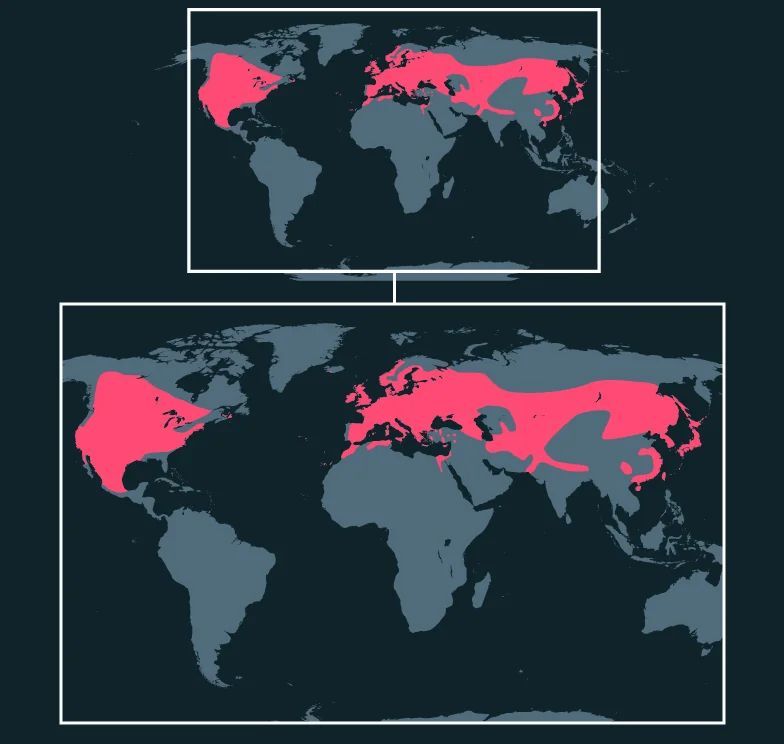
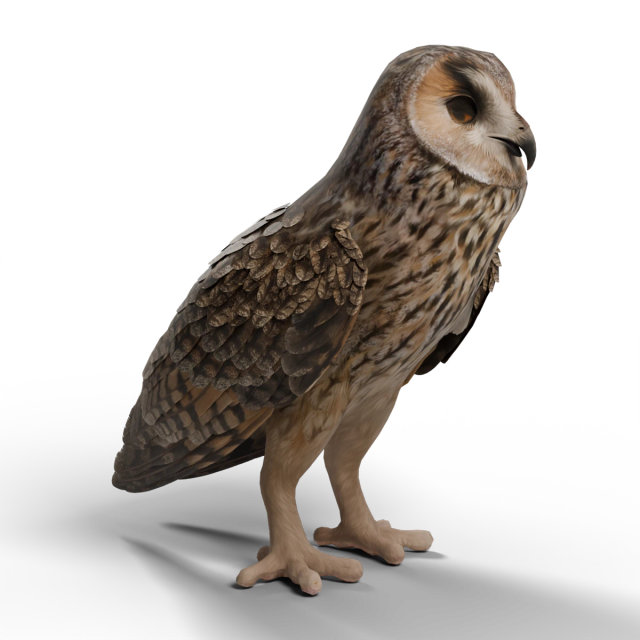
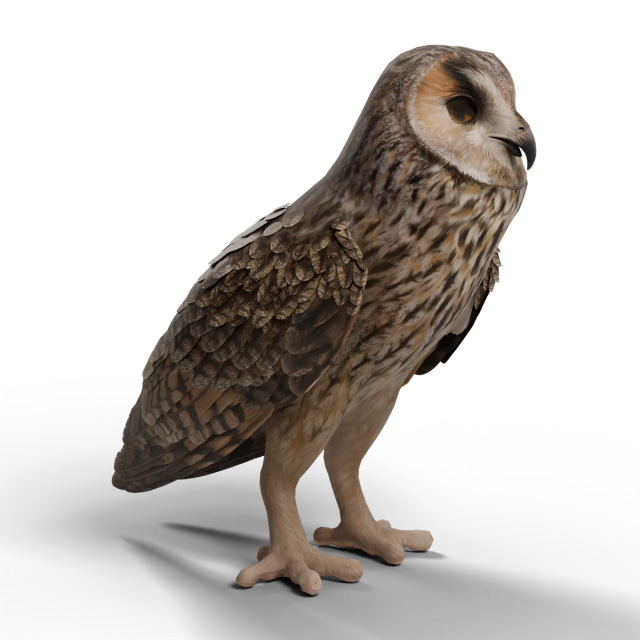
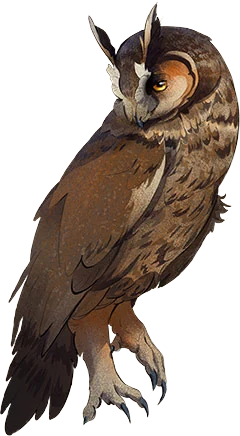
The long-eared owl (or Asio otus), also known as the Northern long-eared owl, lesser horned owl, or cat owl, is a medium-sized owl found across much of Europe, Asia, North America, and parts of North Africa. It inhabits woodlands, forests and dense thickets, often near open grasslands or meadows where it can hunt small mammals such as voles and mice. The long-eared owl has tall, upright ear tufts, orange eyes and mottled brown plumage. Females are typically larger than males, at a height of 27cm to 40cm and a wingspan of 90cm to 100cm and weight of 260g to 435g. Males are 25cm to 37cm tall, have a wingspan of 84cm to 95cm and weigh between 220g and 305g.




Appearance
Male
Female
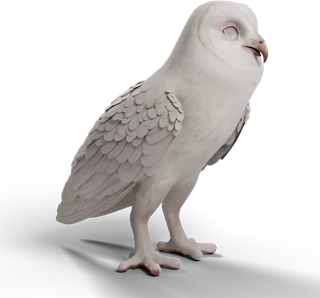
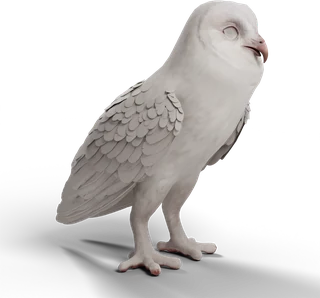
Colourmorphs
 Albino male
 Albino female
Size & weight
Size
Leg span: 89 to 95 cm
Measured as Leg span. The person stands 1.75 m tall for scale.
Habitat requirements
Barrier grade
Grade 2 of 5
Minimum height
1 m minimum
Climbing & water
Climb proof
Not needed
Water barrier
Not allowed
Barriers at this grade
Barrier types with resistance grade 2.



Habitat needs
Minimum area
Land
250 m² + 50 m² per extra animal
Flying
50 m² + 40 m² per extra animal
Shelter
5 m² per animal
Environment
Temperature
-14 to 36°C
Plant coverage
30-100%
Enclosure
Roofed Habitat
Terrain
- Coarse Sand 0-5%
- Rock 0-20%
- Soil 20-90%
- Grass 10-80%
- Waterlogged 0-40%
Diet and enrichment
Diet
- Rodents
- Meat Cuts








Water sources

Conservation
IUCN Red List
Least concern
Least concern
Critically endangered
Wild population
2,200,000
2,200,000 - 3,700,000 in the wild. Rank 58 of 58 species with a known count, smallest first.
Long-eared owls are numerous and of Least Concern, but population numbers are generally in decline. They rely on dense woodland for nesting, and open grassland for hunting, but removal of hedgerows, clearing of woodland and agricultural intensification have reduced available breeding and foraging grounds. Secondary poisoning by rodenticide used to target rats is another serious threat for all raptors. Power line and vehicle conditions can further cause owl deaths in urbanised areas. The main focus in long-eared owl conservation lies on habitat protection and restoration, as well as responsible land management. Preservation of mixed woodland and grassland mosaics and the supply of artificial nesting opportunities support existing populations. The reduced use of harmful rodenticides in favour of wildlife-friendly pest control methods is also an important measure. Public awareness campaigns focus on highlighting the important role owls play in maintaining a balanced ecosystem that supports predators, prey and humans.
Zoopedia sketchbook
Social & reproduction
Keeper notes
For most of the breeding season, long-eared owls are territorial and solitary, with pairs viciously defending their nesting areas from other owls. However, outside of the breeding period, they often gather in communal roosts in groups of up to 20 owls. These communal roosts offer protection from predators, shelter from harsh weather and help the owls find good hunting areas nearby. The courtship and mating behaviour of the long-eared owl takes place in late winter or early spring, when males establish territories and attract females through a combination of vocal and aerial displays. Sometimes males may present food to potential mates as part of pair-bonding. Pairs remain monogamous for the breeding season, but long-eared owls typically do not mate with the same partner every year. Pairs will then search for an abandoned nest rather than building their own. The female lays a clutch of 4 to 6 eggs on average, though clutches may range from 2 to 10 eggs in total. She incubates the eggs for around 25 to 30 days while the male provides her with food. After hatching, the chicks remain in the nest for about 3 weeks before leaving it to perch on nearby branches while still being fed by their parents. They become fully fledged at roughly 5 weeks of age and usually disperse from the breeding area by late summer. Long-eared owls reach sexual maturity at 1 year old, though many may not breed immediately in the next breeding season if conditions are not favourable.
Group and breeding
Group
Group size
1-2 (up to 1 male, up to 1 female)
Male bachelor group
1
Female bachelor group
1
Offspring dispersal
All offspring
Lifecycle and breeding
Life expectancy
10-13 years
Age of sexual maturity
1 year
Age of sexual sterility
Death
Gestation or incubation
1.1 months
Interbirth period
12 months
Clutch size
2-4
Nest Type
Cup Nest - Medium
Mating system
Monogamous
Mating season
Spring
Reproduction in captivity
Average
Dominance
Age-based hierarchy in communal non-breeding roosts
Research
Research levels
| Level | Unlocks | Research gate |
|---|---|---|
| Level 1 | Thriving Requirement 1: at least 4 objects or plants with the Trees tag | |
| Level 2 | Long-Eared Owl Fact Sheet | |
| Level 3 | Thriving Requirement 2: at least 10 objects or plants with the Climbable tag | |
| Level 4 | Thriving Requirement 3: Food Grade 2; Fertility Level 1 (+15% fertility) | Before this level: an Observation Network (Observation Platform) in Scottish Highlands and this species released in Scottish Highlands |
| Level 5 | Thriving Requirement 4: at least 50% native plants | |
| Level 6 | Thriving Requirement 5: Bamboo Feeder, at least 2; Fertility Level 2 (+30% fertility) |
Researched by
Vets
Researched at
Habitat or exhibit and Research Centre
Wildlife Reserve
Scottish Highlands
Every level of this species' research, with its unlock conditions.
Release groups
Valid release groups
| Group | Type | Animals |
|---|---|---|
| Maternal Family Group | Female group | 1 female |
| Solitary Male | Solitary male | 1 male |
| Mating Pair | Breeding partners | 1 male, 1 female |
Release requirements
| Requirement type | Requirement |
|---|---|
| Ecosystems Required | Either Mixed Lowland Forest or Closed Canopy Forest |
| Nature Requirements | Cup Nest - Medium |
Ecosystems


Release groups, reserve requirements and the roles this species fills.
Animal facts
- The long-eared owl frequently uses old nests built by other birds, especially crows or magpies.
- The ‘long ears’ of the long-eared owl aren’t actually ears but feathers used for camouflage and communication.
- The long-eared owl has specialised feathers with soft, fringed edges that make their flight nearly silent and allow them to approach prey undetected.
- Long-eared owl populations living in colder northern regions migrate south in winter, while those in milder climates tend to stay year-round.
- The long-eared owl is extremely well camouflaged and tends to roost quietly in dense conifer trees during the day, often going unnoticed even when perched close to humans.
Taxonomy
Class
Order
Family
Genus
Species