Overview
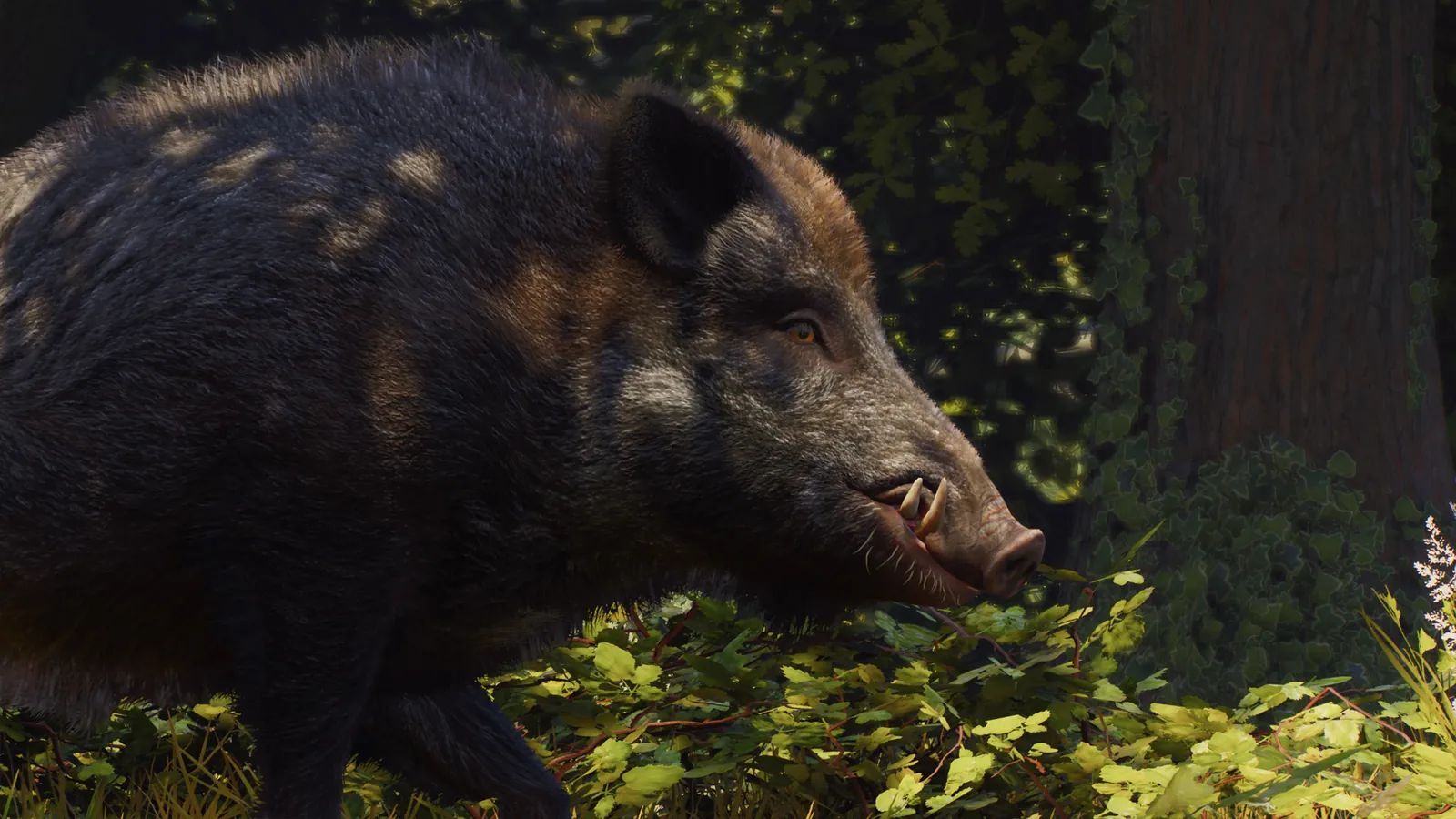
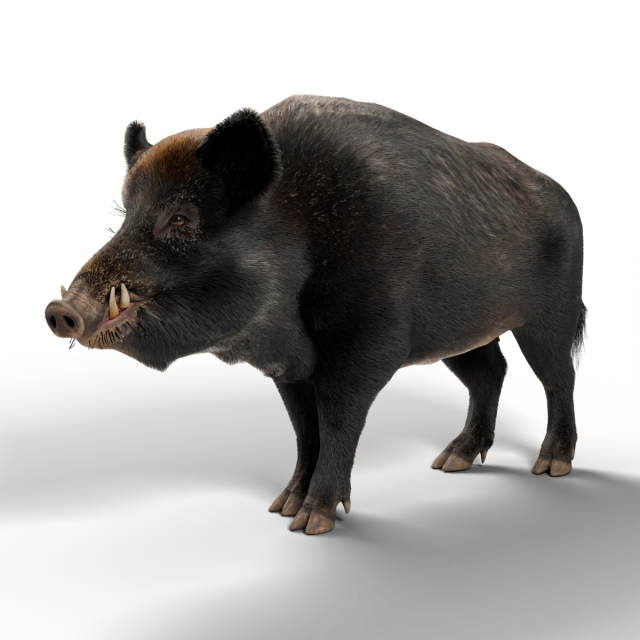
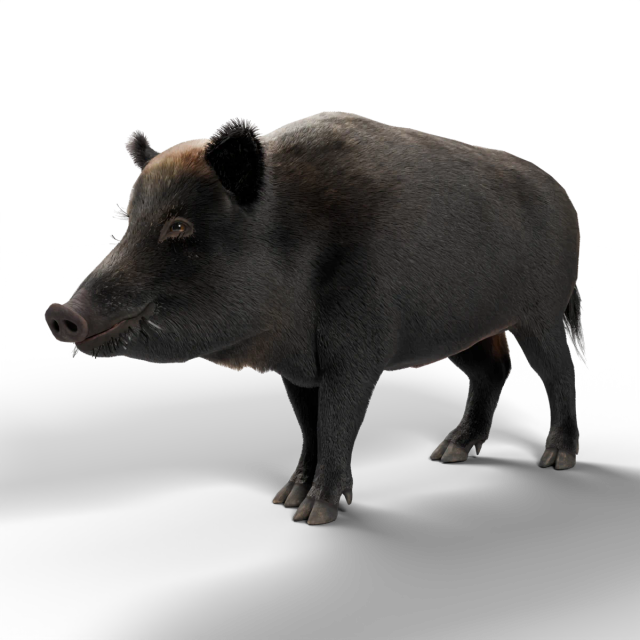
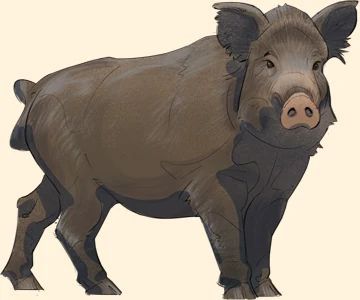
The wild boar (or Sus scrofa), also known as the Eurasian wild pig, is a pig native throughout the temperate regions of Europe, Asia, and areas of Northern Africa. It has also been introduced to North America, South America and Oceania. There are 16 recognised subspecies of the wild boar, varying in appearance. Their coat is made up of dark brown, coarse bristles, which form into a mane on the male’s neck. Wild boars have a large head which reaches up to a third of their body length, and, together with their powerful neck muscles, makes them adept at digging even into frozen ground. Males are larger and heavier, reaching a size of 85cm to 100cm tall at the shoulder and 1.45m to 1.75m long, with a weight of 75kg to 130kg. Females grow to be 75cm to 90cm tall at the shoulder, 1.3m to 1.57m in length, and weigh between 60kg and 90kg.
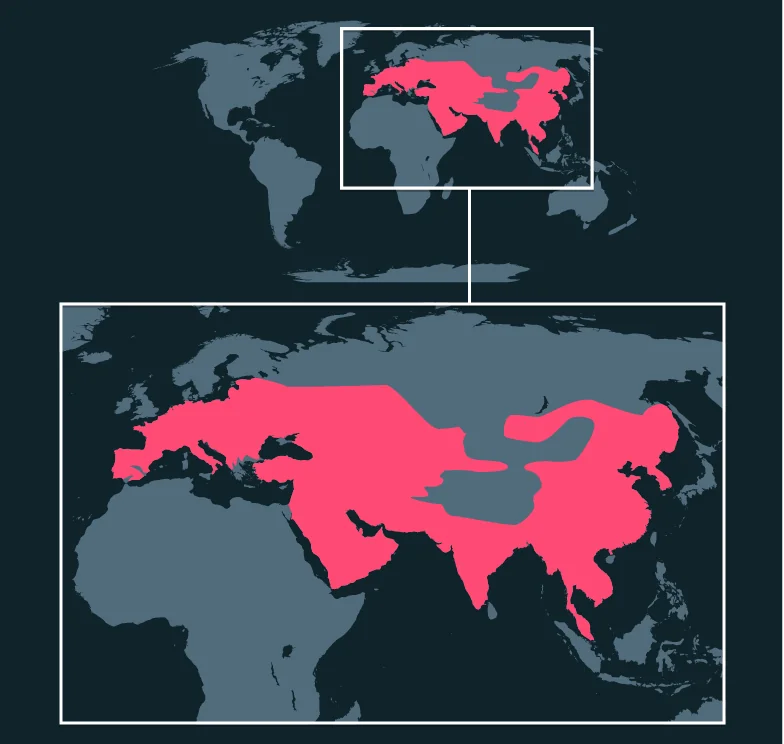
Found in Europe, Asia, Africa
Regions
No entries.
Biomes
No entries.
Appearance
Male
Female
Juvenile
Size & weight
Size
Shoulder height: 80 to 90 cm
Measured as Shoulder height. The person stands 1.75 m tall for scale.
Habitat requirements
Barrier grade
Grade 2 of 5
Minimum height
1.25 m minimum
Climbing & water
Climb proof
Water barrier
Habitat needs
Terrain
- Grass 10-50%
- Sand 10-50%
- Soil 30-50%
- Rock 0-20%
- Snow 0-100%
Diet and enrichment
Diet
- Herbivore Pellets
- Fruit and Vegetables
Feeders
No entries.
Enrichment items
No entries.
Water sources
No entries.
Conservation
IUCN Red List
Least concern
Least concern
Critically endangered
Wild boars are a species of Least Concern, being extremely widespread and populous. Due to overhunting, they became extinct in Great Britain in the High Middle Ages but were reintroduced in the 1980s. Wild boars have established invasive populations in North America and South America, after groups were imported for hunting and breeding, with both intentional releases and escapes, hybridising with domestic pigs. In its native range, the wild boar is hunted for meat and represent a keystone of their habitat’s ecosystems. Wild boars help manage woodlands. As omnivorous foragers, wild boars shape habitats by dispersing seeds and aerating soil, benefitting plant growth and other wildlife. Habitat protection, sustainable hunting regulations, and wildlife corridors help ensure healthy populations while mitigating human-wildlife conflicts. However, in the Americas, invasive populations are managed to protect native wildlife. The wild boar’s return has sparked debate, posing risks to farmland, livestock and other wildlife through damage and disease transmission.
Zoopedia sketchbook
Social & reproduction
Keeper notes
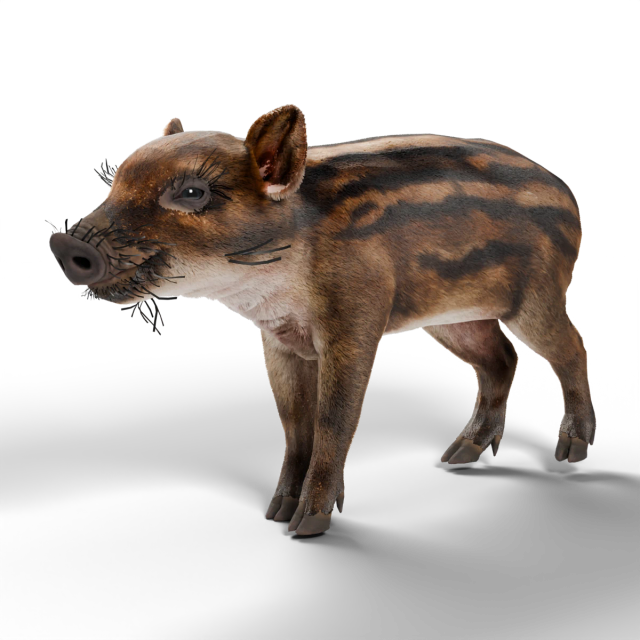
Female wild boars live in sounders led by an old matriarch, consisting of non-breeding females and mothers with their offspring. Adult males are solitary for most of the year, joining sounders only during the breeding season. Young and sub adult males live in bachelor groups. The breeding season in wild boars lasts from November to January. A male who has located a sounder of females will chase off young and infertile sows and herd any females in oestrus. Any rival male interfering with this chase is fought aggressively. If he is successful with herding the group, he mates with any fertile females before leaving the sounder. Sows are pregnant for 108 to 120 days. Towards the end of the pregnancy, a sow constructs a nest made of grass, giving birth to an average of 4 to 6 piglets, although litters of up to 12 have been recorded. She remains in the nest for 10 days, allowing her offspring to suckle. Upon leaving the nest, the piglets remain close to their mother in the sounder. Male piglets between 8 and 15 months old leave to form bachelor groups with other young males, while female piglets either remain with their natal sounder, or split off to establish a new group. Wild boars reach sexual maturity at 1 year old, though females are unlikely to reproduce until 18 months old, and males successfully reproduce around 4 years old when they are strong enough to chase and defend a sounder. Both female and male wild boars keep growing until they are 5 to 6 years old.
Group and breeding
Dominance
Sounders led by dominant matriarch, male dominance based on size
Research
Research levels
| Level | Unlocks | Research gate |
|---|---|---|
| No entries. | ||
Every level of this species' research, with its unlock conditions.
Release groups
Valid release groups
| Group | Type | Animals |
|---|---|---|
| No entries. | ||
Release groups, reserve requirements and the roles this species fills.
Animal facts
- If a wild boar mother dies before her piglets are mature, her offspring is adopted by other sows of her sounder.
- Wild boars can smell edible roots and tubers buried in 25cm of soil.
- Wild boar hair used to be used for toothbrush bristles.
- The wild boar’s main predator is the grey wolf.
- The wild boar has poor eyesight but compensates with its excellent sense of smell and hearing.
Taxonomy
Class
Order
Family
Genus
Species