
Overview
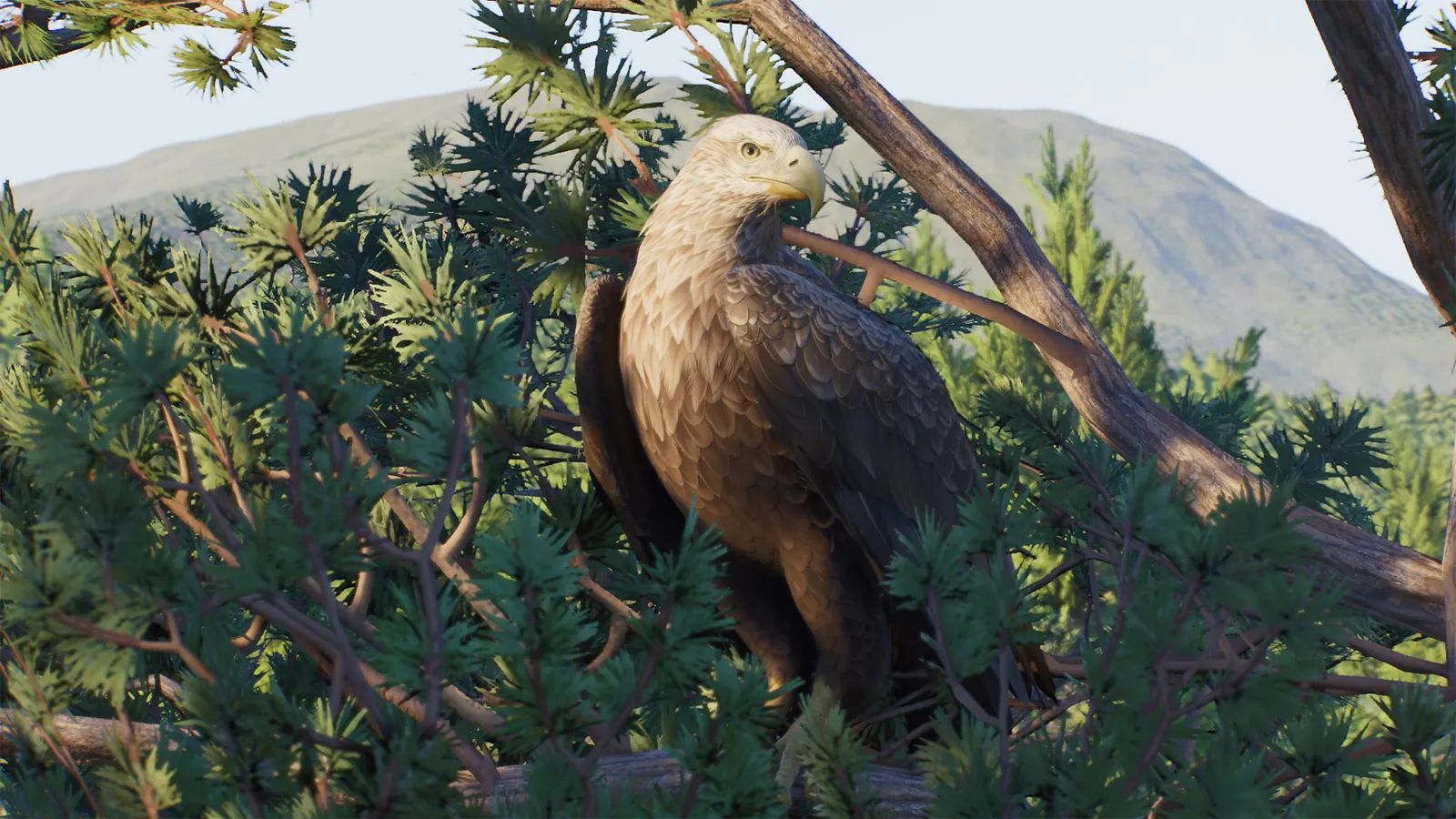
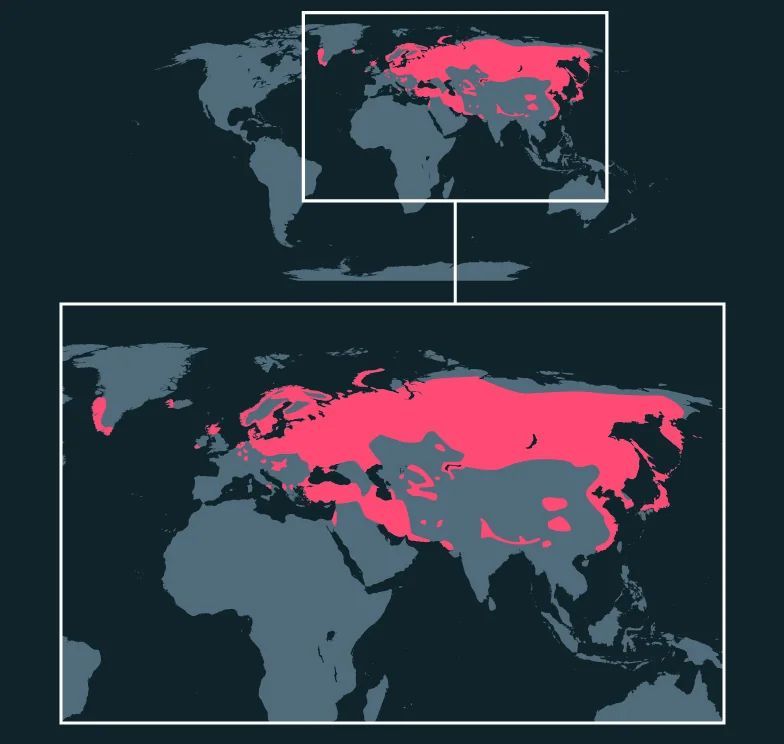
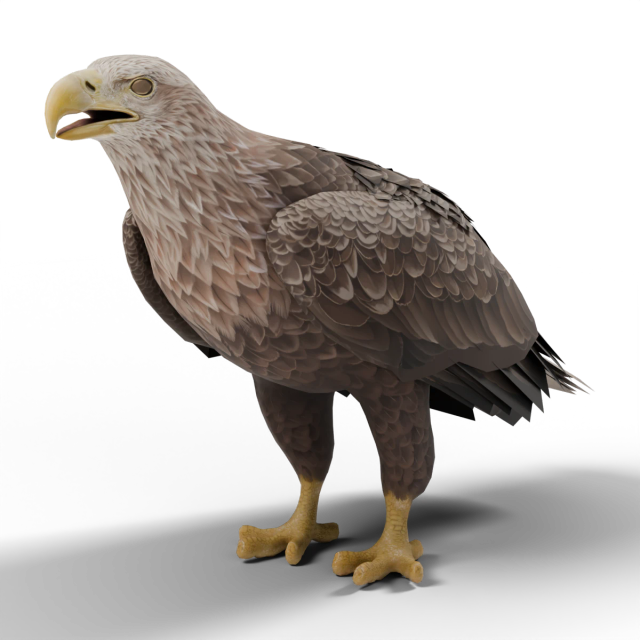
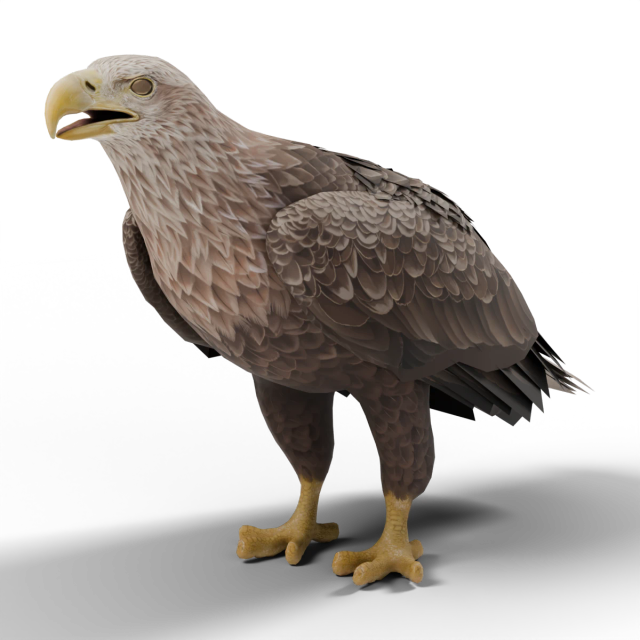
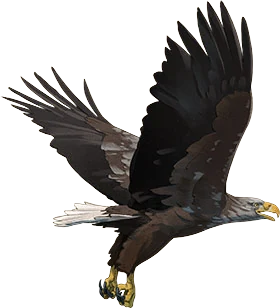
The white-tailed sea-eagle (or Haliaeetus albicilla), also called white-tailed eagle, grey sea eagle or Eurasian sea eagle, is a large bird of prey found across Northern and Eastern Europe, parts of Asia, and coastal regions around the North Pacific. It inhabits a variety of wetland and coastal environments, including sea cliffs, estuaries, rivers, lakes, and marshes, where it has access to open water for hunting. This eagle has a large pale-yellow hooked beak, brown body plumage and a distinctive white tail. Juveniles are darker and lack the white tail, gaining their adult plumage by around 5 years of age. White-tailed sea-eagles have a wingspan of 1.7m to 2.5m and a body length of 66cm to 94cm. Females are 10 to 20% larger than males. Males weigh between 3.1kg and 5.4kg, females are heavier and weigh between 4kg and 6.9kg.




Appearance
Male
Female
Size & weight
Size
Leg span: 2.02 to 2.4 m
Juvenile
Juvenile weight
1.38 kg
Measured as Leg span. The person stands 1.75 m tall for scale.
Habitat requirements
Barrier grade
Grade 2 of 5
Minimum height
1 m minimum
Climbing & water
Climb proof
Not needed
Water barrier
Not allowed
Barriers at this grade
Barrier types with resistance grade 2.



Habitat needs
Minimum area
Land
400 m² + 200 m² per extra animal
Flying
50 m² + 50 m² per extra animal
Shelter
10 m² per animal
Environment
Temperature
-20 to 28°C
Plant coverage
20-50%
Enclosure
Roofed Habitat
Terrain
- Grass 0-30%
- Sand 20-100%
- Rock 0-20%
- Waterlogged 10-100%
- Soil 20-100%
Diet and enrichment
Diet
- Whole Fish
- Small Carcasses



Enrichment items





Water sources

Conservation
IUCN Red List
Least concern
Least concern
Critically endangered
Wild population
20,000
20,000 - 60,000 in the wild. Rank 26 of 58 species with a known count, smallest first.
After facing significant conservation struggles over the past two centuries, white-tailed sea-eagles today are of Least Concern. Once widespread across Eurasia, the species experienced dramatic population declines in the 19th and 20th centuries, driven by illegal shooting, egg collection, and the widespread use of toxic pesticides. By the 1970s, white-tailed eagles had become extinct in several countries, including the UK and parts of central Europe. During recovery, they faced threats like secondary poisoning from rodenticides or lead, nest-site disturbance, and wind turbine collisions. The recovery of white-tailed sea-eagles is one of the most successful raptor conservation stories in Europe. Beginning in the 1970s, reintroduction programs spearheaded population restorations in countries where eagles had become extinct. They involved translocations from healthy populations, nesting site protections, and public education. International protection agreements, the ban of toxic pesticides, and habitat restoration improved breeding successes. White-tailed sea-eagles have successfully re-established breeding populations in several countries, including over 130 pairs in Scotland and a growing number in southern England.
Zoopedia sketchbook
Social & reproduction
Keeper notes
The white-tailed sea-eagle mates for life in early adulthood and then lives in a pair bond with its partner. They will raise chicks together annually but otherwise do not spend time with other eagles. White-tailed sea-eagles form strong, lifelong monogamous pair bonds. Young eagles seek a mate upon reaching maturity, engaging in soaring displays and vocalisations to attract a partner. Bonds are affirmed in spectacular aerial courtship displays and calling together. In the mating season (January to July in the South, and April to September in the North of their range), the pair constructs a large cup nest from sticks and soft vegetation in a tree or on a cliff near water, or returns to and refurbishes the previous year’s nest. The female lays 1 to 3 eggs and does most of the incubation over the next 38 days, while the male primarily supplies her with food, though they may take turns incubating, too. Upon hatching, both parents will gather food to feed the chicks. The young eagles fledge at 10 to 12 weeks old, but rely on their parents for several more weeks as they learn to hunt and navigate their environment. At about 5 to 6 months old, the juveniles disperse widely from their natal territory, developing their survival skills and transitioning to their adult plumage, including the iconic white tail. Sexual maturity is reached at 4 to 6 years old, at which point the young eagles seek to establish a pair bond and territory of their own.
Group and breeding
Group
Group size
1-2 (up to 1 male, up to 1 female)
Male bachelor group
1
Female bachelor group
1
Offspring dispersal
All offspring
Lifecycle and breeding
Life expectancy
30-40 years
Age of sexual maturity
5 years
Age of sexual sterility
Death
Gestation or incubation
1.3 months
Interbirth period
12 months
Clutch size
1-2
Nest Type
Cup Nest - Large
Mating system
Monogamous
Mating season
Spring
Reproduction in captivity
Difficult
Research
Research levels
| Level | Unlocks | Research gate |
|---|---|---|
| Level 1 | Thriving Requirement 1: at least 10 objects or plants with the Climbable tag | |
| Level 2 | Thriving Requirement 2: Water Surface Area; White-Tailed Sea-Eagle Fact Sheet | |
| Level 3 | Release groups and release to the wild | |
| Level 4 | Thriving Requirement 3: Food Grade 2; Fertility Level 1 (+15% fertility) | Before this level: an Observation Network (Observation Platform) in Sweden Reserve and this species released in Sweden Reserve |
| Level 5 | Thriving Requirement 4: at least 50% native plants | |
| Level 6 | Thriving Requirement 5: Cup Nest - Large, at least 3; Fertility Level 2 (+30% fertility) |
Researched by
Vets
Researched at
Habitat or exhibit and Research Centre
Wildlife Reserve
Sweden Reserve
Every level of this species' research, with its unlock conditions.
Release groups
Valid release groups
| Group | Type | Animals |
|---|---|---|
| Breeding Partners | Breeding partners | 1 male, 1 female |
Release requirements
| Requirement type | Requirement |
|---|---|
| Ecosystems Required | Flourishing Lake |
| Nature Requirements | Cup Nest - Large |
Ecosystems


Release groups, reserve requirements and the roles this species fills.
Animal facts
- The white-tailed sea-eagle is Europe’s largest eagle.
- The nest (or ‘eyrie’) of a white-tailed sea eagle is returned to and built up more every year. It may reach sizes of 2m wide and 3.7m high.
- In Norse mythology, the eagle perched at the top of the world tree Yggdrasil is believed to be a white-tailed sea-eagle.
- The eyesight of the white-tailed sea eagle is thought to be 8 times better than that of humans.
- While living close to water and being apt predators of fish, other birds actually make up the largest part of the white-tailed sea-eagle’s diet.
Taxonomy
Class
Order
Family
Genus
Species