
Overview
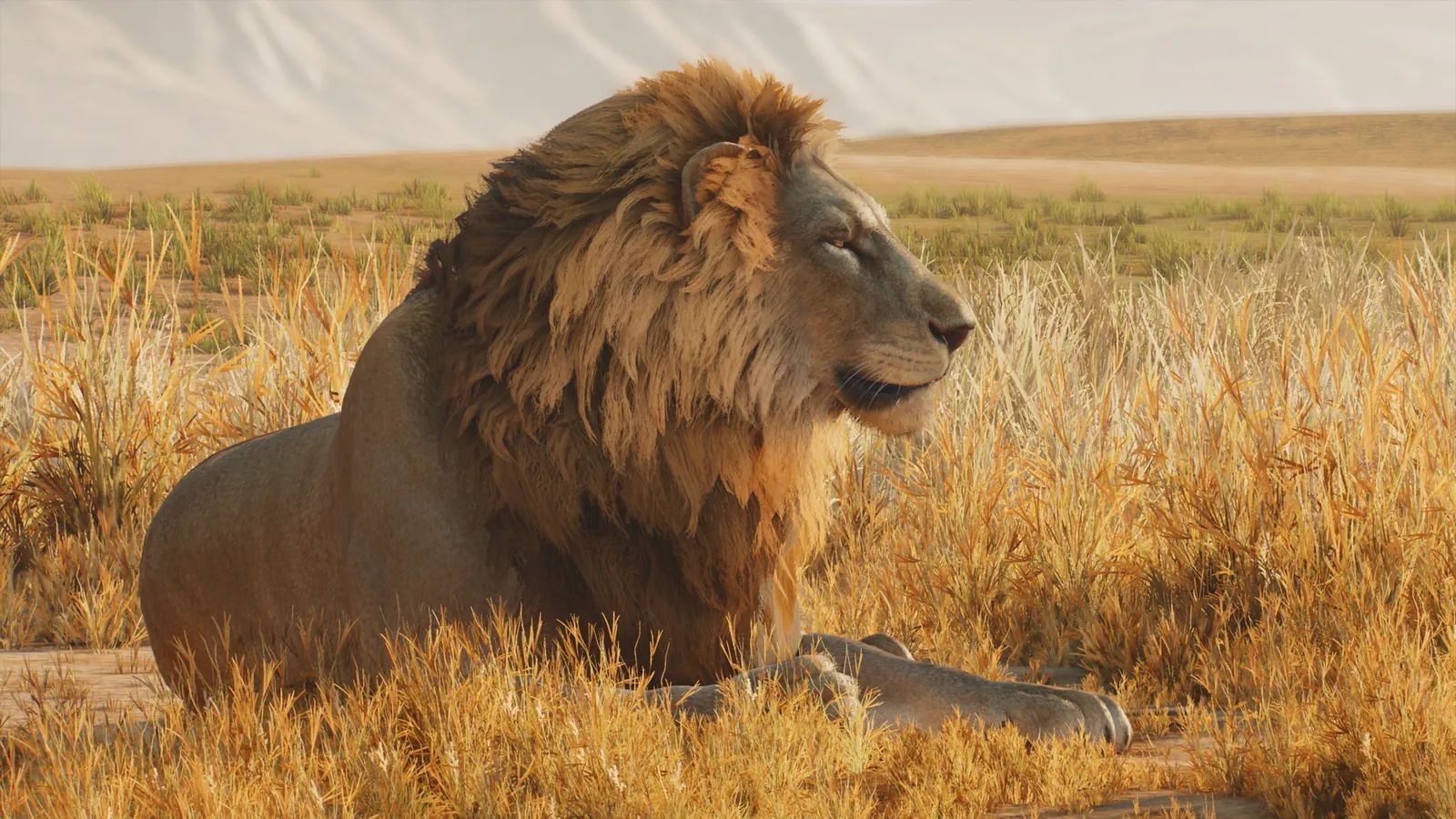
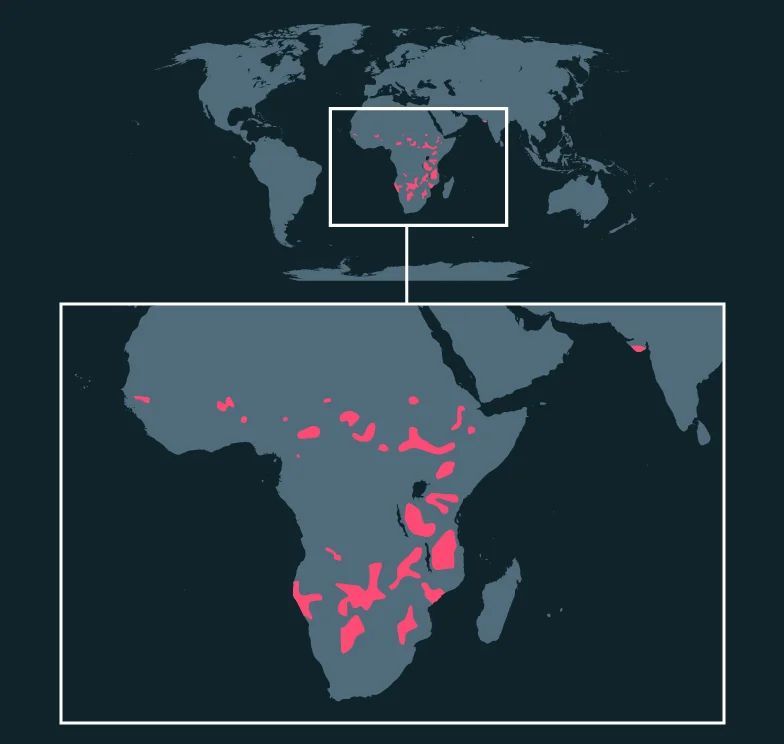
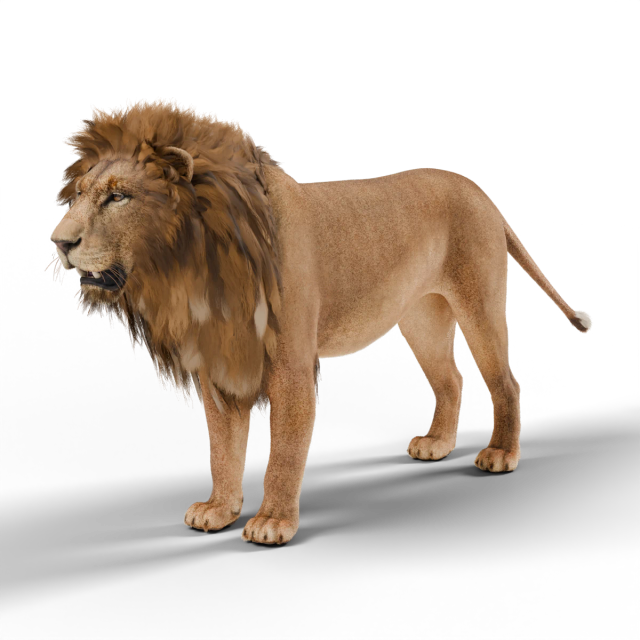
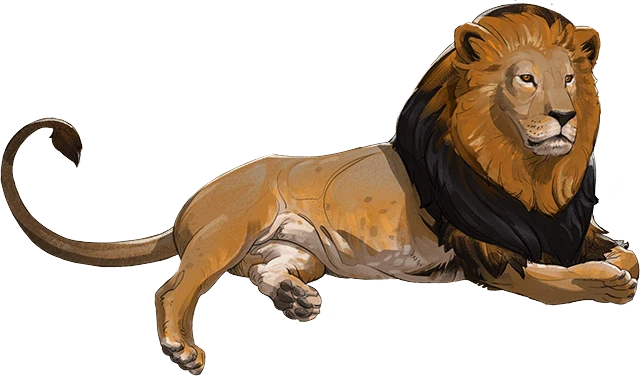
The lion (or Panthera leo) inhabits savannahs, grasslands, and open woodlands across sub-Saharan Africa and Asia (where they only survive in Western India today). Males are instantly recognisable by their thick manes, which range in colour from blond to black and serve both as protection during fights and as a display of dominance, while females lack manes and have sleeker builds for improved hunting agility. Lions have a tan to sandy yellow colour with a paler belly. Adult males typically measure 1.7m to 2.5m in body length, with a tail of 90cm to 105cm, and weigh between 150kg and 250kg. Females are smaller, averaging 1.4m to 1.8m in body length, with a tail of 70cm to 100cm and weigh between 110kg and 180kg.
Found in Africa
Regions
Biomes

Appearance
Male
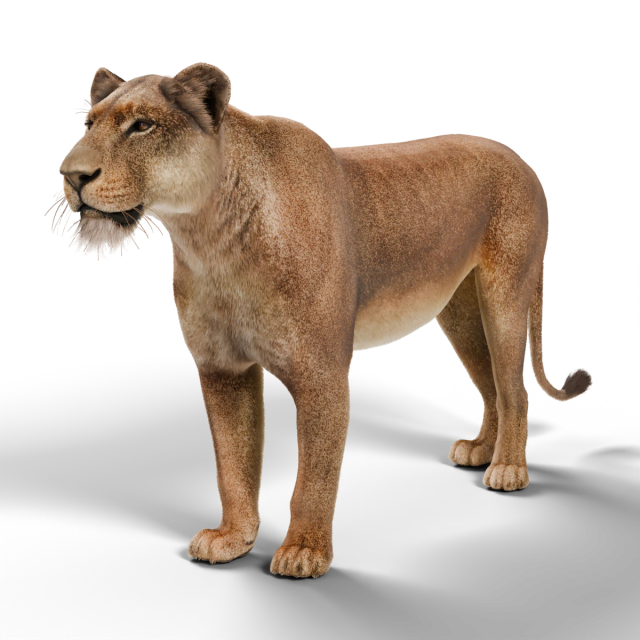
Female
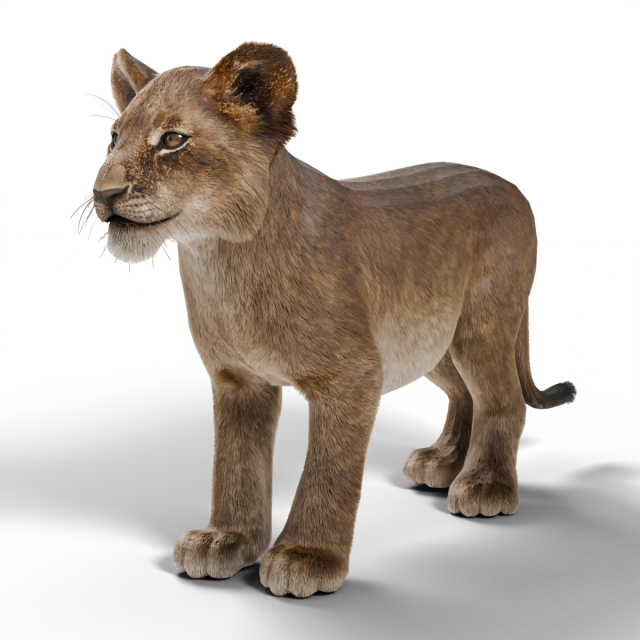
Juvenile
Colourmorphs
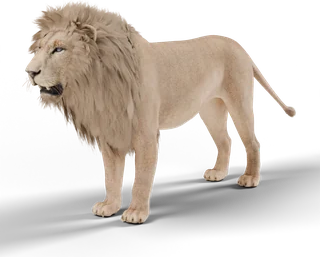 Leucistic male
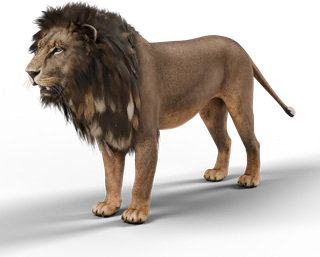 Darker Variation male
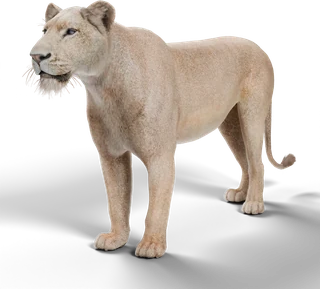 Leucistic female
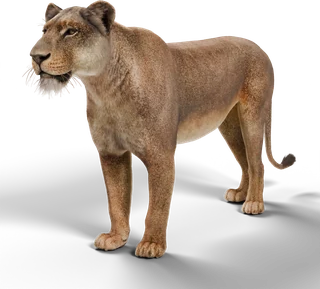 Darker Variation female
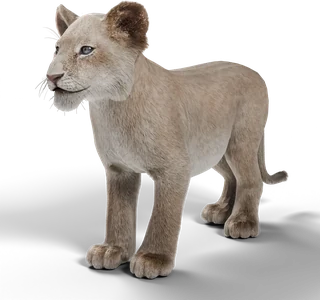 Leucistic juvenile
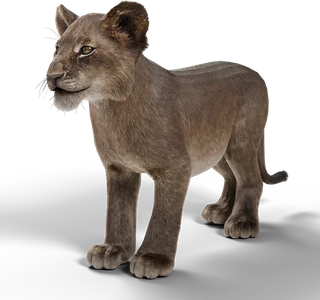 Darker Variation juvenile
Size & weight
Size
Shoulder height: 1.07 to 1.23 m
Juvenile
Juvenile weight
7.85 kg
Measured as Shoulder height. The person stands 1.75 m tall for scale.
Habitat requirements
Barrier grade
Grade 3 of 5
Minimum height
3 m minimum
Climbing & water
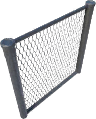
Climb proof
Needed
Water barrier
Not allowed


Habitat needs
Minimum area
Land
810 m² + 110 m² per extra animal
Shelter
10 m² per animal
Environment
Temperature
14 to 41°C
Plant coverage
0-30%
Enclosure
Climb-Proof Habitat
Dislikes
Rain and snow
Terrain
- Grass 20-90%
- Rock 0-20%
- Soil 10-80%
- Waterlogged 0-10%
- Sand 0-60%
Diet and enrichment
Diet
- Nutritionally Complete Meat
- Small Carcasses








Water sources


Conservation
IUCN Red List
Vulnerable
Least concern
Critically endangered
Wild population
22,000
22,000 - 25,000 (estimate) in the wild. Rank 30 of 58 species with a known count, smallest first.
Lions are a Vulnerable species, facing significant threats of habitat loss and fragmentation. Urban and agricultural development divides and reduces their natural range, isolating populations. Close contact to human settlement leads to increased conflict and retaliatory killing for lion predation on livestock. Poaching and illegal wildlife trade for trophies and traditional medicine adds to the threat, as well as declining prey availability due to overhunting and habitat fragmentation. Climate change exacerbates these pressures by altering habitats and water availability. Protected areas are key to lion conservation. Wildlife corridors help connect fragmented habitats, both for lions and their prey populations. Compensation and livestock fencing schemes and other community-based conservation programs work to reduce human-lion conflict. Lion-based ecotourism initiatives also bring financial benefits to local populations. Internationally, trade of lion products is strictly regulated, and numerous NGOs partner with governments to strengthen anti-poaching patrols.
Zoopedia sketchbook
Social & reproduction
Keeper notes
Lions are social animals. In the wild, a pride usually consists of several related females and their young, a dominant male and one or two subordinate males. Lions are playful with their counterparts and are rarely aggressive unless a male challenges the alpha male. Young male lions who have not acquired a pride also often form small groups and travel and hunt together. Lions breed year-round. The dominant male in a lion pride mates with all mature and receptive females, though sometimes a lioness in heat may mate with multiple males. Females will be pregnant for 3.5 months and usually have a litter of 2 to 3 cubs, which are born in a den away from the pride. Usually, lionesses introduce their cubs into the pride when they are about 6 to 8 weeks old. Cubs are weaned at around 7 to 8 months old. Lions reach sexual maturity at 3 to 4 years old. Most female cubs will remain with their mother’s pride, whereas all male cubs are forced to leave and must try to acquire their own pride. Young males might form small bachelor groups; these coalitions may sometimes take over a pride together. When an old or weak alpha male is ousted by rival males, they will then kill lion cubs that are not theirs, because females will not mate while they have cubs.
Group and breeding
Group
Group name
Pride
Group size
2-30 (up to 1 male, up to 29 females)
Male bachelor group
1-5
Female bachelor group
1-30
Offspring dispersal
Male offspring
Lifecycle and breeding
Life expectancy
12-20 years
Age of sexual maturity
3 years
Age of sexual sterility
15 years
Gestation or incubation
3.6 months
Interbirth period
32.4 months
Litter size
1-3
Mating system
Polygynous
Mating season
Aseasonal
Reproduction in captivity
Easy
Dominance
One dominant male, rarely male coalitions. Female hierarchy based on age.
Research
Research levels
| Level | Unlocks | Research gate |
|---|---|---|
| Level 1 | Thriving Requirement 1: Restraint Feeder, at least 3 | |
| Level 2 | Thriving Requirement 2: Water Surface Area; Lion Fact Sheet | |
| Level 3 | Release groups and release to the wild | |
| Level 4 | Thriving Requirement 3: Food Grade 2; Fertility Level 1 (+15% fertility) | Before this level: an Observation Network (Observation Platform) in Great Rift Valley Reserve and this species released in Great Rift Valley Reserve |
| Level 5 | Thriving Requirement 4: at least 6 objects or plants with the Trees tag | |
| Level 6 | Thriving Requirement 5: Long Grass terrain; Fertility Level 2 (+30% fertility) |
Researched by
Vets
Researched at
Habitat or exhibit and Research Centre
Wildlife Reserve
Great Rift Valley Reserve
Every level of this species' research, with its unlock conditions.
Release groups
Valid release groups
| Group | Type | Animals |
|---|---|---|
| Pride | Mixed group | 1 male, 3 to 8 females |
| Male Coalition | Male group | 2 to 3 males |
| Female Group | Female group | 3 to 10 females |
Release requirements
| Requirement type | Requirement |
|---|---|
| Ecosystems Required | Either Rocky Hills or Riverine |
| Ecosystems Required | Flourishing Savannah |
| Species Roles Required | Medium Prey |
Ecosystems



Release groups, reserve requirements and the roles this species fills.
Animal facts
- The roar of an adult male can be heard from 8km away.
- Lions are the most social of the big cats.
- Lions can reach speeds of up to 80km/h when running.
- Female lions do 90% of the hunting in a pride.
- Male lions spend their time defending their territory and females from rival males.
Taxonomy
Class
Order
Family
Genus
Species