Overview
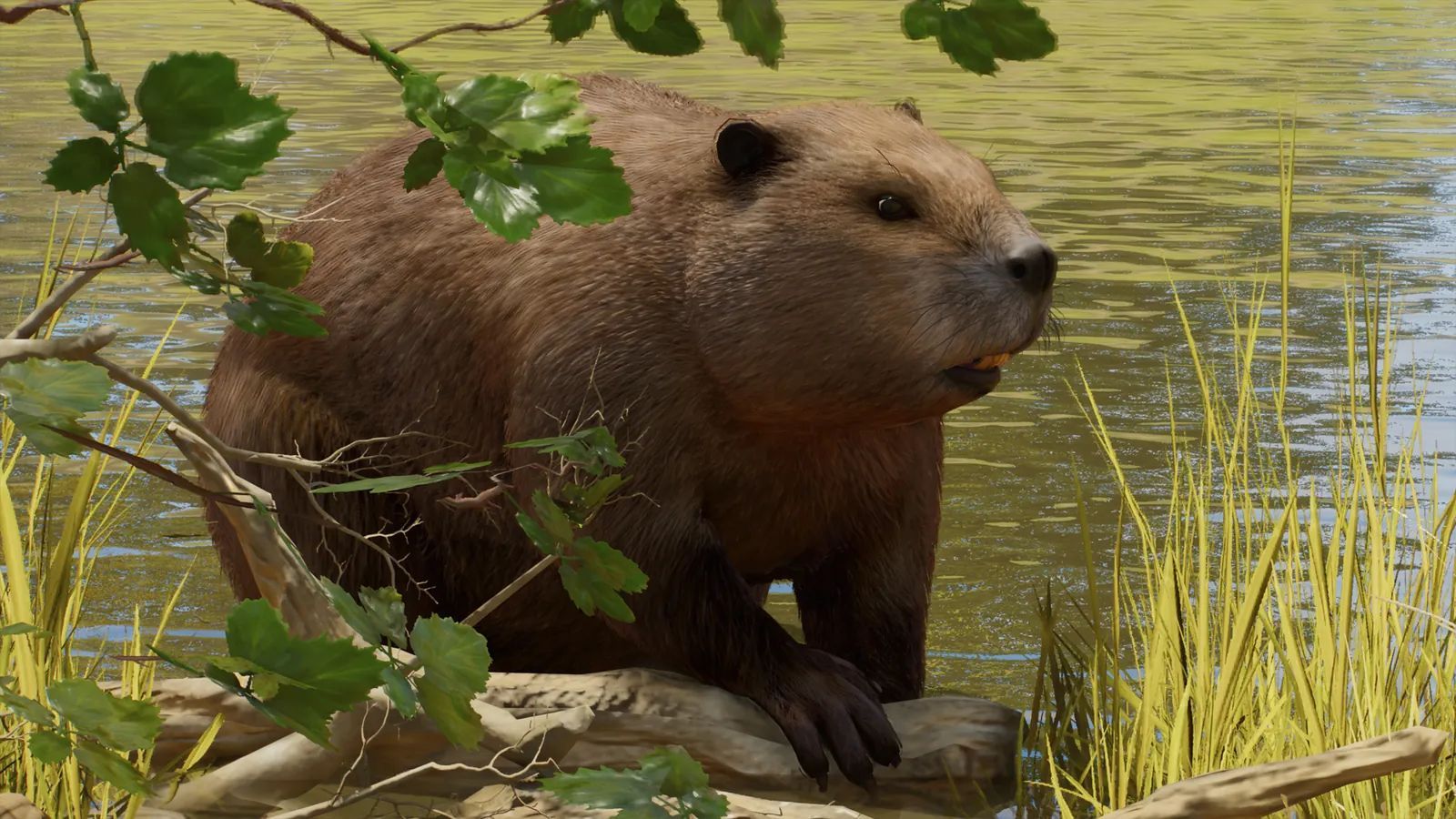
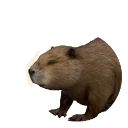
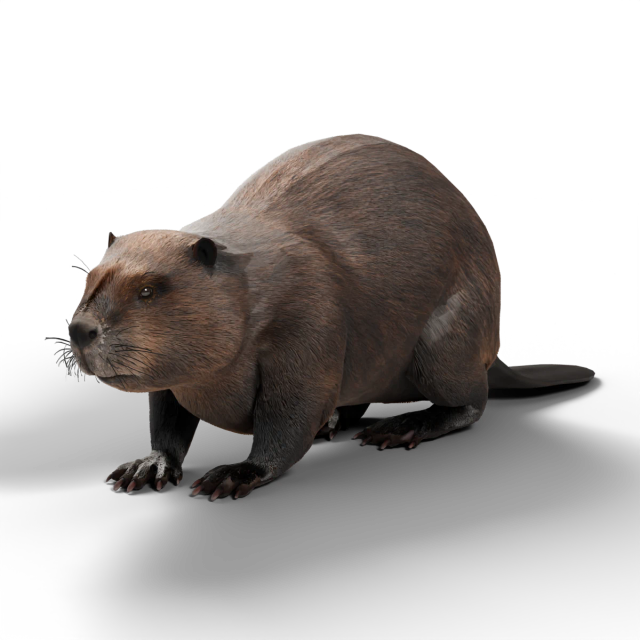
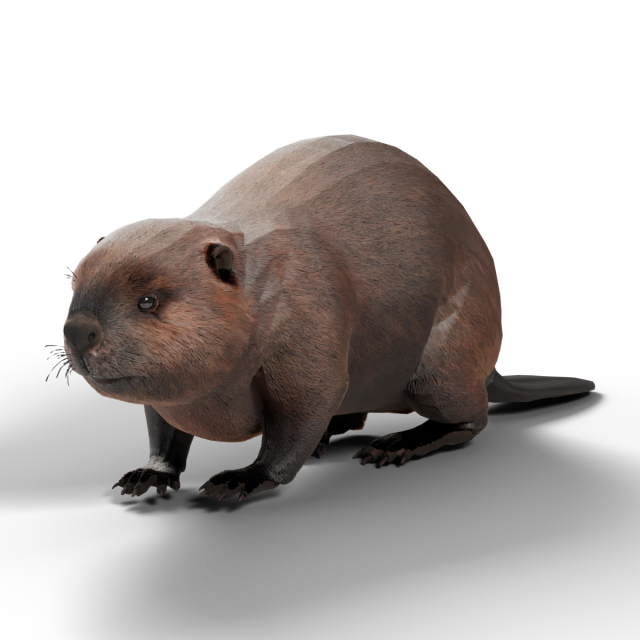
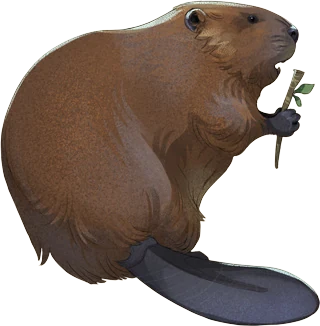
The Eurasian beaver (or Castor fiber) is a large species of rodent that lives in the temperate woodland and riverine areas of Europe and Asia. The Eurasian beaver has a double coat, meaning its fur has a surface layer of long, coarse hairs and an undercoat of shorter, finer hairs. This coat gives the beaver’s fur a coarse appearance, and may be beige, brown, reddish-brown or black. The beaver has small ears and eyes, a black nose high on the snout and large, pronounced front teeth. Eurasian beavers have a head-body length of 80cm to 100cm and a tail length of 25cm to 50cm. They weigh between 11kg and 30kg.
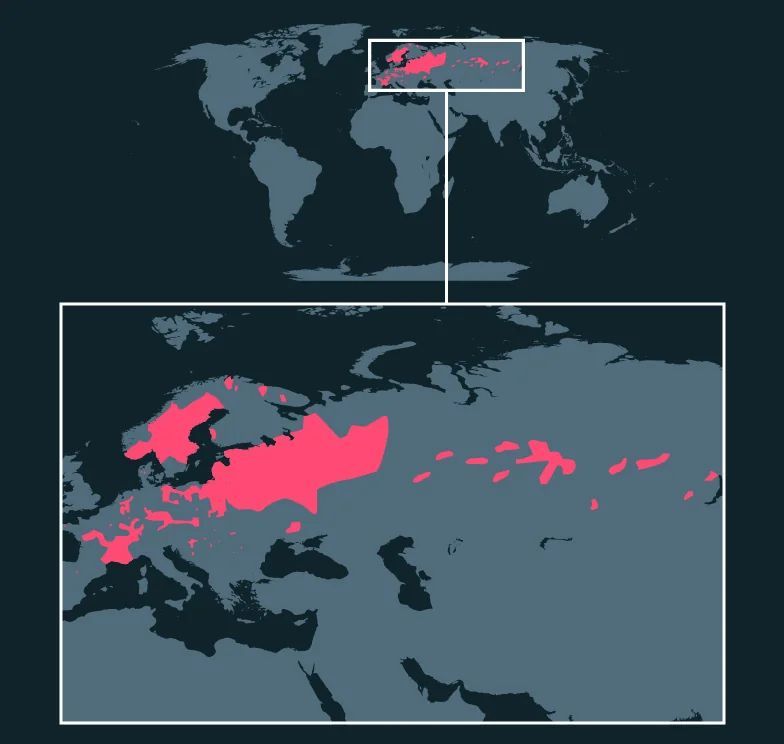
Found in Europe, Asia
Regions



Appearance
Adult
Juvenile
Colourmorphs
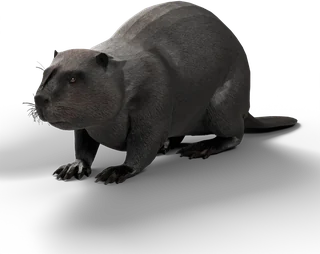 Darker Variation
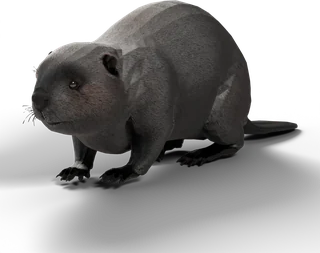 Darker Variation juvenile
Size & weight
Size
Nose to rump: 90 cm
Weight
Male
20 kg
Female
20 kg
Bars use a log scale against the heaviest animal in the Zoopedia, the Common Hippopotamus.
Measured as Nose to rump. The person stands 1.75 m tall for scale.
Habitat requirements
Barrier grade
Grade 2 of 5
Minimum height
1.25 m minimum
Climbing & water
Climb proof
Not needed
Water barrier
Not allowed
Barriers at this grade
Barrier types with resistance grade 2.



Habitat needs
Minimum area
Land
300 m² + 35 m² per extra animal
Water
210 m² + 26 m² per extra animal
Deep water
45 m² + 15 m² per extra animal
Shelter
5 m² per animal
Environment
Temperature
-5 to 30°C
Plant coverage
15-100%
Enclosure
Habitat
Dislikes
Snow
Terrain
- Grass 10-60%
- Sand 10-60%
- Soil 10-60%
- Rock 10-60%
- Snow 0-100%
- Waterlogged 0-100%
Diet and enrichment
Diet
- Young Branches and Leaves
- Root Vegetables










Water sources

Conservation
IUCN Red List
Least concern
Least concern
Critically endangered
Wild population
1,500,000
1,500,000 in the wild. Rank 54 of 58 species with a known count, smallest first.
While considered Least Concern today, the Eurasian beaver was driven to near extinction in the early 20th century due to excessive hunting for fur, meat, and castoreum. Castoreum is an oily secretion used in perfumes and medicine. Deforestation and wetlands drainage for agriculture further reduced the population. Persecution by farmers, who saw beavers as pests due to their dam-building, also contributed to their decline. By the early 1900s, only a few scattered populations of 1,200 individuals remained in remote areas of Russia, France, Norway, and Germany. The recovery of the Eurasian beaver is one of Europe’s most successful wildlife conservation stories. Conservation efforts like legal protection, habitat restoration and reintroductions led to a remarkable resurgence. Today, the population exceeds one million across their historic range, contributing to ecosystem restoration by improving wetland biodiversity, regulating water flow, and creating habitats for numerous other species. Their successful return highlights the effectiveness of targeted conservation and rewilding strategies.
Zoopedia sketchbook
Social & reproduction
Keeper notes
The Eurasian beaver lives in family groups of a mated dominant pair, their young adult offspring and the litter of kits from that year. Beavers are monogamously pair bonded and mate between December and May, with peaks in January. The pair build a lodge, a mound of wood with inside chambers, located in water. The male will monitor the female’s urine to determine when she is fertile, and mate with her in the water when she is in oestrus. After a gestation period of about 3 months, the female gives birth to a litter of 2 to 6 kits in the central chamber of the lodge. Kits begin swimming a few days into their lives and start eating solid food by 2 weeks old. Weaning is complete by 3 months old. Kits remain with their parents until 1.5 to 2 years old, although some reports have seen them stay with their family for up to 4 years. Dispersing young adult beavers move several kilometres away from their parents’ home range and search for another bachelor beaver of the opposite sex. The new pair will establish their own territory and build a lodge to start their own family. Beavers reach sexual maturity as early as 2 years old, though many only successfully reproduce from 3 years on.
Group and breeding
Group
Group name
Colony
Group size
2-8 (up to 8 males, up to 8 females)
Male bachelor group
1-2
Female bachelor group
1-2
Offspring dispersal
None
Lifecycle and breeding
Life expectancy
10-24 years
Age of sexual maturity
2 years
Age of sexual sterility
Death
Gestation or incubation
3.5 months
Interbirth period
8.5 months
Litter size
1-4
Mating system
Monogamous
Mating season
Winter
Reproduction in captivity
Average
Dominance
Family group lead by monogamous pair
Research
Research levels
| Level | Unlocks | Research gate |
|---|---|---|
| Level 1 | Thriving Requirement 1: at least 15 objects or plants with the Aquatic tag | |
| Level 2 | Thriving Requirement 2: at least 4 objects or plants with the Trees tag; Eurasian Beaver Fact Sheet | |
| Level 3 | Release groups and release to the wild | |
| Level 4 | Thriving Requirement 3: Food Grade 2; Fertility Level 1 (+15% fertility) | Before this level: an Observation Network (Observation Platform) in Scottish Highlands and this species released in Scottish Highlands |
| Level 5 | Thriving Requirement 4: at least 50% native plants | |
| Level 6 | Thriving Requirement 5: Platform Floats, at least 2; Fertility Level 2 (+30% fertility) |
Researched by
Vets
Researched at
Habitat or exhibit and Research Centre
Wildlife Reserve
Scottish Highlands
Every level of this species' research, with its unlock conditions.
Release groups
Valid release groups
| Group | Type | Animals |
|---|---|---|
| Family Group | Mixed group | 2 males, 2 females |
| Breeding Partners | Breeding partners | 1 male, 1 female |
Release requirements
| Requirement type | Requirement |
|---|---|
| Ecosystems Required | Either Lake or Fen Wetland |
Ecosystems



Release groups, reserve requirements and the roles this species fills.
Animal facts
- The Eurasian beaver slaps its tail on the water to alert its family of danger.
- The Eurasian beaver can hold its breath for 15 minutes while swimming.
- Eurasian beavers have a ‘nictitating membrane’ (a clear eyelid) that allows them to see underwater.
- The Eurasian beaver’s thick, warm waterproof fur keeps it insulated and dry. These fur qualities almost led to its extinction due to overhunting.
- The teeth of the Eurasian beaver never stop growing, and gnawing on wood keeps them filed down. They appear orange due to iron content in their enamel, making them exceptionally sturdy.
Taxonomy
Class
Order
Family
Genus
Species