Overview
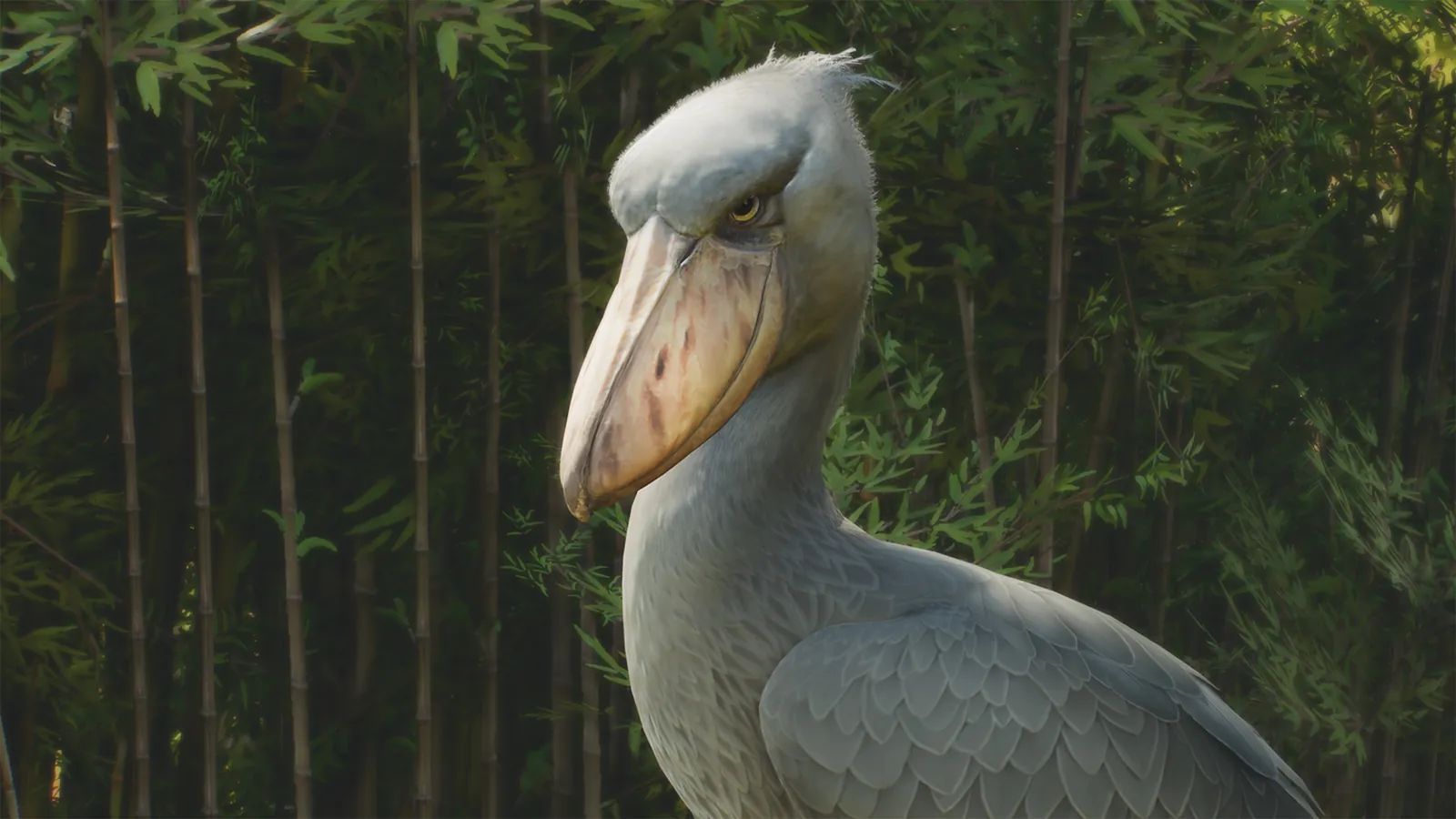
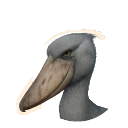
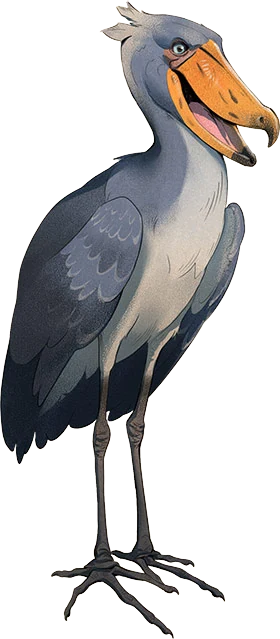
The shoebill (or Balaeniceps rex), also known as the shoe-billed stork, whale-headed stork or whalebill, is a large, solitary wading bird that inhabits tropical East African freshwater swamps. It prefers areas with stagnant, low-oxygen water; conditions that slow fish movement and make hunting easier. The shoebill has a tall, blue-grey body, broad wings and a huge, shoe-shaped bill with a hooked tip, which it uses to catch large fish. Adults stand 1.1m to 1.5m tall and have a wingspan of 2.3m to 2.6m. Despite their height, they are relatively light birds, usually weighing 4kg to 7kg, with some large males approaching 7.5kg. Shoebills show subtle sexual dimorphism: females are slightly smaller and lighter, and males have bulkier bills and are taller on average.
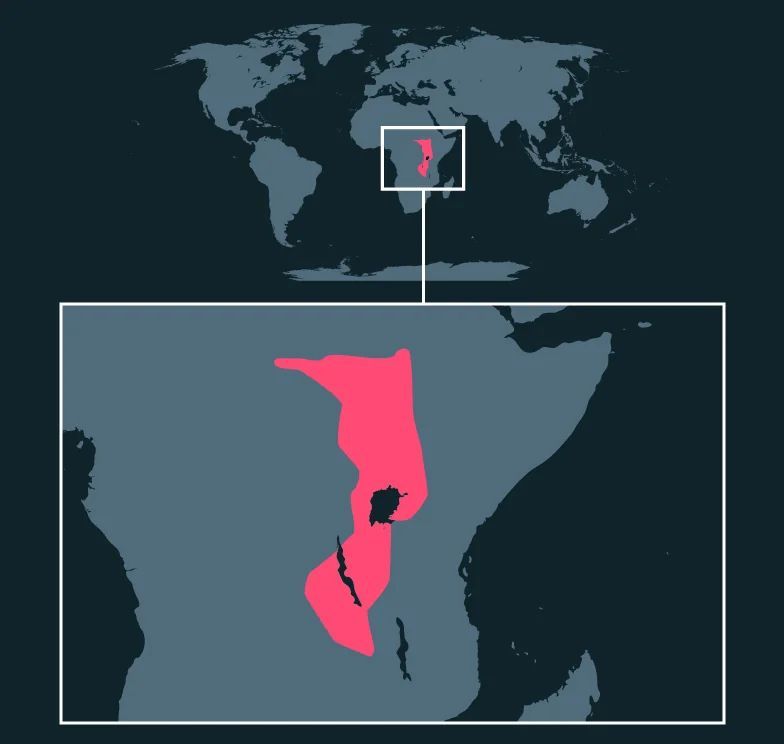
Found in Africa
Regions
Biomes

Appearance
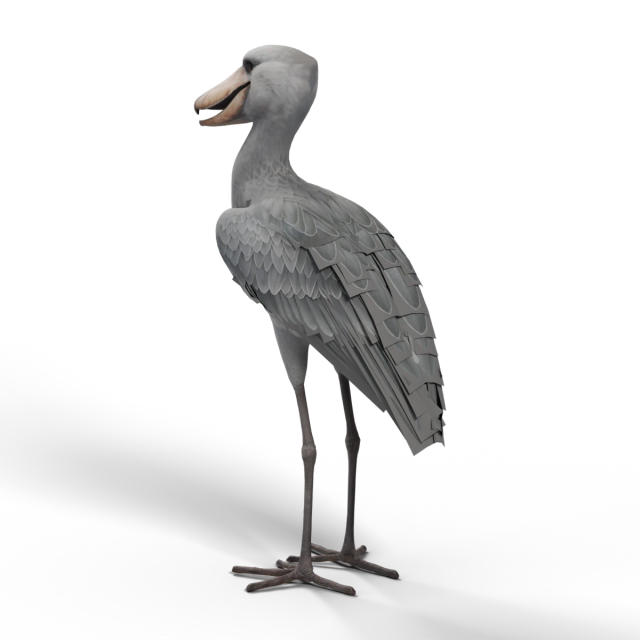
Male
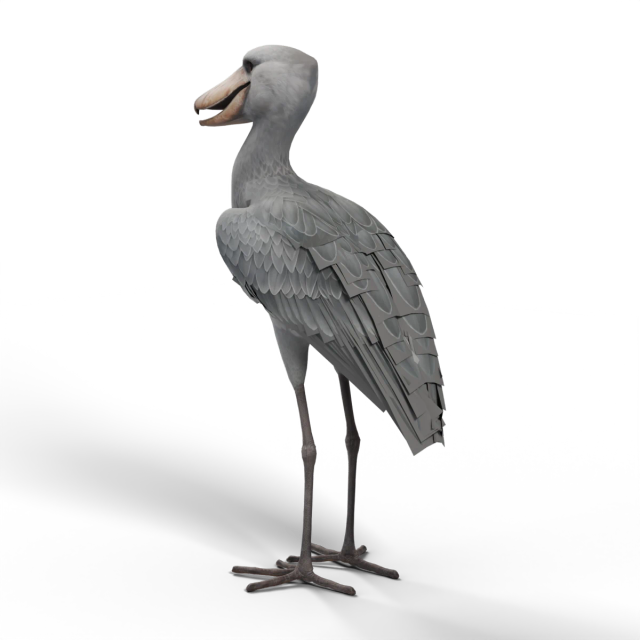
Female
Size & weight
Size
Leg span: 2.4 to 2.5 m
Juvenile
Juvenile weight
560 g
Measured as Leg span. The person stands 1.75 m tall for scale.
Habitat requirements
Barrier grade
Grade 2 of 5
Minimum height
1 m minimum
Climbing & water
Climb proof
Not needed
Water barrier
Not allowed
Barriers at this grade
Barrier types with resistance grade 2.



Habitat needs
Minimum area
Land
200 m² + 200 m² per extra animal
Flying
50 m² + 15 m² per extra animal
Shelter
5 m² per animal
Environment
Temperature
14 to 33°C
Plant coverage
20-60%
Enclosure
Roofed Habitat
Dislikes
Snow
Terrain
- Grass 20-80%
- Sand 0-80%
- Waterlogged 20-100%
- Rock 0-20%
- Soil 20-80%
Diet and enrichment
Diet
- Whole Fish
- Amphibians






Water sources

Conservation
IUCN Red List
Vulnerable
Least concern
Critically endangered
Wild population
3,000
3,000 - 5,300 in the wild. Rank 11 of 58 species with a known count, smallest first.
Shoebills are considered Vulnerable, majorly threatened by habitat loss due to wetland conversion to agricultural land and infrastructural development. Additionally, nests are often disturbed by human activity, hunting, and capture of chicks for the illegal exotic bird trade. Climate change and shifting water regimes further stress their specialised freshwater swamp ecosystems, making suitable breeding and feeding habitat less reliable. Conservation efforts focus on habitat protection, community involvement and legal regulation. In Zambia’s Bangweulu Wetlands, wardens are employed to protect nests, and the world’s first captive rearing and rehabilitation facility has been set up, which collects, rears and releases ‘spare’ chicks to bolster populations. In other areas, community-based conservation groups work on conserving key sites through ecotourism, education, and sustainable farming projects, which encourages local stewardship of shoebill habitats. Additionally, international protections like CITES Appendix II regulate trade - enforcement efforts aim to reduce poaching and disturbance, while research and monitoring seek to fill knowledge gaps about population trends and ecology.
Zoopedia sketchbook
Social & reproduction
Keeper notes
Shoebills are solitary animals. They form seasonal pairings for breeding but otherwise live alone. Shoebills usually mate at the onset of the wet season and form seasonal monogamous pairs for breeding. Detailed courtship behaviour is not well documented; it is believed to include bill clattering and head movements that help strengthen the pair bond and signal readiness to mate. As water levels fall at the end of the rainy season, a bonded pair clears and tramples an area of floating vegetation to build a large nest platform, often hidden within papyrus and reed beds. The female shoebill usually lays 1-3 white eggs, which are incubated over a 30-day period by both parents. Adults may occasionally cool the eggs by dousing them with water held in their large bills to prevent overheating. After hatching, chicks are covered in thick silvery-grey down and rely entirely on parental care. In the wild, usually only the eldest chick is tended to, and the others die if they are not needed as ‘back-ups’. Food is provided by regurgitation, with feeding rates increasing as the chick grows. Shoebills typically fledge at about 95 to 105 days and begin flying around 105 to 112 days. They continue to receive food from the parents for several weeks after fledging, before becoming independent. Shoebills reach sexual maturity at 3 years old.
Group and breeding
Group
Group size
1-2 (up to 1 male, up to 1 female)
Male bachelor group
1
Female bachelor group
1
Offspring dispersal
All offspring
Lifecycle and breeding
Life expectancy
25-37 years
Age of sexual maturity
4 years
Age of sexual sterility
Death
Gestation or incubation
1.1 months
Interbirth period
12 months
Clutch size
1-2
Mating system
Monogamous
Mating season
Summer
Reproduction in captivity
Difficult
Research
Research levels
| Level | Unlocks | Research gate |
|---|---|---|
| Level 1 | Thriving Requirement 1: at least 10 objects or plants with the Reed tag | |
| Level 2 | Thriving Requirement 2: Water Surface Area; Shoebill Fact Sheet | |
| Level 3 | Release groups and release to the wild | |
| Level 4 | Thriving Requirement 3: Food Grade 2; Fertility Level 1 (+15% fertility) | Before this level: an Observation Network (Observation Platform) in Great Rift Valley Reserve and this species released in Great Rift Valley Reserve |
| Level 5 | Thriving Requirement 4: at least 50% native plants | |
| Level 6 | Thriving Requirement 5: Block of Frozen Fish, at least 2; Fertility Level 2 (+30% fertility) |
Researched by
Vets
Researched at
Habitat or exhibit and Research Centre
Wildlife Reserve
Great Rift Valley Reserve
Every level of this species' research, with its unlock conditions.
Release groups
Valid release groups
| Group | Type | Animals |
|---|---|---|
| Maternal Family Group | Female group | 1 female |
| Solitary Male | Solitary male | 1 male |
| Breeding Partners | Breeding partners | 1 male, 1 female |
Release requirements
| Requirement type | Requirement |
|---|---|
| Ecosystems Required | Swamp |
| Nature Requirements | Water Platform Nest - Large |
Ecosystems

Release groups, reserve requirements and the roles this species fills.
Animal facts
- The shoebill is also called the whale-headed stork or whalebill, with its scientific name Balaeniceps rex meaning ‘whale-head king’.
- The massive bill of the shoebill can be used not just to catch fish but also to stab and disable prey before swallowing.
- The wing-flapping rate of the shoebill (150 flaps per minute) is among the slowest of large birds, reflecting their large size.
- Shoebills are largely solitary and territorial, with even breeding pairs often foraging at opposite ends of their territory.
- Shoebills often stand motionless for long periods like a statue, waiting to strike unsuspecting fish and other prey.
Taxonomy
Class
Order
Family
Genus
Species