Overview
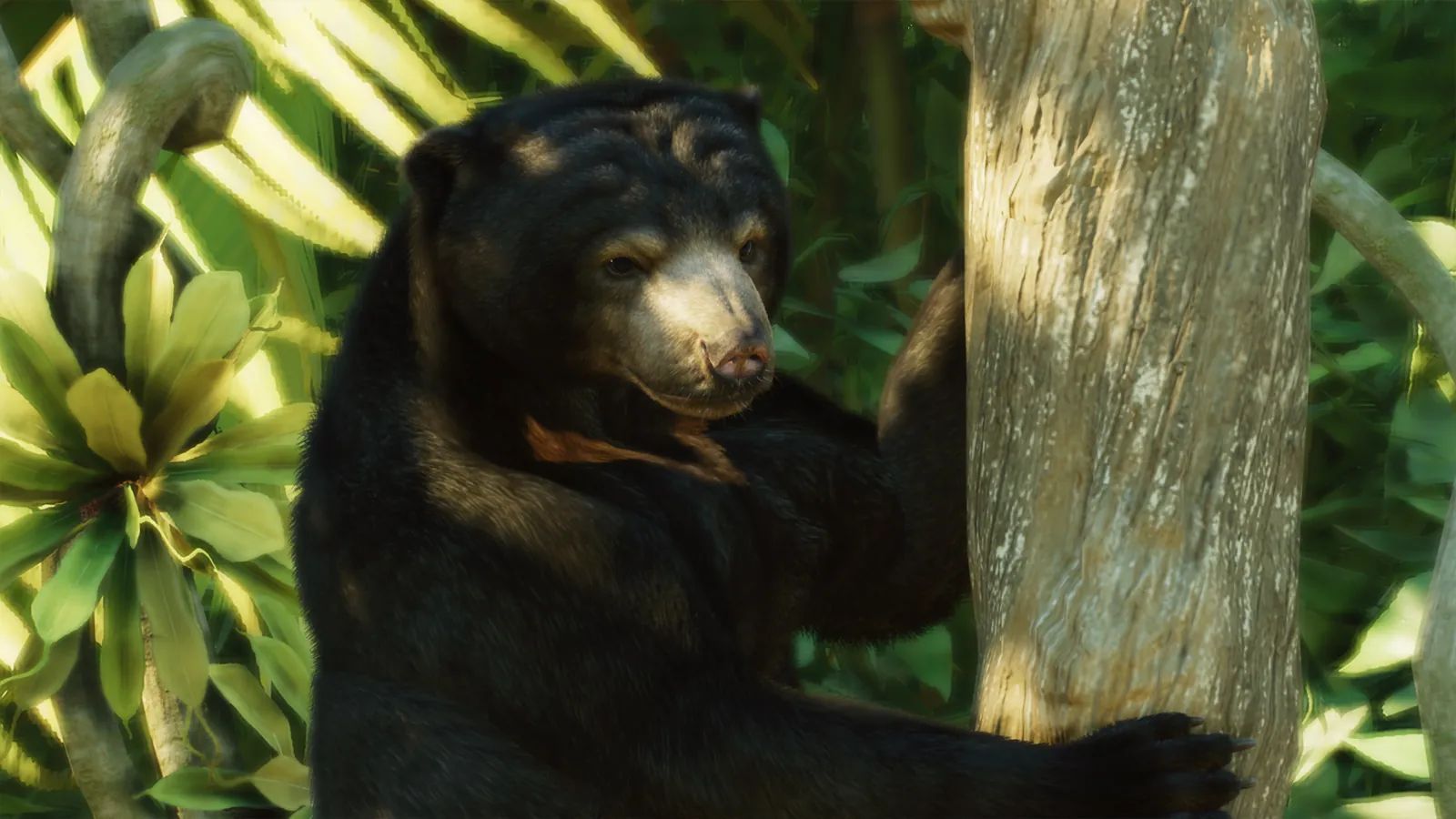
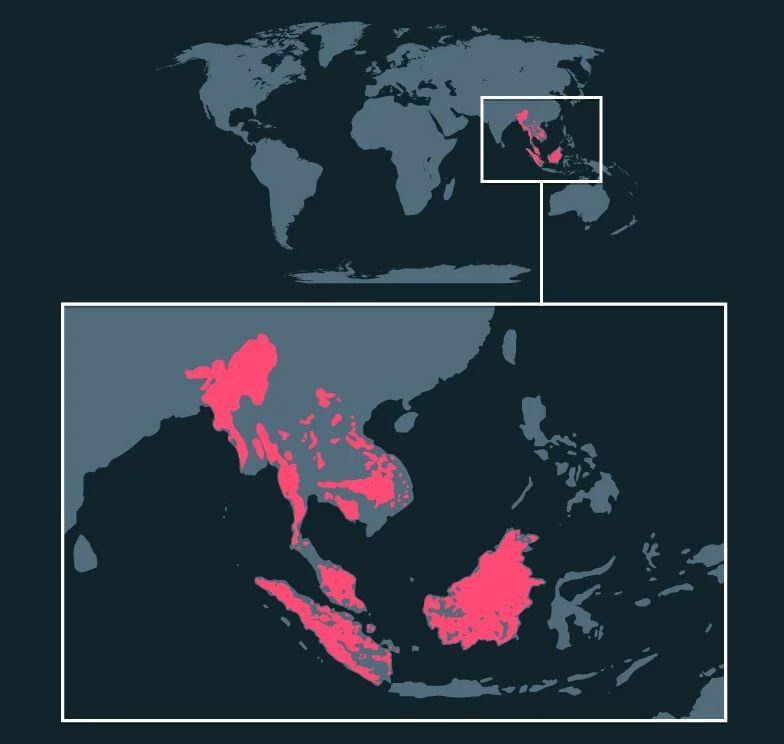
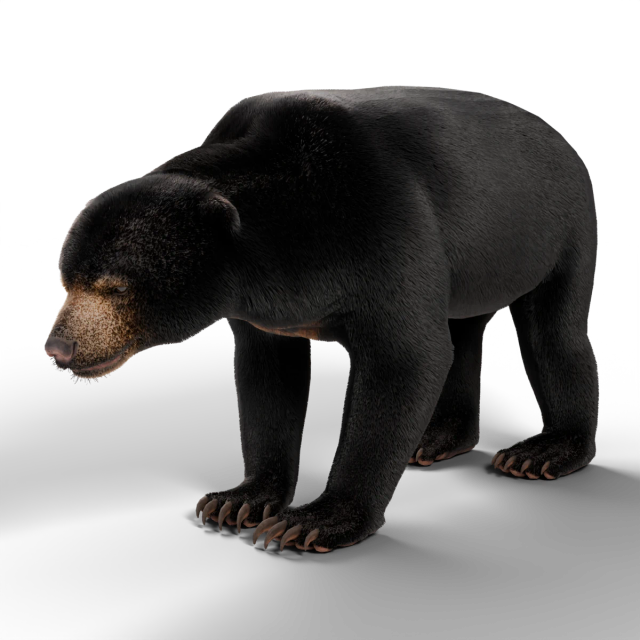
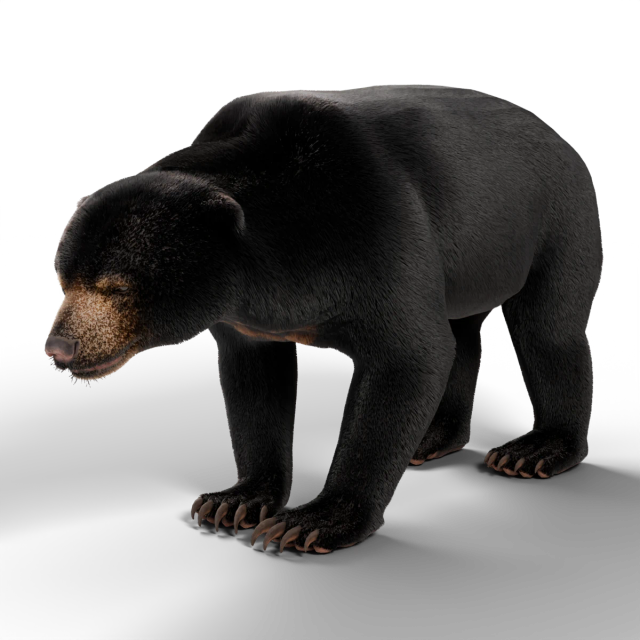
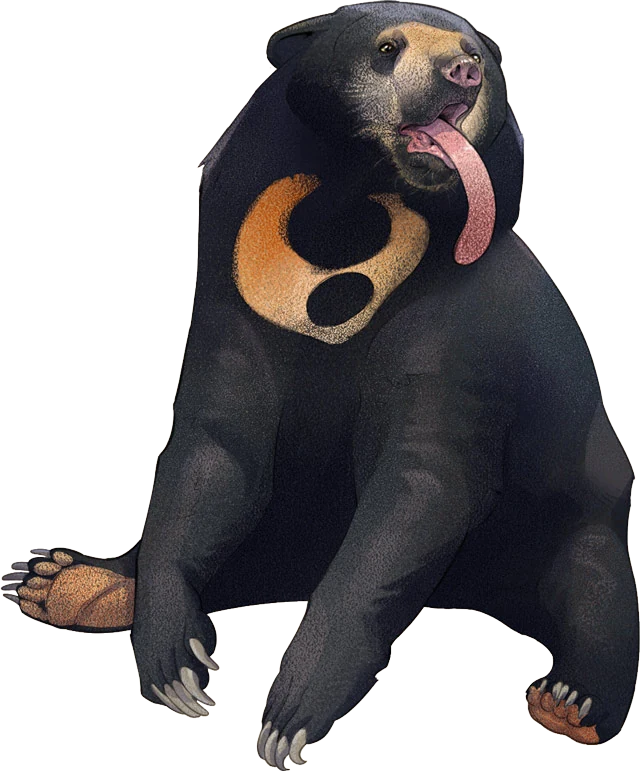
The sun bear (or Helarctos malayanus) is a small species of bear that lives in the tropical rainforests of Southeast Asia. It has dark brown to black fur with a yellow-tan face and muzzle with a distinctive orange-coloured crescent marking across its upper chest. The sun bear has a broad head, long oblong snout and small rounded ears. Males and females look alike, but males are 10% to 20% larger than females. They measure between 120cm and 150cm in length and weigh between 27kg and 65kg on average.


Appearance
Male
Female
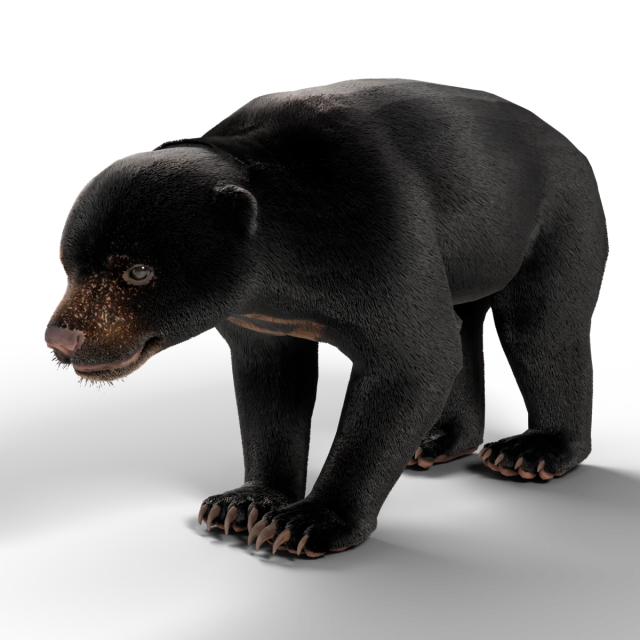
Juvenile
Size & weight
Size
Nose to rump: 1.25 to 1.4 m
Juvenile
Juvenile weight
9.25 kg
Measured as Nose to rump. The person stands 1.75 m tall for scale.
Habitat requirements
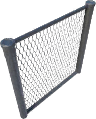
Barrier grade
Grade 3 of 5
Minimum height
3 m minimum
Climbing & water
Climb proof
Needed
Water barrier
Not allowed


Habitat needs
Minimum area
Land
920 m² + 135 m² per extra animal
Water
30 m² + 15 m² per extra animal
Climbing
30 m² + 15 m² per extra animal
Shelter
20 m² per animal
Environment
Temperature
18 to 33°C
Plant coverage
20-100%
Enclosure
Climb-Proof Habitat
Dislikes
Rain and snow
Terrain
- Sand 0-10%
- Rock 0-20%
- Soil 50-100%
- Grass 0-50%
Diet and enrichment
Diet
- Leafy Greens and Vegetables
- Meat Cuts and Fruit







Water sources


Conservation
IUCN Red List
Vulnerable
Least concern
Critically endangered
Sun bears are Vulnerable due to habitat loss, poaching, and illegal wildlife trade. Deforestation for palm oil plantations and logging has fragmented their natural rainforest habitat. Additionally, these bears are often captured for the exotic pet trade or killed for their body parts, which are used in traditional medicine. Their elusive and solitary nature makes it difficult for researchers to monitor populations accurately, complicating conservation planning and intervention efforts. Local governments and conservation organisations attempt to protect sun bears in various ways: Sanctuaries provide a safe environment for bears rescued from the illegal wildlife trade or captivity, with rehabilitation towards a potential rewilding possible. Promoting sustainable palm oil production may curb deforestation. Community education programs also play a crucial role by raising awareness about the ecological importance of sun bears and discouraging poaching. Ongoing in-situ and ex-situ research helps understand sun bear behaviour, guiding conservation strategies and policy decisions for long-term survival.
Zoopedia sketchbook
Social & reproduction
Keeper notes
Sun bears are solitary, with the exception of a mother with her cubs. They only interact to mate. Due to the secretive nature of this species, there are gaps in the knowledge regarding their mating habits. What is known is that sun bears mate year-round, and males track females via their urine. Upon meeting, the pair has a brief courtship and mates before going their separate ways. The female sun bear is pregnant for 3 to 7 months. During the late weeks of her pregnancy, she will locate a den in a hollow tree or somewhere similar where she will give birth to 1 to 3 cubs. Cubs stay with their mother for 3 years. After this point the mother is likely to mate again, while the cubs disperse to live solitarily and independently. Sun bears reach sexual maturity at 3 to 4 years old.
Group and breeding
Research
Research levels
| Level | Unlocks | Research gate |
|---|---|---|
| No entries. | ||
Every level of this species' research, with its unlock conditions.
Release groups
Valid release groups
| Group | Type | Animals |
|---|---|---|
| No entries. | ||
Release groups, reserve requirements and the roles this species fills.
Animal facts
- The sun bear is the smallest bear species.
- Sun bear cubs are born blind and hairless.
- Sun bears are also known as ‘honey bears’ because of their love of honey and their habit of breaking open beehives to get it.
- The sun bear’s tongue is 20cm to 25cm long. It uses its tongue to extract insects and honey.
- Sun bears can copy each other’s facial expression, a primate-like behaviour.
Taxonomy
Class
Order
Family
Genus
Species