
Overview
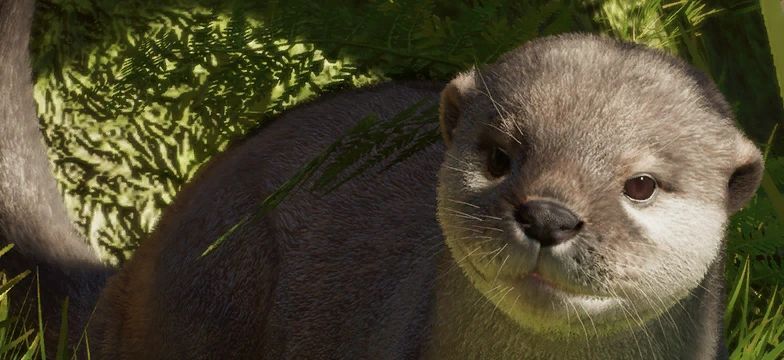
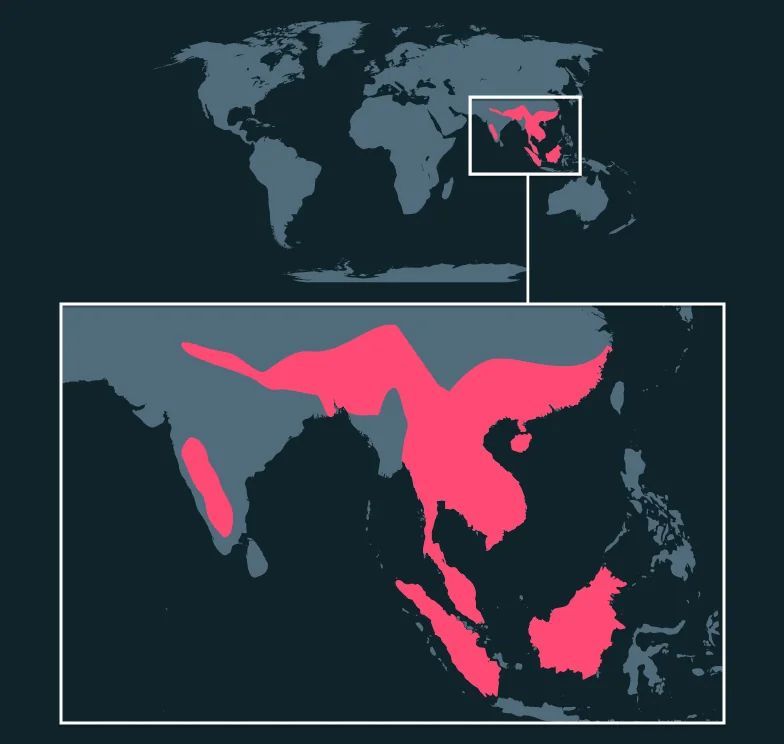
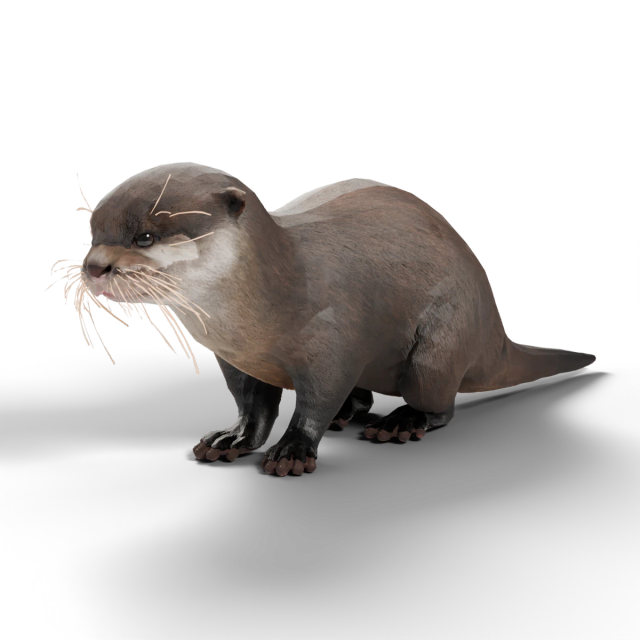
Native to the rivers and streams of Central and Southeast Asia, the Asian small-clawed otter (or Aonyx cinereus) is the smallest otter species in the world. Its sleek body is covered in brown fur, with a white belly and throat. Asian small-clawed otters grow between 72cm and 96cm in total body length and weigh 2.7kg to 5.4kg. There are no notable physical differences between females and males of this species.
Found in Asia
Regions
No entries.
Biomes
No entries.
Appearance
Juvenile
Colourmorphs
No entries.
Size & weight
Weight
Male
4 kg
Female
4 kg
Bars use a log scale against the heaviest animal in the Zoopedia, the Common Hippopotamus.
Juvenile
Juvenile weight
1 kg
Measured as Length. The person stands 1.75 m tall for scale.
Habitat requirements
Barrier grade
Grade 2 of 5
Minimum height
1.25 m minimum
Climbing & water
Climb proof
Water barrier
Habitat needs
Terrain
- Grass 20-100%
- Short Grass 15-100%
- Sand 0-60%
- Soil 0-50%
- Rock 0-20%
- Waterlogged 0-100%
Diet and enrichment
Diet
- Nutritionally Complete Dry Kibble
- Small Whole Fish
Feeders
No entries.
Enrichment items
No entries.
Water sources
No entries.
Conservation
IUCN Red List
Vulnerable
Least concern
Critically endangered
As a Vulnerable species, Asian small-clawed otters face threats from habitat loss, pollution, and wildlife trade. Rapid urbanisation and the conversion of wetlands and mangroves into aquaculture farms have severely fragmented their natural habitats. Additionally, water pollution from pesticides, heavy metals, and industrial runoff degrades freshwater ecosystems. Perhaps most pressing is the growing demand for otters in the illegal pet trade, particularly in countries like Indonesia and Thailand, where otter pups are poached and sold in wildlife markets or online. Conservation efforts are carried out by governments and NGOs: increased enforcement of CITES regulations attacks illegal trade, while awareness campaigns target consumer demand. Rehabilitation and release programs show promise in reintroducing rescued individuals into protected habitats, which can offer safe havens, though many require better management and enforcement. Research into otter ecology, behaviour, and population dynamics informs habitat restoration and conflict mitigation strategies, particularly in rice farming landscapes where coexistence is possible. These combined approaches aim to preserve both the species and the ecosystems they help support.
Zoopedia sketchbook
Social & reproduction
Keeper notes
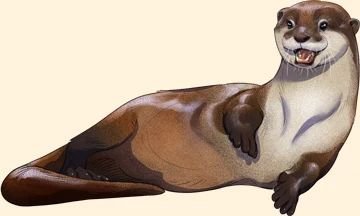
Asian small-clawed otters are very social and intelligent animals, living in family groups of around 15 members. These groups are led by a dominant mated pair and their offspring across various litters. Family groups break apart if they become too large or one of the leaders dies – in this case, family members will leave and attempt to form new breeding groups with other unrelated individuals. When the dominant female of a group is in oestrus, she and the dominant male spend bonding time playing and nuzzling. The pair mates several times over the female’s fertile period, where copulation can be initiated by either the male or female, and lasts between 5 to 25 minutes. Pregnancies in Asian small-clawed otters last for a period of 68 to 74 days, after which the female gives birth to a litter of between 1 and 6 pups, with an average litter size of 2. The pups are born blind and open their eyes after 1 to 1.5 months after birth, which is also when they will begin moving around independently. They will usually leave the den and have their first swim at around 2 months old. Weaning begins at 4 months old, though pups may already begin consuming solid food 1 to 2 months prior, and is usually complete by 8 months old. Asian small-clawed otters reach sexual maturity at 1.5 to 2 years old but remain with the family group without breeding. Instead, older pups help raising their siblings. New families are formed with unrelated individuals when existing family groups split up due to size or death of one of the leaders.
Group and breeding
Dominance
Dominant mated pair within family group
Research
Research levels
| Level | Unlocks | Research gate |
|---|---|---|
| No entries. | ||
Every level of this species' research, with its unlock conditions.
Release groups
Valid release groups
| Group | Type | Animals |
|---|---|---|
| No entries. | ||
Release groups, reserve requirements and the roles this species fills.
Animal facts
- Asian small-clawed otters are monogamous and mate for life.
- The Asian small-clawed otter can close its ears and nostrils when swimming.
- Despite living in groups, Asian small-clawed otters generally hunt for themselves.
- The Asian small-clawed otter is extremely dexterous in comparison to other otter species due to short claws and incomplete webbing between its toes.
- Grooming is extremely important for Asian small-clawed otters as it traps air between the hair follicles, keeping otters insulated and dry while swimming.
Taxonomy
Class
Order
Family
Genus
Species