Overview
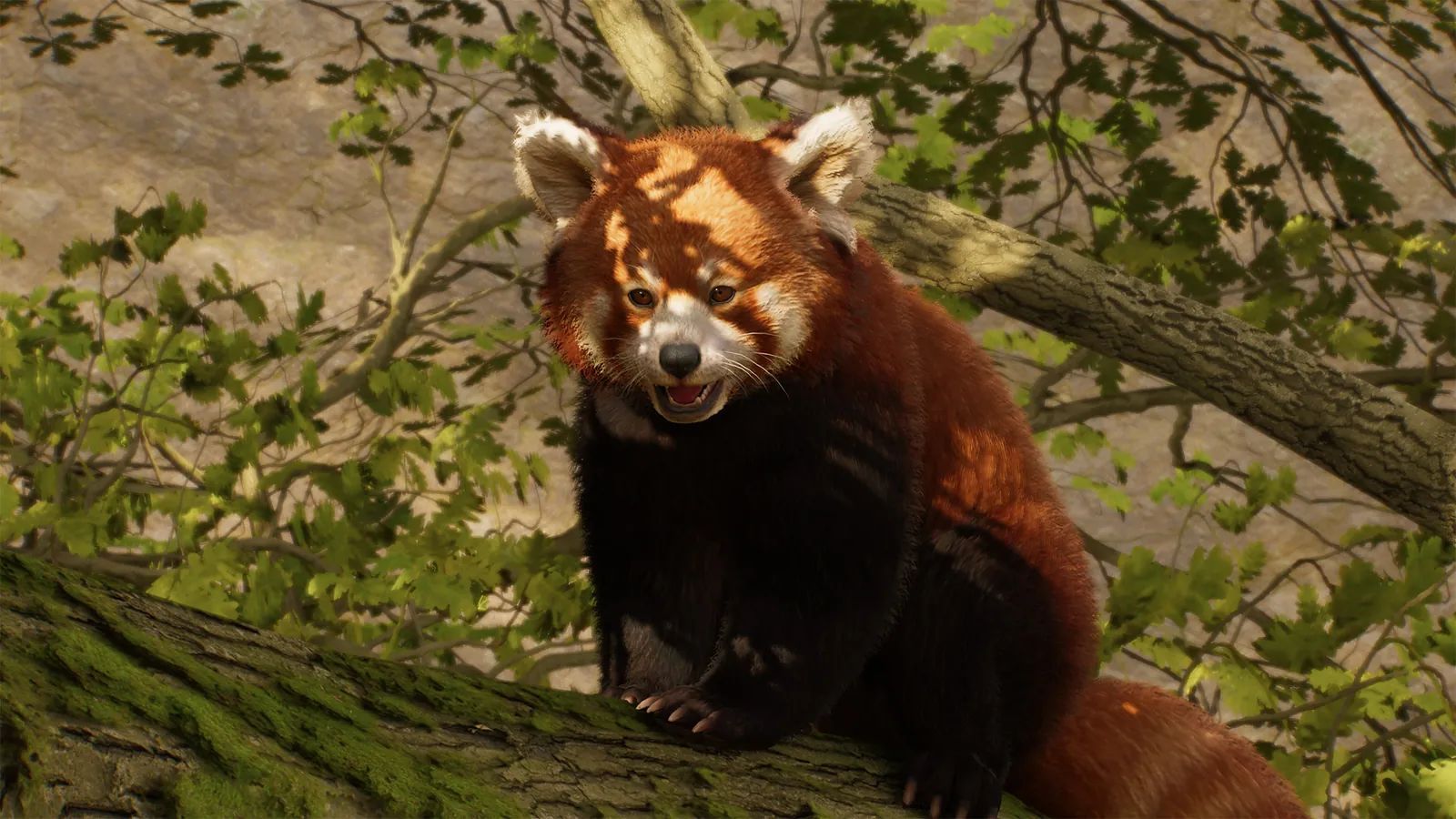
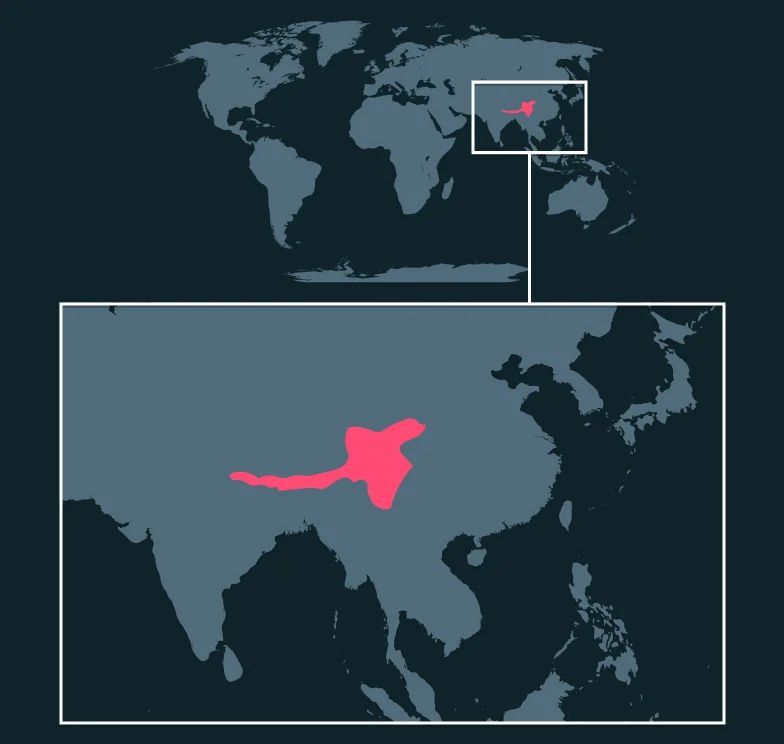
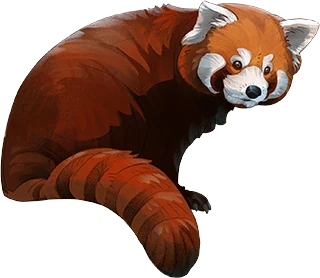
The red panda (or Ailurus fulgens) is a small mammal that lives in the woodlands of the Himalayas and multiple areas of China. Despite its name, it is not closely related to the giant panda, however it does share some characteristics such as a diet mainly consisting of bamboo. They have striking red fur, black legs, a ringed tail, and white ears and snout. The red panda averages between 50cm and 64cm from head to body, with a tail 28cm to 59cm long. Males are slightly heavier than females, ranging from 3.7kg to 6.2kg compared to 3kg to 6kg.


Appearance
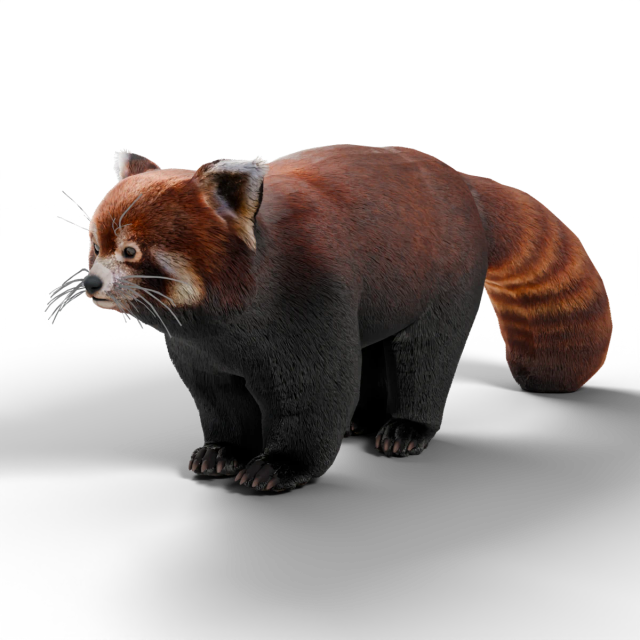
Adult
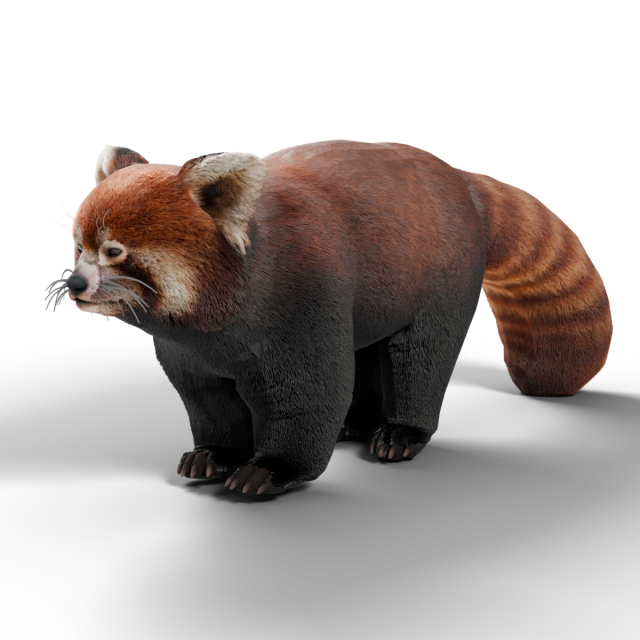
Juvenile
Colourmorphs
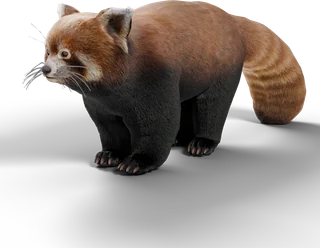 Leucistic
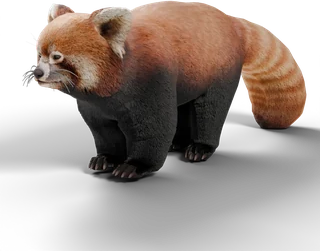 Leucistic juvenile
Size & weight
Size
Nose to rump: 59 cm
Measured as Nose to rump. The person stands 1.75 m tall for scale.
Habitat requirements
Barrier grade
Grade 2 of 5
Minimum height
3 m minimum
Climbing & water
Climb proof
Not needed
Water barrier
Allowed
Water barrier size
3 m wide, 1 m deep
Barriers at this grade
Barrier types with resistance grade 2.



Habitat needs
Minimum area
Land
160 m² + 80 m² per extra animal
Climbing
60 m² + 20 m² per extra animal
Shelter
5 m² per animal
Environment
Temperature
-6 to 28°C
Plant coverage
35-100%
Enclosure
Climb-Proof Habitat
Dislikes
Rain and snow
Terrain
- Grass 50-100%
- Sand 0-20%
- Rock 0-20%
- Waterlogged 0-5%
- Soil 0-50%
Diet and enrichment
Diet
- Bamboo
- Nutritionally Complete Biscuits







Enrichment items


Water sources

Conservation
IUCN Red List
Endangered
Least concern
Critically endangered
Wild population
10,000
10,000 in the wild. Rank 18 of 58 species with a known count, smallest first.
Red pandas are Endangered, threatened primarily by habitat loss due to deforestation for human expansion and logging operations. Their main food source is bamboo, which experiences mass die-offs after flowering. In fragmented habitats, red pandas are unable to fall back to areas with living bamboo. Additionally, climate change alters the overall distribution of bamboo, and increases the risk for natural disasters like landslides. Poaching and illegal wildlife trade also threaten the red panda. In many countries, habitat protection and restoration projects are underway, with forest corridors being established to connect fragmented habitats. Community-based conservation programs empower local people to participate in monitoring and protecting red pandas while providing alternative livelihoods to reduce dependence on forest resources. Captive breeding focuses on research and establishing a healthy insurance population. International cooperation through various organisations helps raise awareness, fund conservation projects, and strengthen anti-poaching measures, offering hope for the long-term survival of this charismatic species.
Zoopedia sketchbook
Social & reproduction
Keeper notes
Red pandas are solitary and territorial animals, with males having larger territories than females. In nature, the two only interact during the mating season. Both are also hunted by snow leopards and martens in the wild, and as a result like to have places to isolate themselves and hide. Red pandas mate in late winter and spring, from mid-January to early March. They track mates using scent marking. When a male and female encounter each other, the female will invite the male to mate with her with tail-flicking and by rolling on the ground. The female red panda gives birth to a litter of 1 to 4 cubs after a gestation of 4 to 5 months, who will remain in the nest or den for the first 4 months of their lives. As the cubs begin to venture out with their mother, they learn essential survival skills and how to navigate their environment. Soon after, at 7 to 8 months old or at the start of the next mating season, they will disperse to establish their own territories. Red pandas reach sexual maturity at 12 to 18 months old.
Group and breeding
Group
Group size
1-2 (up to 1 male, up to 1 female)
Male bachelor group
1
Female bachelor group
1
Offspring dispersal
All offspring
Lifecycle and breeding
Life expectancy
8-15 years
Age of sexual maturity
1.5 years
Age of sexual sterility
Death
Gestation or incubation
4.3 months
Interbirth period
7.7 months
Litter size
1-3
Mating system
Promiscuous
Mating season
Spring
Reproduction in captivity
Very Easy
Research
Research levels
| Level | Unlocks | Research gate |
|---|---|---|
| Level 1 | Thriving Requirement 1: at least 4 objects or plants with the Trees tag; Red Panda Fact Sheet | |
| Level 2 | Thriving Requirement 2: Water Surface Area; Fertility Level 1 (+15% fertility) | |
| Level 3 | Thriving Requirement 3: Food Grade 2; Release groups and release to the wild | |
| Level 4 | Thriving Requirement 4: at least 50% native plants | |
| Level 5 | Thriving Requirement 5: at least 10 objects or plants with the Rocks tag; Fertility Level 2 (+30% fertility) |
Researched by
Vets
Researched at
Habitat or exhibit and Research Centre
Every level of this species' research, with its unlock conditions.
Release groups
Valid release groups
| Group | Type | Animals |
|---|---|---|
| Maternal Family Group | Female group | 1 female |
| Solitary Male | Solitary male | 1 male |
| Breeding Partners | Breeding partners | 1 male, 1 female |
Release groups, reserve requirements and the roles this species fills.
Animal facts
- The red panda is also known as the 'firefox'.
- Red pandas have fur on the soles of their paws that helps with scent marking and provides protection from the cold.
- Red Pandas have a modified wrist bone that forms a 'sixth finger', which they use for stripping bamboo.
- Pregnant red pandas will build nests in rock crevices and hollow trees before they give birth to their cubs.
- In 2005, a red panda called 'Babu' escaped from Birmingham Nature Centre, UK into the city centre. He became a local celebrity and was named 'Brummie of the Year' – the only non-human to ever win the award.
Taxonomy
Class
Order
Family
Genus
Species