Overview
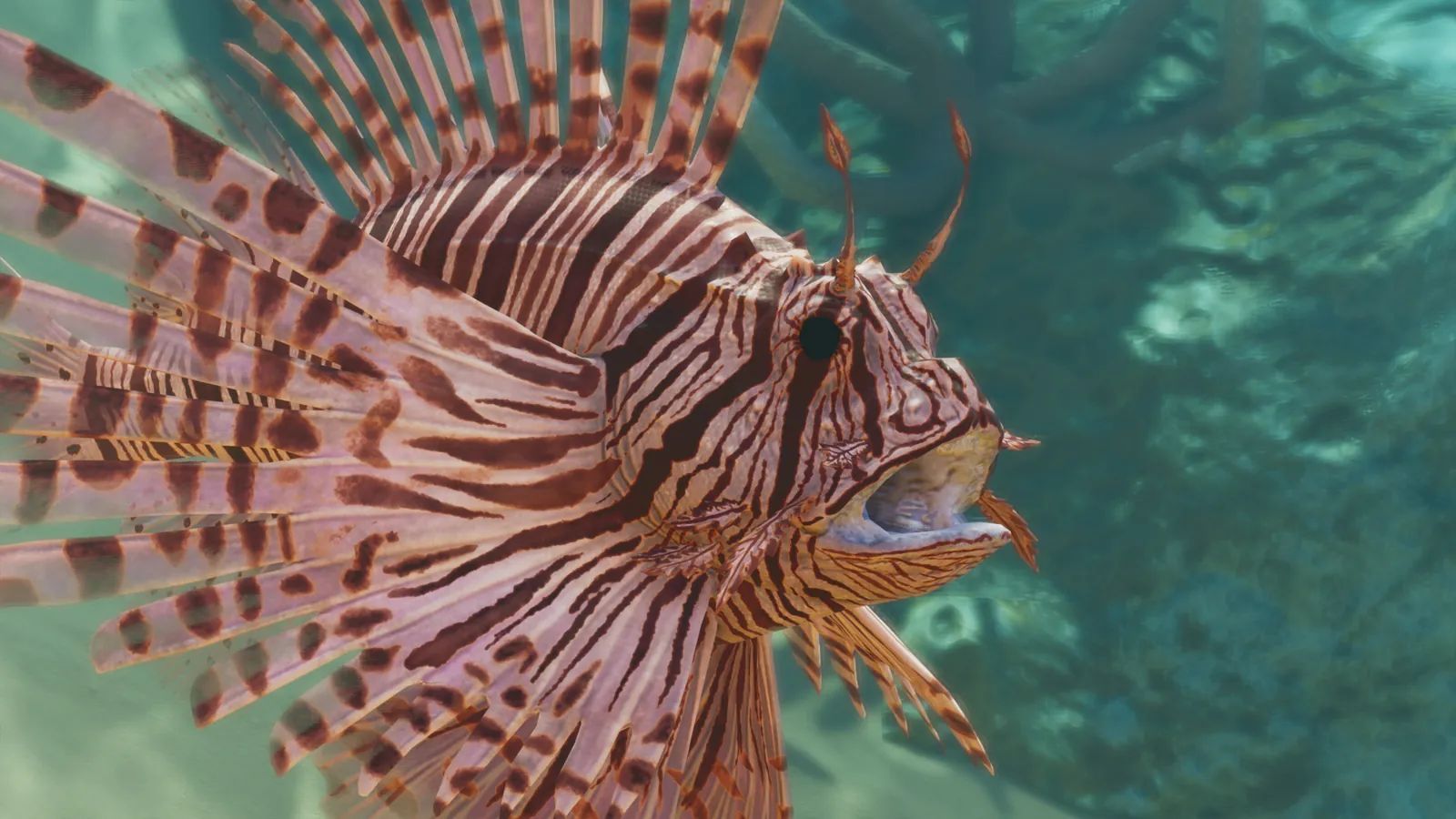
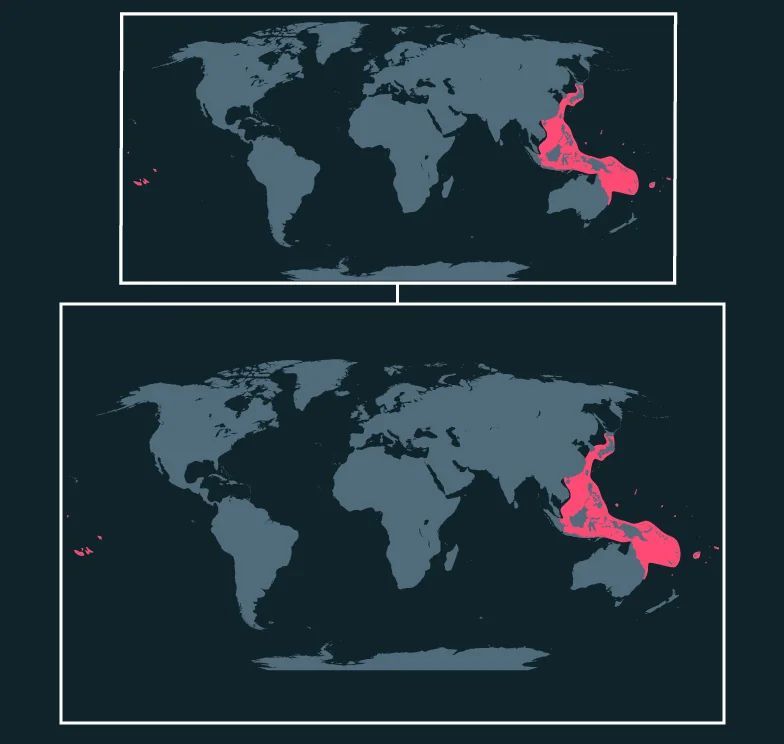
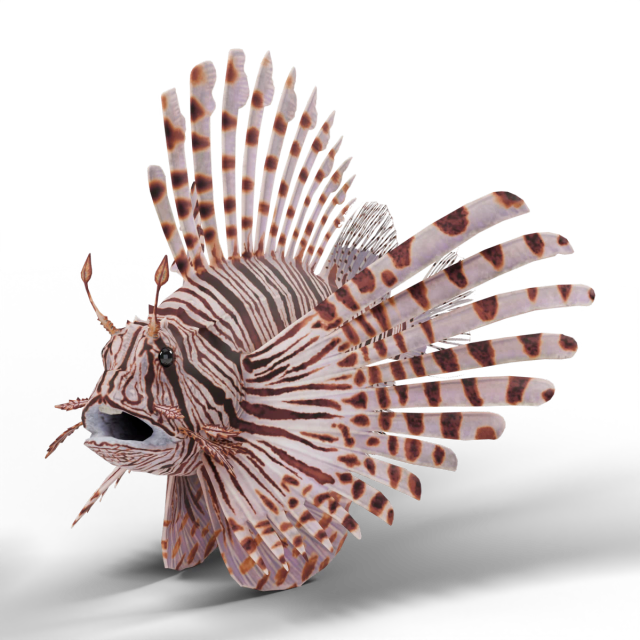
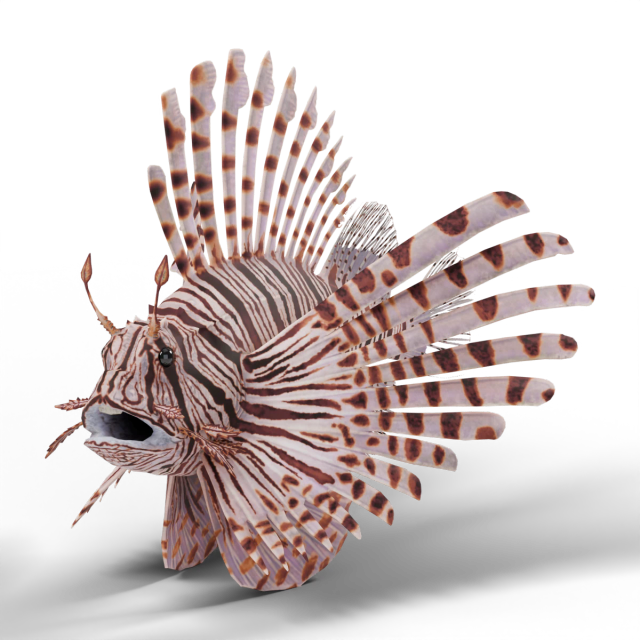
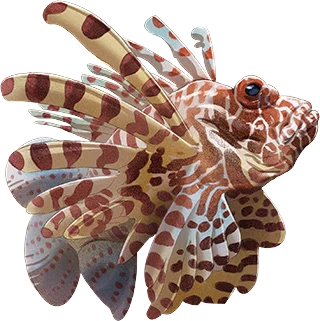
The red lionfish (or Pterois volitans) is a venomous reef fish native to the Indo-Pacific region, including the Red Sea, Indian Ocean, and western Pacific. Due to aquarium releases, it has become a well-established invasive species in the western Atlantic, Caribbean Sea, and parts of the Gulf of Mexico, where it threatens native marine ecosystems. Red lionfish typically inhabit coral reefs, rocky outcrops, lagoons, and seagrass beds. The fish is easily recognised by its white and red body stripes, fan-like pectoral fins, and long venomous dorsal spines. Adults measure 25cm to 32cm in length and weigh 1.2kg to 1.5kg, with males being slightly larger than females but otherwise no apparent difference between the sexes.

Appearance
Adult
Juvenile
Size & weight
Size
Length: 34 cm
Juvenile
Juvenile weight
500 g
Measured as Length. The person stands 1.75 m tall for scale.
Habitat requirements
Barrier grade
Grade 2 of 5
Minimum height
1 m minimum
Climbing & water
Climb proof
Not needed
Water barrier
Not allowed

Habitat needs
Minimum area
Deep water
16 m² + 16 m² per extra animal
Environment
Temperature
22 to 28°C
Plant coverage
0-100%
Water salinity
Saltwater
Enclosure
Aquarium
Dislikes
Snow
Terrain
- Sand 30-80%
- Soil 0-50%
- Rock 20-70%
- Fine Sand 25-80%
Diet and enrichment
Diet
- Krill
- Small Whole Fish
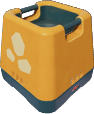
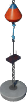
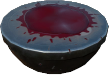
Enrichment items
Conservation
IUCN Red List
Least concern
Least concern
Critically endangered
The red lionfish is of Least Concern, and poses serious conservation challenges as an invasive species in the Western Central Atlantic. Introduced through the aquarium trade in the 1980s, lionfish have since spread rapidly due to their lack of natural predators and high reproductive rates. Their generalist diet has made them a top predator in many invaded habitats, and they significantly reduce populations of native reef fish by consuming large quantities of juvenile fish and crustaceans. A variety of management and control efforts have been implemented to mitigate their impact. Organised lionfish culling programs, such as spear-fishing derbies and targeted removal dives, aim to suppress local populations and reduce pressure on native species. They are also being promoted as a human food source alongside safe handling techniques to encourage commercial harvesting. Research is being done to understand how native predators may accept lionfish as a food source as a long-term goal. While eradication is currently impossible, the spread and ecological damage may at least be minimised.
Zoopedia sketchbook
Social & reproduction
Keeper notes
Red lionfish are solitary but will gather in temporary harems during breeding events. Red lionfish mate year-round, though peaks in frequency in warmer months, which may be as often as every 4 days. A single, territory-holding male may gather a temporary harem of up to 7 receptive females. Courtship in such a harem involves circling, sidewinding, and leading displays. As broadcast spawners, the females release 4,000 to 30,000 eggs each, which float just below the surface, and the male releases his sperm so that the eggs are fertilised externally. Once fertilised, the embryos develop rapidly, and larvae hatch approximately 36 hours after fertilisation. The lionfish larvae are free-swimming and pelagic, developing for 20 to 40 days while feeding on microscopic zooplankton. After this stage, they transition into their juvenile reef-dwelling form and settle in the benthic zone. Red lionfish mature at around 1 year of age, coinciding with a body length of 17.5cm to 18cm in females and 10cm to 18cm in males.
Group and breeding
Group
Group size
1-20 (up to 19 males, up to 19 females)
Male bachelor group
1-20
Female bachelor group
1-20
Offspring dispersal
All offspring
Lifecycle and breeding
Life expectancy
10-20 years
Age of sexual maturity
1 year
Age of sexual sterility
Death
Interbirth period
6 months
Litter size
1-5
Mating system
Promiscuous
Mating season
Aseasonal
Reproduction in captivity
Very Easy
Dominance
Male dominance based on size
Research
Research levels
| Level | Unlocks | Research gate |
|---|---|---|
| Level 1 | Thriving Requirement 1: at least 20 objects or plants with the Rocks tag; Red Lionfish Fact Sheet | |
| Level 2 | Thriving Requirement 2: at least 5 objects or plants with the Coral tag; Fertility Level 1 (+15% fertility) | |
| Level 3 | Thriving Requirement 3: Food Grade 2; Release groups and release to the wild | |
| Level 4 | Thriving Requirement 4: Coarse Sand terrain | |
| Level 5 | Thriving Requirement 5: Smooth Rock terrain; Fertility Level 2 (+30% fertility) |
Researched by
Vets
Researched at
Habitat or exhibit and Research Centre
Every level of this species' research, with its unlock conditions.
Release groups
Valid release groups
| Group | Type | Animals |
|---|---|---|
| Solitary Male | Solitary male | 1 male |
| Solitary Female | Solitary female | 1 female |
Release groups, reserve requirements and the roles this species fills.
Animal facts
- The red lionfish possesses venomous spines along its dorsal, anal, and pelvic fins that can deliver a painful sting to predators and humans.
- The red lionfish can reproduce every 4 days, with females capable of releasing up to 2 million eggs per year in tropical conditions.
- The red lionfish is an ambush predator, using its large, fan-like pectoral fins to corner prey and then striking with rapid bursts of speed.
- The red lionfish can consume prey up to half its body length in size.
- The red lionfish has invaded over 7,000,000km² of ocean, including the Gulf of Mexico, Caribbean, and East Coast of the USA.
Taxonomy
Class
Order
Family
Genus
Species