Overview
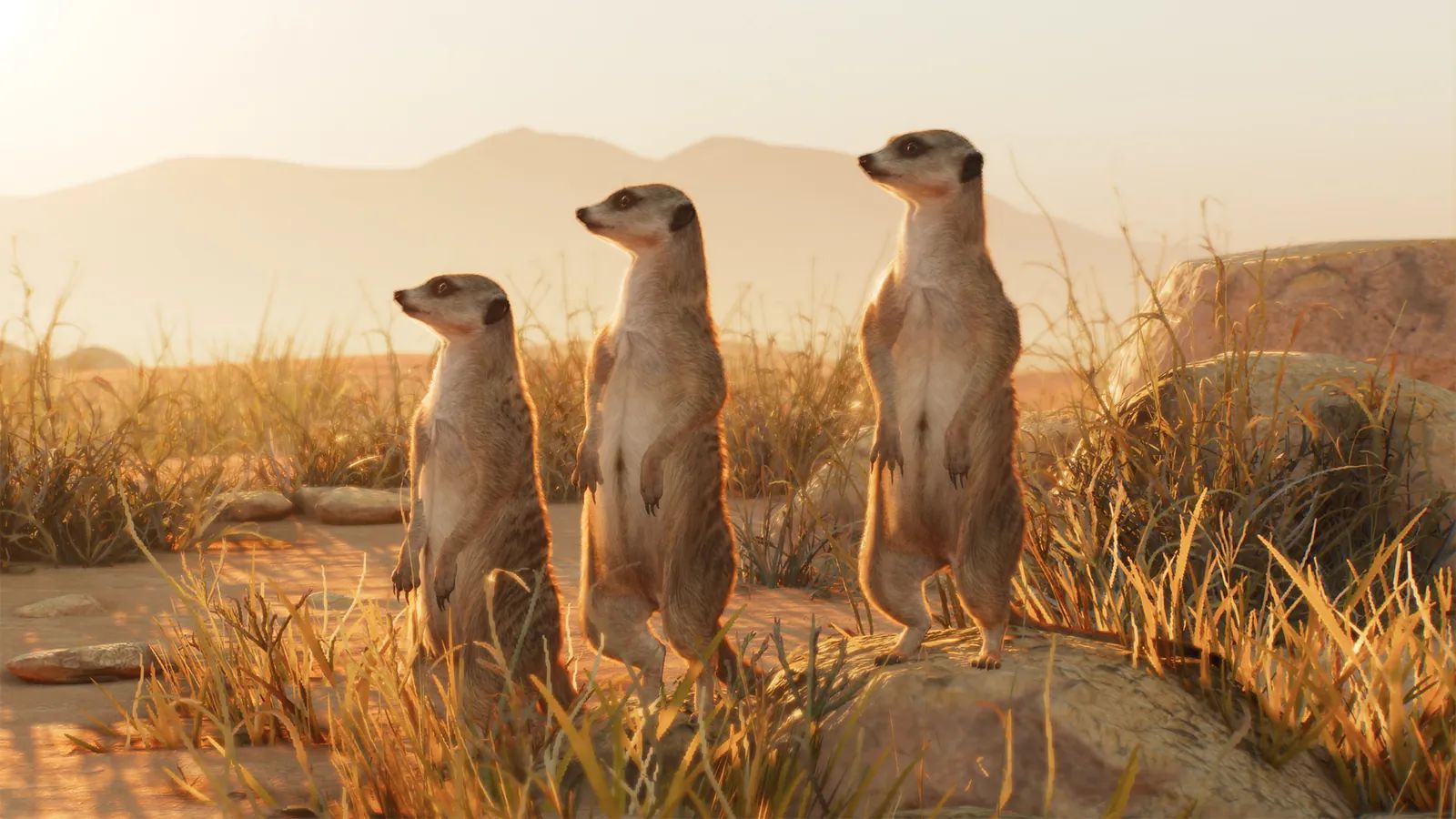
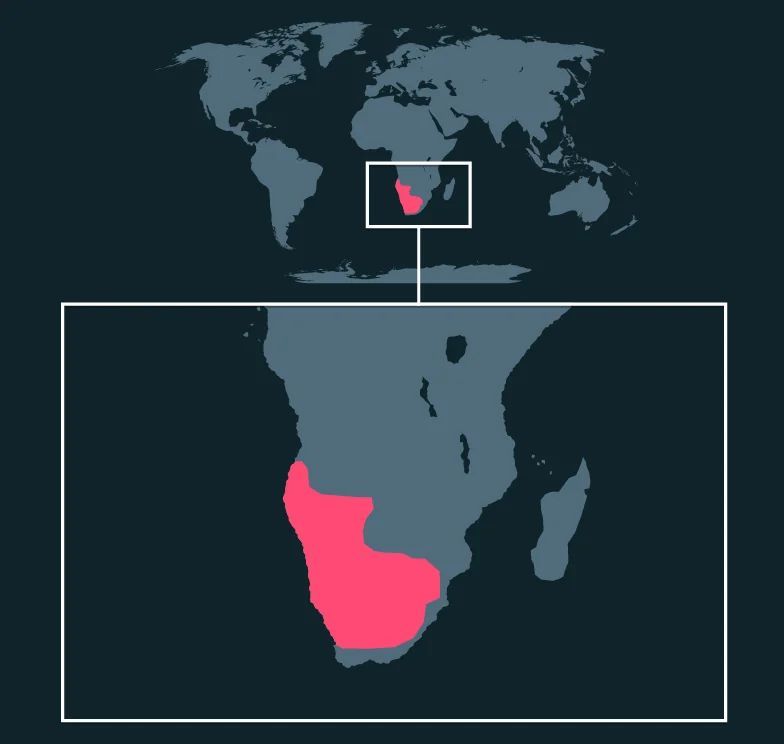
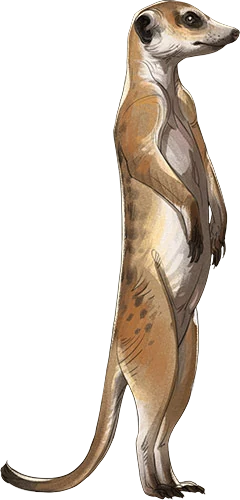
The Meerkat (or Suricata suricatta) is a species of social mongoose found in complex underground burrows in the savannahs and semi-deserts of Southern Africa. Meerkats have a flat, pointed head and a sandy-coloured face with black eyes and ears. They have a mottled pattern of grey and yellow fur on their back and a pointed, black tipped tail. Meerkats move on all fours but assume a distinctive stance on their hind legs when alert. The Meerkat has a head-body length of 24cm to 35cm and weighs between 0.62kg and 0.97kg. Females tend to be heavier than males.


Appearance
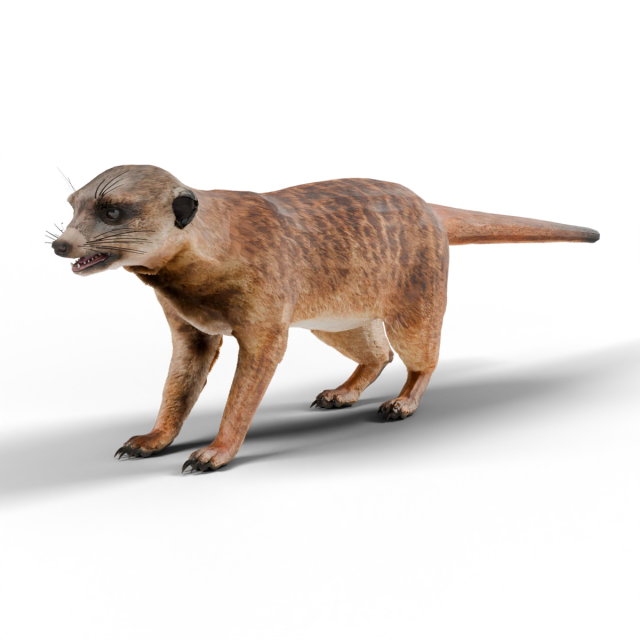
Adult
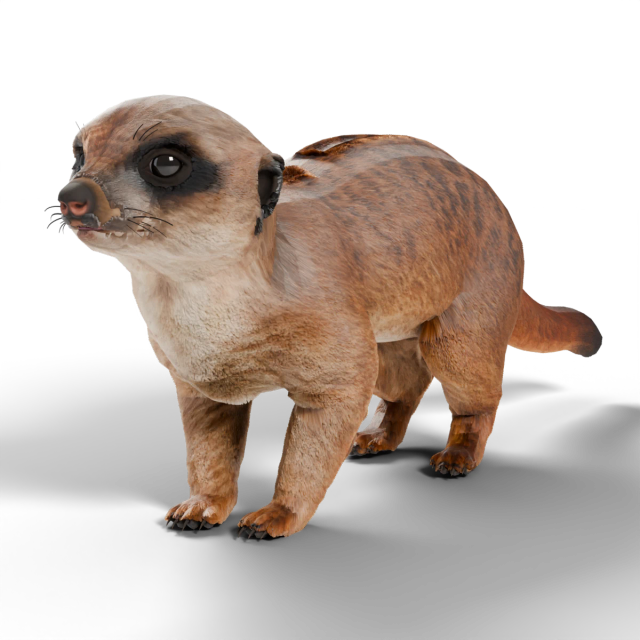
Juvenile
Size & weight
Size
Length: 30 cm
Weight
Male
775 g
Female
775 g
Bars use a log scale against the heaviest animal in the Zoopedia, the Common Hippopotamus.
Juvenile
Juvenile weight
387.5 g
Measured as Length. The person stands 1.75 m tall for scale.
Habitat requirements
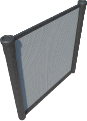
Barrier grade
Grade 1 of 5
Minimum height
1.25 m minimum
Climbing & water
Climb proof
Not needed
Water barrier
Not allowed

Habitat needs
Minimum area
Land
180 m² + 14 m² per extra animal
Shelter
2 m² per animal
Environment
Temperature
14 to 41°C
Plant coverage
0-35%
Enclosure
Habitat
Dislikes
Rain and snow
Terrain
- Sand 30-70%
- Soil 20-70%
- Rock 0-30%
- Short Grass 0-30%
- Waterlogged 0-5%
Diet and enrichment
Diet
- Ground Meat
- Mealworms


Enrichment items



Water sources

Conservation
IUCN Red List
Least concern
Least concern
Critically endangered
The Meerkat is considered a species of Least Concern, facing relatively few direct conservation threats. However these pressures can still impact local populations and ecosystem balance. Habitat degradation due to agricultural expansion, mining, and human settlement can disrupt their natural environment, particularly in parts of southern Africa. Additionally, climate change poses a long-term risk by altering the arid ecosystems they depend on. Meerkats are also vulnerable to diseases, some of which can be transmitted from domestic animals. Conservation efforts focus on habitat protection and ecological research. Protected areas such as national parks and reserves in southern Africa help safeguard meerkat habitats from development and exploitation. Scientific studies on meerkat behaviour, social structures, and disease dynamics provide valuable insights that inform conservation strategies. Additionally, public education and responsible ecotourism promote awareness and support for preserving meerkat populations. Though not the focus of intensive conservation programs, meerkats benefit from broader efforts aimed at maintaining biodiversity and healthy ecosystems in their native range.
Zoopedia sketchbook
Social & reproduction
Keeper notes
Meerkats live in family packs and are considered to be ‘eusocial’, meaning highly socially organised and pack members have strongly defined roles within their group. The alpha female is determined by age and size, but younger females will vie for the position as she gets older. Meerkats breed year round with peaks around heavy rainfall. An alpha female will give birth to most pups in the meerkat pack. Subordinate females occasionally reproduce when plenty of food is available, but their young will be at risk of being killed by the alpha. Males initiate mating by roughly fighting the alpha female, including grabbing and face nipping. If the male wins, he will grab the female round the middle and mate with her. After a pregnancy of 60 to 70 days, a litter of 3 to 7 pups is born, remaining in the den for 16 days, protected and fed by the alpha female and other pack members. Pups venture to the entrance of the den to play, and from 26 days adults will teach them how to forage and hunt different types of prey. For example, how to pull the sting off scorpions before eating them. Pups are weaned between 7 and 9 weeks old and can forage independently by 12 weeks old. Juveniles reach sexual maturity between 2 and 3 years old. Groups of 1 to 3 males will migrate in search of an unrelated pack or an unattached female to start their own pack. Unrelated packs are hostile, and it may take several days to be accepted. Females often remain with their natal pack to challenge for alpha female in the future, however failed challengers will be ousted from the pack.
Group and breeding
Group
Group name
Mob
Group size
2-30 (up to 20 males, up to 20 females)
Male bachelor group
1-12
Female bachelor group
1-3
Offspring dispersal
None
Lifecycle and breeding
Life expectancy
12-20 years
Age of sexual maturity
3 years
Age of sexual sterility
Death
Gestation or incubation
2.2 months
Interbirth period
9.8 months
Litter size
1-3
Mating system
Polyandrous
Mating season
Aseasonal
Reproduction in captivity
Very Easy
Colourmorphs
- Leucistic
- Albino
Dominance
Alpha female in matriarchal society
Research
Research levels
| Level | Unlocks | Research gate |
|---|---|---|
| Level 1 | Thriving Requirement 1: at least 6 objects or plants with the Shrub tag | |
| Level 2 | Meerkat Fact Sheet | |
| Level 3 | Thriving Requirement 2: Tunnel, at least 3 | |
| Level 4 | Thriving Requirement 3: Food Grade 2; Fertility Level 1 (+15% fertility) | Before this level: an Observation Network (Observation Platform) in Great Rift Valley Reserve and this species released in Great Rift Valley Reserve |
| Level 5 | Thriving Requirement 4: at least 12 objects or plants with the Small Rocky Cover tag | |
| Level 6 | Thriving Requirement 5: Animal Burrow - Small, at least 4; Fertility Level 2 (+30% fertility) |
Researched by
Vets
Researched at
Habitat or exhibit and Research Centre
Wildlife Reserve
Great Rift Valley Reserve
Every level of this species' research, with its unlock conditions.
Release groups
Valid release groups
| Group | Type | Animals |
|---|---|---|
| Family Group | Mixed group | 4 to 8 males, 4 to 8 females |
| Mating Pair | Breeding partners | 1 to 5 males, 1 to 5 females |
Release requirements
| Requirement type | Requirement |
|---|---|
| Ecosystems Required | Savannah |
Ecosystems

Release groups, reserve requirements and the roles this species fills.
Animal facts
- The teeth and front claws of the meerkat are adapted for digging and it can close its ears and nostrils to prevent dirt from entering them.
- Meerkats will mob and sometimes kill snakes that enter their territory.
- In some areas of South Africa, meerkats are kept on farmland to act as pest control due to their ability to effectively kill rodents and pest insects.
- Meerkat females have a hierarchy of social rank, with the oldest and largest female usually assuming the role of alpha.
- Meerkat packs have ‘sentries’ that give different alarm calls to warn their pack mates of different predators.
Taxonomy
Class
Order
Family
Genus
Species