Overview
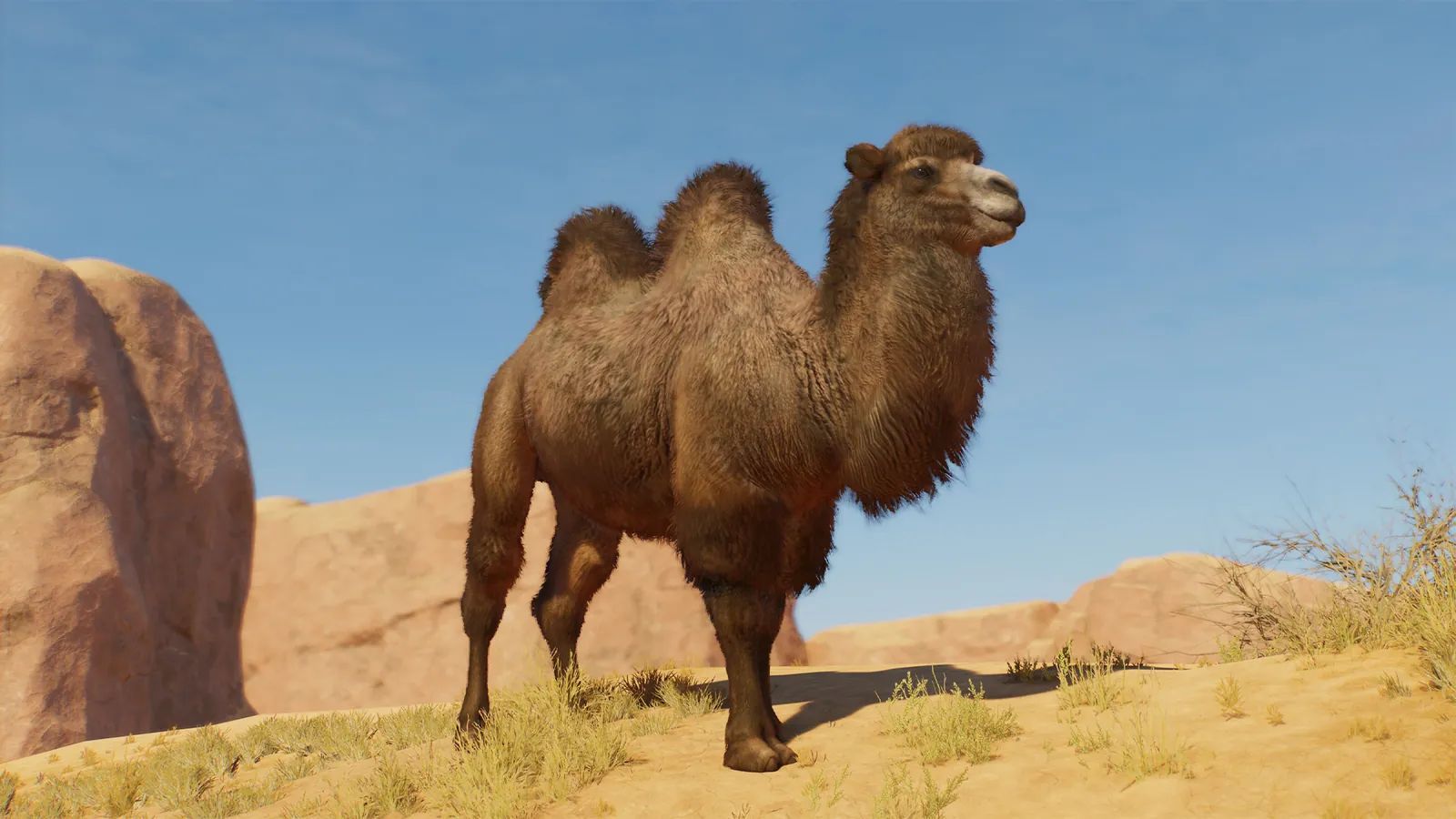
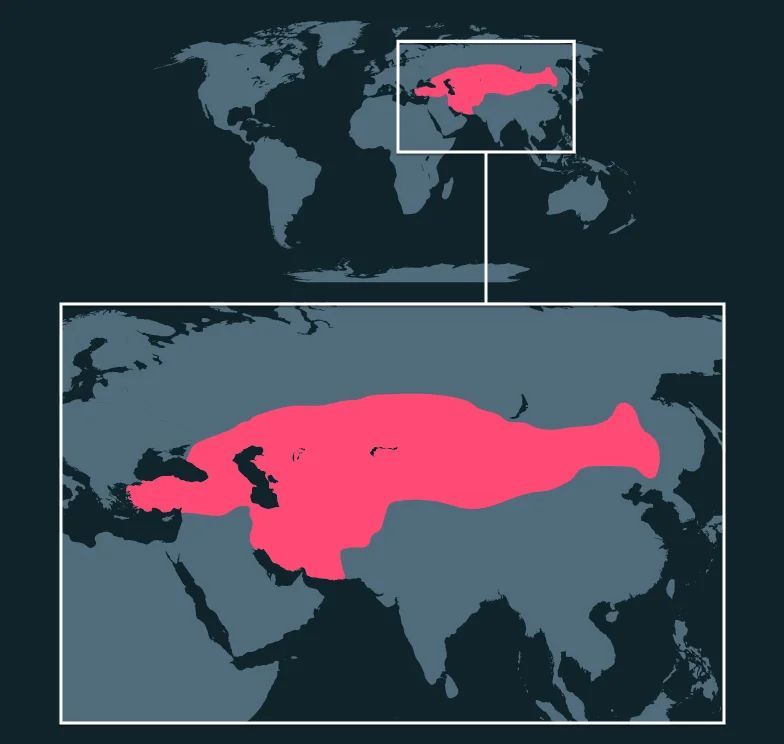
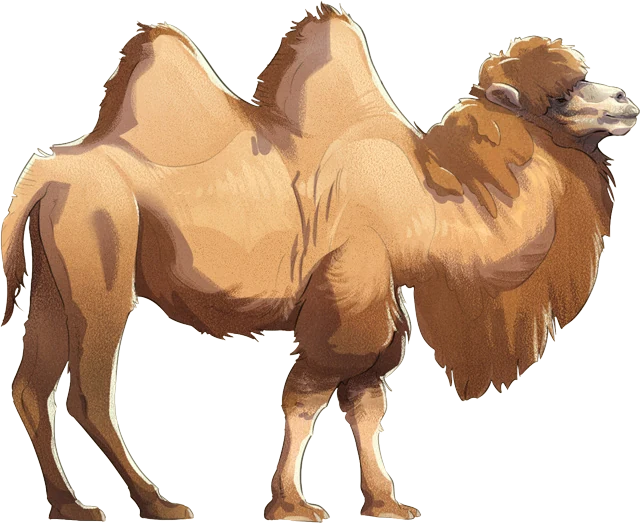
The Bactrian camel (or Camelus bactrianus) is a large ungulate native to Central Asia. It is also known as the Mongolian camel, two-humped camel or double humped camel. It is closely related to the wild Bactrian camel (C. ferus), but both share a common ancestor. The (domesticated) Bactrian camel has two humps and thick sandy-coloured wool coats, although it can also be dark brown or white. Shoulder height ranges from 1.6m to 1.8m tall, and total height including the humps may reach up to 2.3m tall. Bactrian camels weigh between 300kg and 1,000kg. Males may be up to 20% larger than females, and are also heavier, at an average of 600kg compared to 480kg.



Appearance
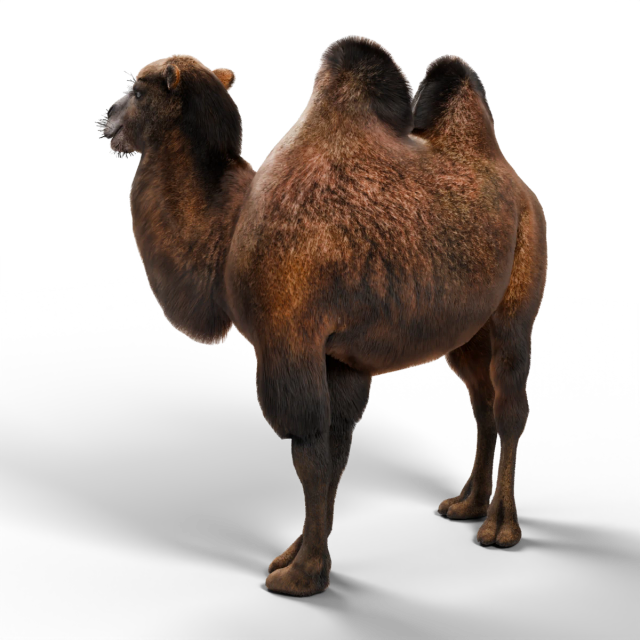
Male
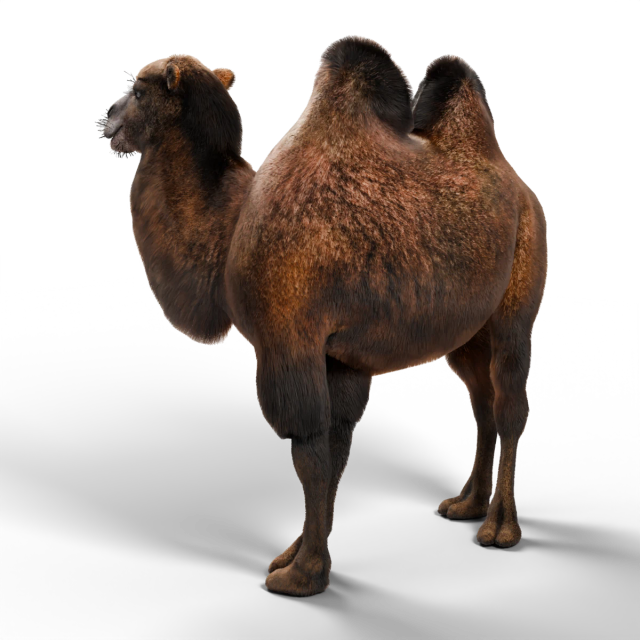
Female
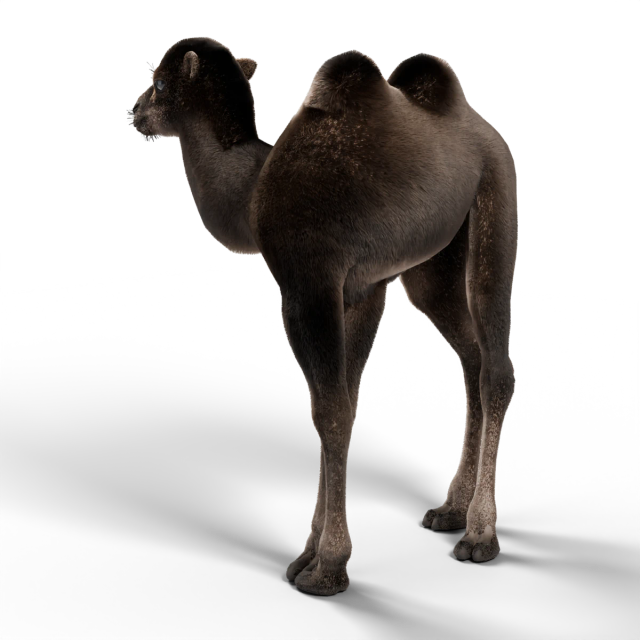
Juvenile
Colourmorphs
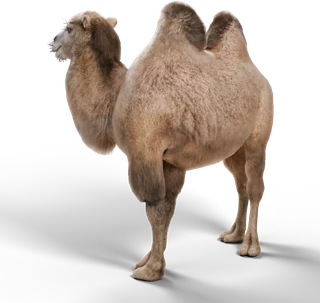 Leucistic male
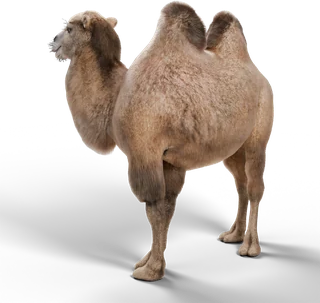 Leucistic female
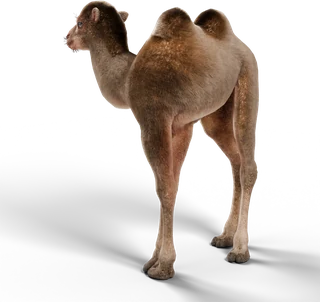 Leucistic juvenile
Size & weight
Size
Shoulder height: 1.7 to 2 m
Weight
Male
725 kg
Female
725 kg
Bars use a log scale against the heaviest animal in the Zoopedia, the Common Hippopotamus.
Juvenile
Juvenile weight
77 kg
Measured as Shoulder height. The person stands 1.75 m tall for scale.
Habitat requirements
Barrier grade
Grade 2 of 5
Minimum height
1.25 m minimum
Climbing & water
Climb proof
Not needed
Water barrier
Not allowed
Barriers at this grade
Barrier types with resistance grade 2.



Habitat needs
Minimum area
Land
650 m² + 100 m² per extra animal
Environment
Temperature
-40 to 40°C
Plant coverage
0-20%
Enclosure
Habitat
Terrain
- Grass 0-80%
- Sand 0-100%
- Soil 0-50%
- Rock 0-20%
- Snow 0-100%
- Waterlogged 0-5%
Diet and enrichment
Diet
- Hay
- Herbivore Pellets






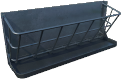
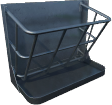
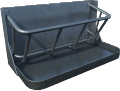





Water sources


Conservation
IUCN Red List
Domesticated
Least concern
Critically endangered
Wild population
2,000,000
2,000,000 (estimated) in the wild. Rank 56 of 58 species with a known count, smallest first.
The Bactrian camel is a domesticated species with a large and stable population, and therefore not threatened. However, the related wild Bactrian camel is Critically Endangered and nearing extinction. In captivity, the domesticated Bactrian camel acts as an ambassador species to raise awareness and funds and presents research opportunity that may benefit the wild species’ survival. Wild Bactrian camels survive only in small fragmented herds across the Gobi desert. They are threatened by habitat loss, poaching, poisoning, disturbance from mining and infrastructure projects, and hybridisation with feral domesticated Bactrian camels. These pressures are worsened by low numbers and the remoteness of its range, which makes monitoring and rapid response difficult. Conservation focuses strongly on habitat protection and anti-poaching patrols. Additionally, a captive-breeding facility is providing population insurance. Some organisations also focus on community outreach to reduce hybridisation risks, and campaign to reduce infrastructure disturbance in key landscapes.
Zoopedia sketchbook
Social & reproduction
Keeper notes
Camels are social animals, living in harem groups in the wild comprised of a dominant male, several female mates and their offspring. The dominant male leads the herd in their migrations. Bachelor males live solitarily or in 'bachelor herds' until they acquire their own harem of females. Bactrian camels are a domesticated species, though some herds are kept semi-wild and display their natural mating behaviours. The mating season in Bactrian camels is in March and April, but because camels are induced ovulators, breeders may also use artificial insemination to choose another time for conception. During the natural mating period, the dominant male in a harem will mate with all adult females and may be violent towards other males. Female Bactrian camels are pregnant for about 13 months and give birth to 1 calf, though twins occur occasionally. Calves nurse from their mothers for up to 1.5 years. The young remain with their mother and herd until between 3 and 5 years old, which is also when sexual maturity is reached, and then leave to establish or join an unrelated herd.
Group and breeding
Group
Group name
Herd
Group size
2-11 (up to 1 male, up to 10 females)
Male bachelor group
1-2
Female bachelor group
1-11
Offspring dispersal
Male offspring
Lifecycle and breeding
Life expectancy
30-45 years
Age of sexual maturity
6 years
Age of sexual sterility
35 years
Gestation or incubation
13 months
Interbirth period
23 months
Litter size
1
Mating system
Polygynous
Mating season
Spring
Reproduction in captivity
Very Easy
Dominance
Dominant male
Research
Research levels
| Level | Unlocks | Research gate |
|---|---|---|
| Level 1 | Thriving Requirement 1: Short Grass terrain; Bactrian Camel Fact Sheet | |
| Level 2 | Thriving Requirement 2: Rubbing Pillar, at least 3; Fertility Level 1 (+15% fertility) | |
| Level 3 | Thriving Requirement 3: Food Grade 2 | |
| Level 4 | Thriving Requirement 4: at least 7 objects or plants with the Shrub tag | |
| Level 5 | Thriving Requirement 5: at least 3 objects or plants with the Thorny tag; Fertility Level 2 (+30% fertility) |
Researched by
Vets
Researched at
Habitat or exhibit and Research Centre
Every level of this species' research, with its unlock conditions.
Animal facts
- Bactrian camels are not born with humps. They start developing once a camel calf begins eating solid food.
- Camels have long eyelashes and nostrils that can fully close to protect themselves in sandstorms.
- The Bactrian camel's two humps are made of fat and are built up during times of plentiful food, then shrink as they sustain the camel through times when food is sparse.
- Bactrian camels are not fussy about what they eat; they can eat thorny, tough and bitter vegetation, carrion and will also eat tents, rope, clothes and other items when very hungry.
- Bactrian camels were domesticated 4000 years ago in the steppes of Central Asia; they are farmed as pack animals and for their milk and wool.
Taxonomy
Class
Order
Family
Genus
Species