Overview
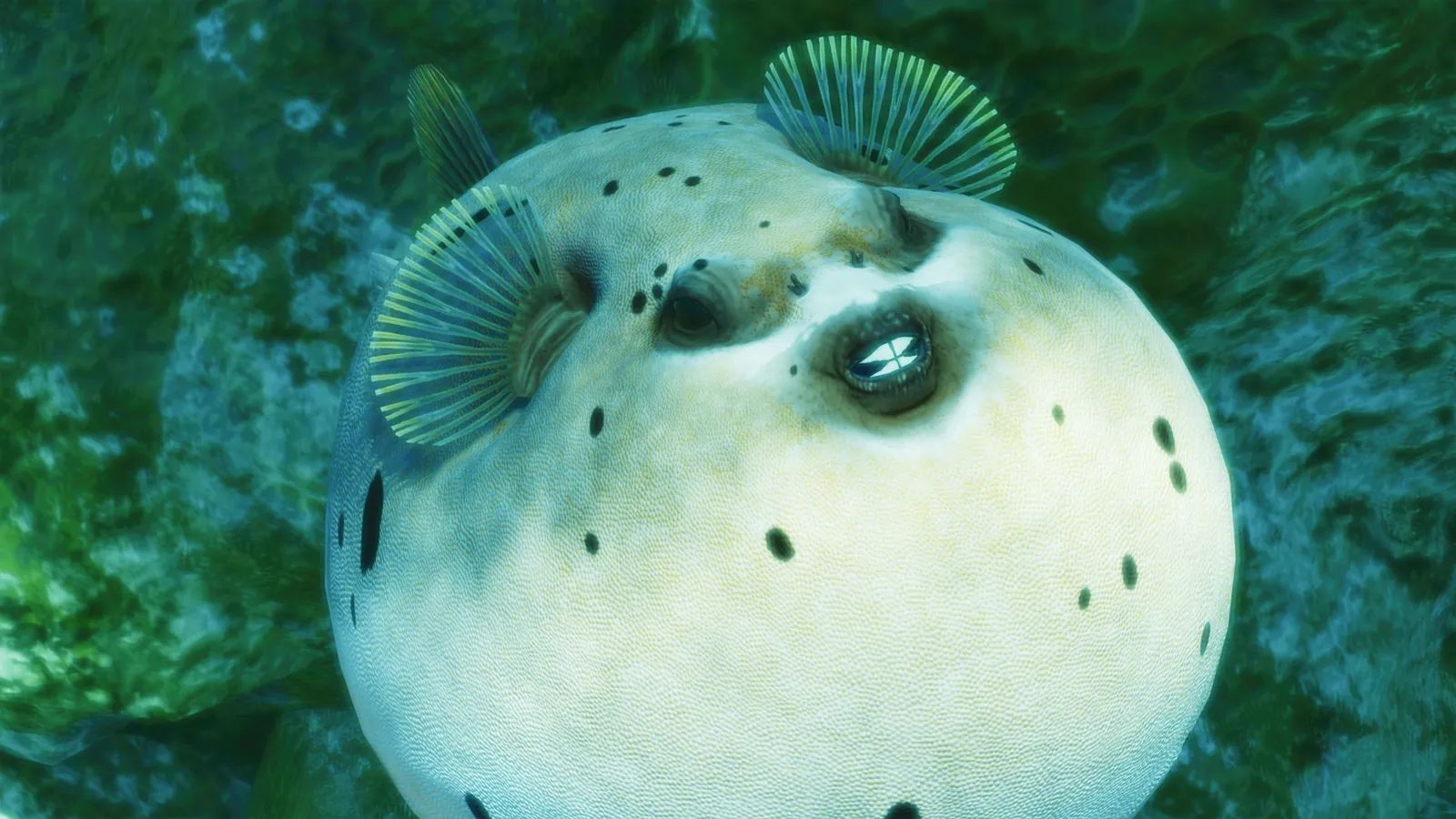
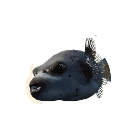
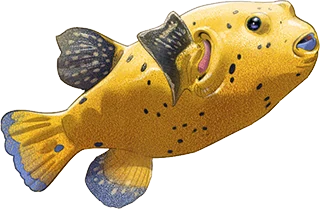
The blackspotted pufferfish (or Arothron nigropunctatus), also known as the dog-faced pufferfish, is a tropical marine fish commonly found throughout the Indo-Pacific region from the Eastern coast of Africa to the islands of the central Pacific Ocean. It typically inhabits coral reefs, reef slopes, and lagoons at a depth of up to 25m. Blackspotted puffers are characterised by their stout, rounded bodies and short, ‘puppy-like’ snouts. Their colouration varies from pale grey to yellow to blue, or a combination thereof, with scattered black spots and sometimes dark patches around the eyes or along the back. Blackspotted puffers grow to an adult length of up to 33cm.
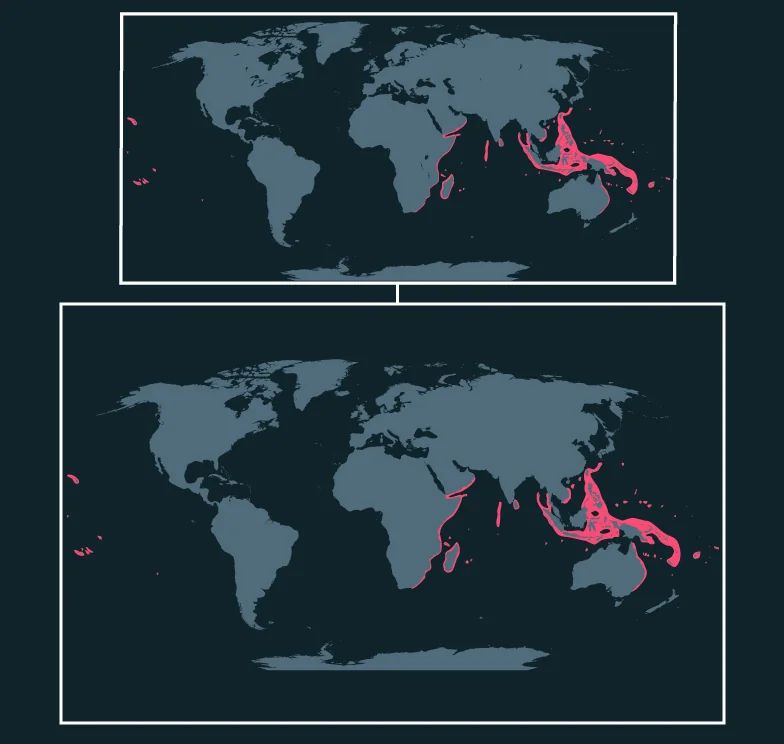
Found in Indo-Pacific reefs and lagoons
Regions
Biomes

Appearance
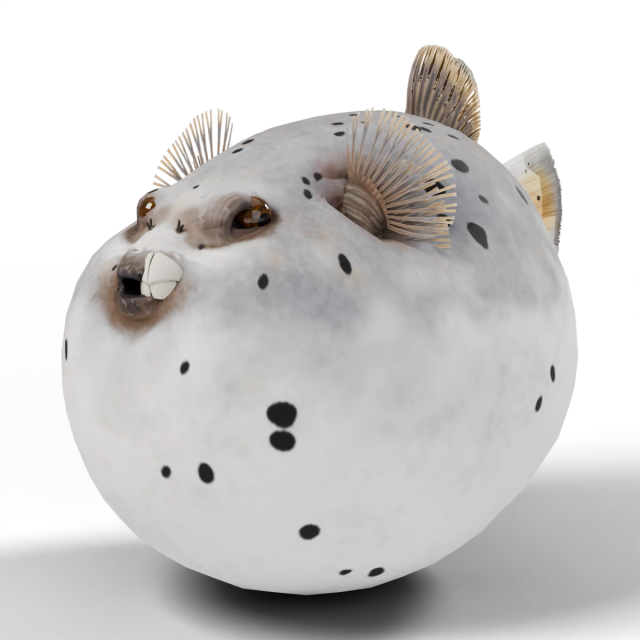
Adult
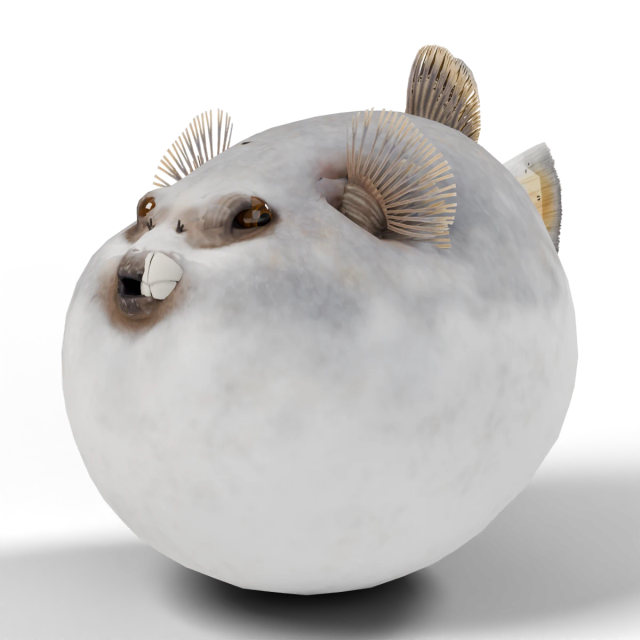
Juvenile
Colourmorphs
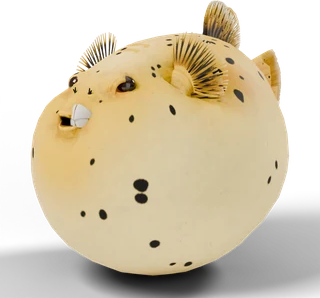 Yellow Morph
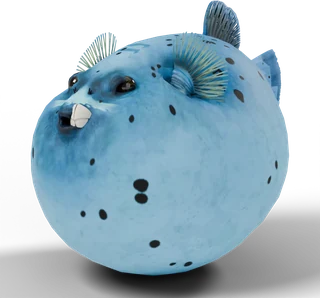 Blue Morph
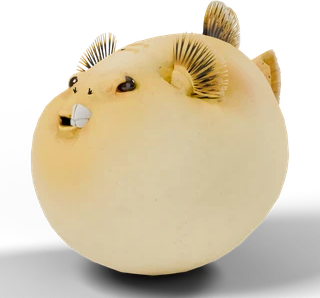 Yellow Morph juvenile
 Blue Morph juvenile
Size & weight
Size
Nose to rump: 33 cm
Measured as Nose to rump. The person stands 1.75 m tall for scale.
Habitat requirements
Barrier grade
Grade 1 of 5
Minimum height
1 m minimum
Climbing & water
Climb proof
Not needed
Water barrier
Not allowed
Barriers at this grade
Barrier types with resistance grade 2 or higher.





Habitat needs
Minimum area
Deep water
16 m² + 40 m² per extra animal
Environment
Temperature
23 to 27°C
Plant coverage
20-80%
Water salinity
Saltwater
Enclosure
Aquarium
Terrain
- Sand 30-80%
- Soil 0-50%
- Rock 20-70%
Diet and enrichment
Diet
- Krill
- Clams and Crustaceans

Enrichment items
Conservation
IUCN Red List
Least concern
Least concern
Critically endangered
Blackspotted pufferfish are of Least Concern, though are facing some general conservation challenges, primarily linked to habitat degradation and the marine aquarium trade. Coral reef degradation caused by climate change, ocean acidification, coastal development, and destructive fishing practices pose a major threat to their natural habitat: blackspotted pufferfish rely on coral reefs for shelter and food availability. Localised overharvesting for aquarium collections and habitat decline could have long-term impacts on population stability if unmanaged. Although direct conservation actions specific to this fish are limited, broader reef conservation efforts play a crucial role in supporting their long-term survival. Established marine protected areas in key parts of the Indo-Pacific have helped safeguard critical reef habitats from destruction. Campaigns for sustainable aquarium trade practices have also promoted captive breeding and responsible sourcing. Continuation of these measures, and monitoring of population trends, are essential to ensure the blackspotted puffers’ abundance in its natural range.
Zoopedia sketchbook
Social & reproduction
Keeper notes
Blackspotted puffers are solitary and territorial, only interacting with conspecifics during the breeding season. Scientific studies on the reproduction and life history of the blackspotted puffer are limited, though it is thought to follow the life cycle patterns typical of many other pufferfish. Blackspotted pufferfish appear to mate year-round. Males and females engage in courtship displays like circling and body movements near the reef substrate. Females lay eggs in the open water or onto the substrate, fertilisation occurs externally as males spawn. Unlike some other species of pufferfish, the blackspotted puffer does not provide parental care. The fertilised eggs hatch into planktonic larvae, which drift and grow in the ocean currents for several weeks before settling on the reef as juveniles. The juveniles grow rapidly, feeding on small invertebrates and algae. A blackspotted puffer typically reaches sexual maturity between 2 and 3 years old, at a size of around 20cm to 25cm.
Group and breeding
Group
Group size
1-4 (up to 1 male, up to 3 females)
Male bachelor group
1
Female bachelor group
1-3
Offspring dispersal
All offspring
Lifecycle and breeding
Life expectancy
8-10 years
Age of sexual maturity
2 years
Age of sexual sterility
Death
Interbirth period
12 months
Litter size
1-5
Mating system
Promiscuous
Mating season
Aseasonal
Reproduction in captivity
Very Difficult
Dominance
Males fight for territories and access to females
Research
Research levels
| Level | Unlocks | Research gate |
|---|---|---|
| Level 1 | Thriving Requirement 1: at least 15 objects or plants with the Rocks tag; Blackspotted Puffer Fact Sheet | |
| Level 2 | Thriving Requirement 2: at least 5 objects or plants with the Ocean Bed tag; Fertility Level 1 (+15% fertility) | |
| Level 3 | Thriving Requirement 3: Food Grade 2; Release groups and release to the wild | |
| Level 4 | Thriving Requirement 4: at least 50% native plants | |
| Level 5 | Thriving Requirement 5: Deep Water Surface Area; Fertility Level 2 (+30% fertility) |
Researched by
Vets
Researched at
Habitat or exhibit and Research Centre
Every level of this species' research, with its unlock conditions.
Release groups
Valid release groups
| Group | Type | Animals |
|---|---|---|
| Solitary Male | Solitary male | 1 male |
| Solitary Female | Solitary female | 1 female |
Release groups, reserve requirements and the roles this species fills.
Animal facts
- The blackspotted puffer contains tetrodotoxin, a powerful neurotoxin that is lethal to predators and humans if ingested.
- Like many pufferfish, the blackspotted puffer can inflate its body by taking in water (or air) to deter predators, as it will look much larger and will be harder to eat.
- The blackspotted puffer has thick, leathery skin instead of scales which help it resist injury and parasites.
- The genus name Arothron comes from the Greek words 'a-', which expresses absence, and ‘rothron’, meaning nostril. These pufferfish have prominent nasal tentacles without openings.
- The blackspotted puffer has a strong, beak-like mouth made of fused teeth, perfect for crunching on hard prey like crustaceans, molluscs, and coral-dwelling invertebrates.
Taxonomy
Class
Order
Family
Genus
Species