Overview
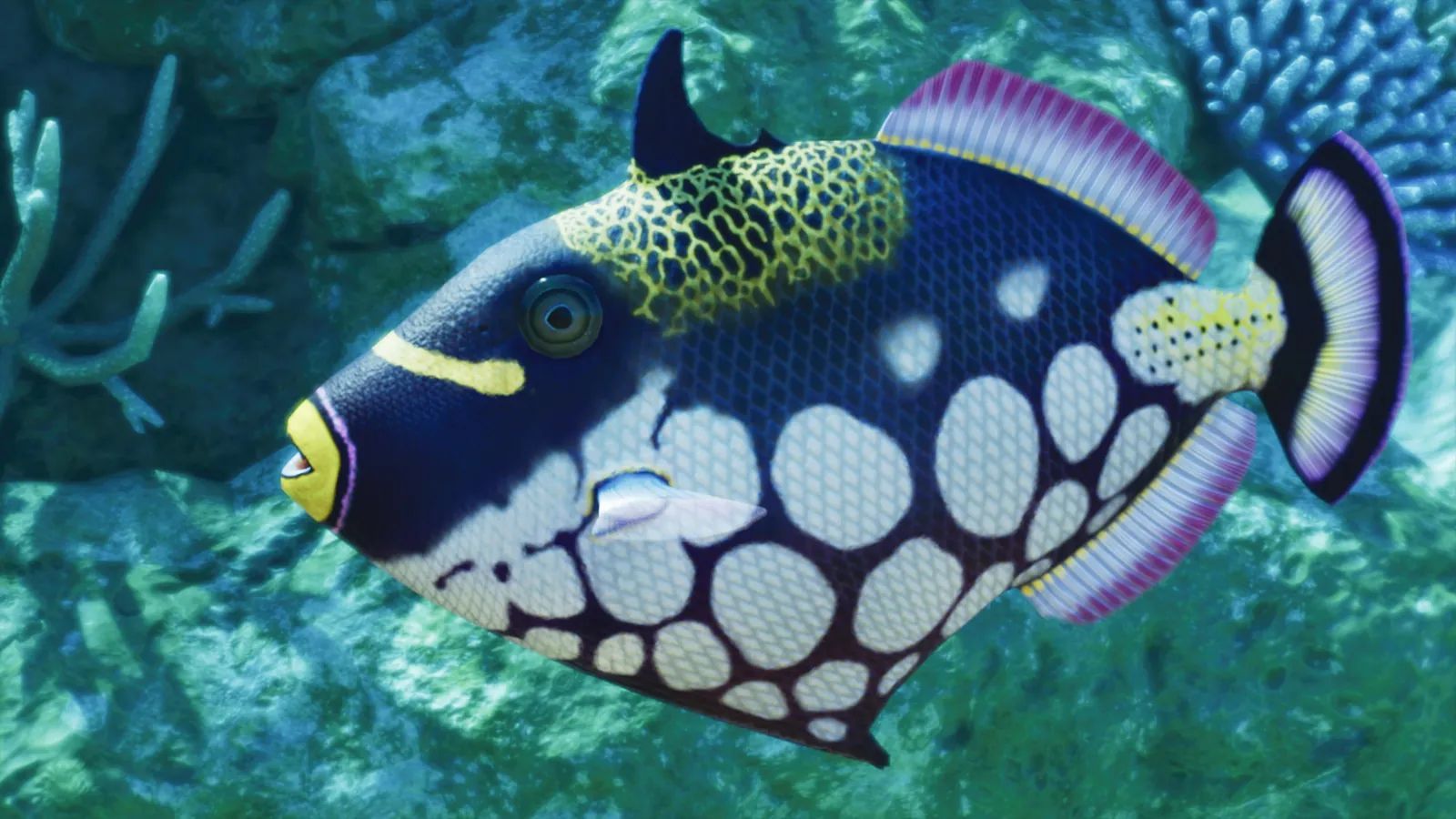
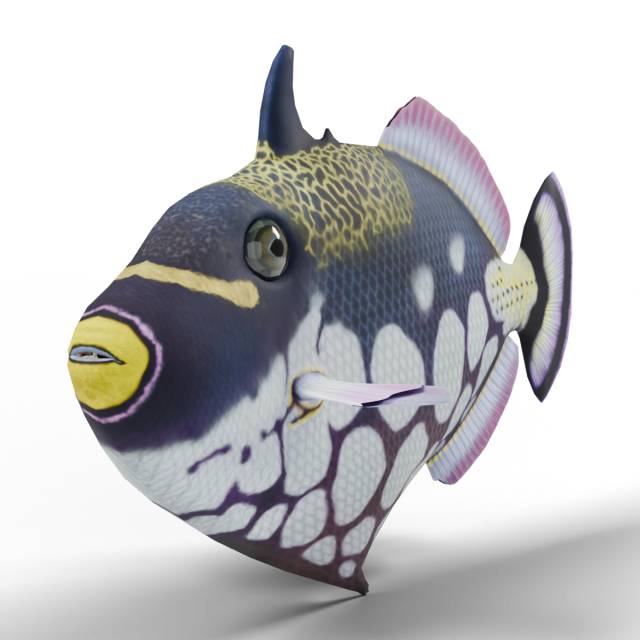
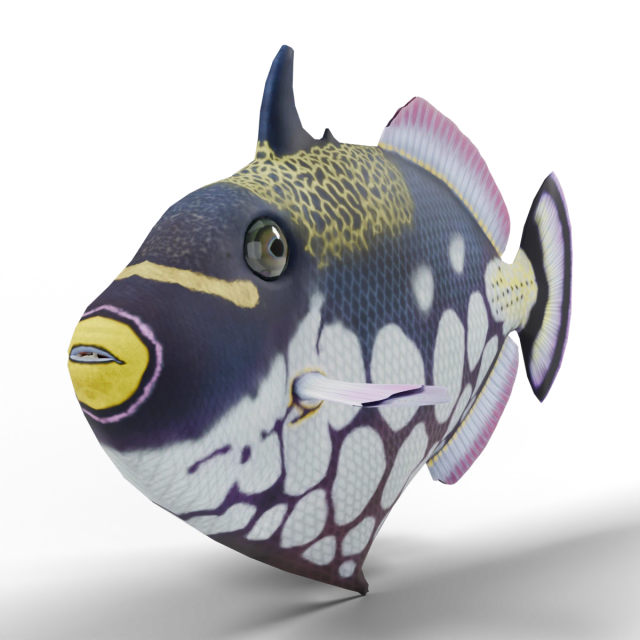
The clown triggerfish (or Balistoides conspicillum) inhabits clear tropical and subtropical coral reefs, lagoons, and reef slopes where it shelters in caves or crevices. It lives throughout the Indo-Pacific, from the eastern coast of Africa and the Red Sea across the Indian Ocean to the western and central Pacific, including Indonesia, Australia, and Micronesia. It has a black to brown body covered in large white spots, a yellow mouth, and a mask-like pattern around the eyes. Clown triggerfish are robust and laterally compressed. Adults typically measure 30cm to 40cm in length and weigh 2kg to 4kg on average. Males are slightly larger and heavier than females, but otherwise the sexes look very similar in colouration and overall shape.
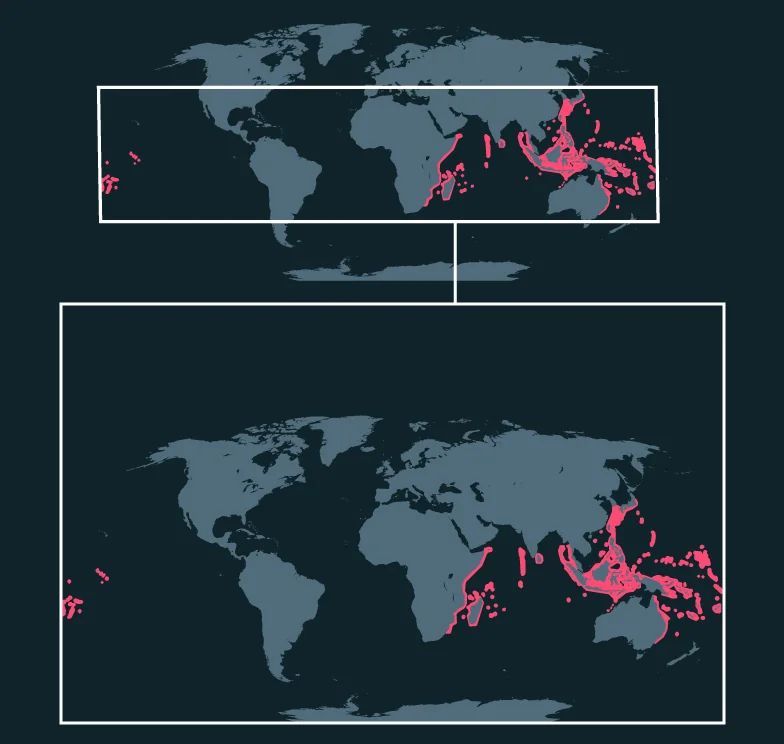
Found in Indo-Pacific reefs and coasts
Regions
Biomes

Appearance
Adult
Juvenile
Size & weight
Size
Length: 40 cm
Weight
Male
2 kg
Female
2 kg
Bars use a log scale against the heaviest animal in the Zoopedia, the Common Hippopotamus.
Juvenile
Juvenile weight
500 g
Measured as Length. The person stands 1.75 m tall for scale.
Habitat requirements
Barrier grade
Grade 1 of 5
Minimum height
1 m minimum
Climbing & water
Climb proof
Not needed
Water barrier
Not allowed
Habitat needs
Minimum area
Deep water
16 m² + 16 m² per extra animal
Environment
Temperature
23 to 30°C
Plant coverage
0-100%
Water salinity
Saltwater
Enclosure
Aquarium
Terrain
- Fine Sand 30-80%
- Soil 0-50%
- Rock 20-70%
- Coarse Sand 0-5%
Diet and enrichment
Diet
- Krill
- Shrimp



Enrichment items

Conservation
IUCN Red List
Least concern
Least concern
Critically endangered
The clown triggerfish is a species of Least Concern. Clown triggerfish rely on healthy reef structures for shelter, nesting sites, and feeding. Survival and reproductive success suffer as coral reefs degrade due to climate change, coral bleaching, ocean acidification, coastal development, and destructive fishing practices. It is collected for the aquarium trade due to its striking appearance, and localised overharvesting can occur. Their aggressive behaviour and slow growth make populations slow to recover when numbers decline. The clown triggerfish benefits from marine protected areas that restrict fishing and habitat destruction in key reef habitats. Broader initiatives improving reef resilience and sustainable coastal development indirectly support the species. Regulations on aquarium fish collection and responsible aquarium sourcing limit pressure on wild populations. Ongoing reef monitoring, public education, and conservation research are essential to ensure that clown triggerfish populations remain stable as reef ecosystems continue to face global environmental stressors.
Zoopedia sketchbook
Social & reproduction
Keeper notes
Clown triggerfish are not social fish. They are primarily solitary and territorial, especially as adults. Individuals usually occupy and defend a specific area of reef that contains shelter and feeding grounds. Breeding occurs year-round, but peaks in warmer seasons. During the breeding season, male clown triggerfish establish and defend territories on sandy areas near reefs, often containing multiple nesting sites. Courtship involves the male displaying to receptive females through body posturing, swimming displays, and leading them toward a prepared nesting area. Spawning occurs when a female deposits thousands of adhesive eggs into a shallow depression in the sand, after which the male fertilises them externally. Once spawning is complete, the female plays the primary role in reproduction by remaining at the nest to guard and aerate the eggs, while the male may continue defending the broader territory from intruders. Parental aggression during this period is intense, and nesting adults are well known for charging divers or large animals that come too close. The eggs hatch after several days, releasing tiny planktonic larvae that drift in the open ocean. This pelagic larval stage can last several weeks, allowing for wide dispersal across the Indo-Pacific. As the juveniles settle onto reefs, they adopt a more benthic lifestyle and gradually develop the bold colouration characteristic of adults. Growth is slow, with individuals taking several years to reach sexual maturity.
Group and breeding
Group
Group size
1-2 (up to 1 male, up to 1 female)
Male bachelor group
1
Female bachelor group
1
Offspring dispersal
All offspring
Lifecycle and breeding
Life expectancy
8-20 years
Age of sexual maturity
4 years
Age of sexual sterility
Death
Interbirth period
3 months
Litter size
1-2
Mating system
Promiscuous
Mating season
Aseasonal
Reproduction in captivity
Very Difficult
Dominance
Males guard and maintain territories
Research
Research levels
| Level | Unlocks | Research gate |
|---|---|---|
| Level 1 | Thriving Requirement 1: at least 5 objects or plants with the Rocks tag; Clown Triggerfish Fact Sheet | |
| Level 2 | Thriving Requirement 2: at least 12 objects or plants with the Coral tag; Fertility Level 1 (+15% fertility) | |
| Level 3 | Thriving Requirement 3: Food Grade 2; Release groups and release to the wild | |
| Level 4 | Thriving Requirement 4: Aquatic Feeder - Flakes, at least 1 | |
| Level 5 | Thriving Requirement 5: Fine Sand terrain; Fertility Level 2 (+30% fertility) |
Researched by
Vets
Researched at
Habitat or exhibit and Research Centre
Every level of this species' research, with its unlock conditions.
Release groups
Valid release groups
| Group | Type | Animals |
|---|---|---|
| Solitary Male | Solitary male | 1 male |
| Solitary Female | Solitary female | 1 female |
| Breeding Partners | Breeding partners | 1 male, 1 female |
Release groups, reserve requirements and the roles this species fills.
Animal facts
- The clown triggerfish has extremely strong teeth adapted to crushing the shells of crustaceans, molluscs and sea urchins.
- The clown triggerfish has a dorsal spine that can lock in an upright position, which it uses to anchor itself into crevices to avoid predators.
- The clown triggerfish is extremely territorial and aggressive and is known to chase divers.
- The clown triggerfish can blow strong water jets which can uncover food by flipping over pebbles and sand.
- The distinctive appearance of the clown triggerfish makes it a sought after aquarium fish, but its aggressive nature makes it difficult to keep.
Taxonomy
Class
Order
Family
Genus
Species