Overview
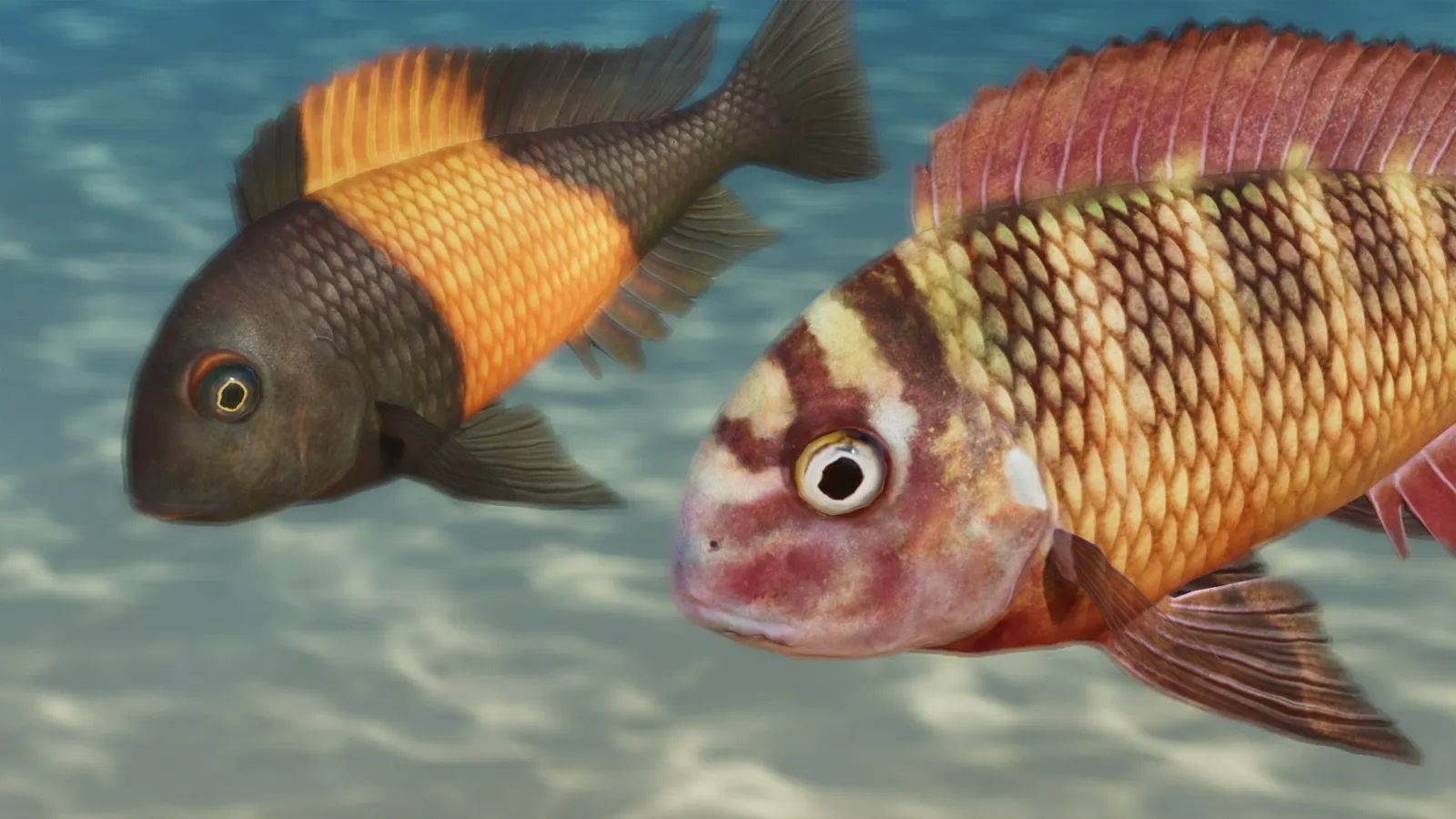
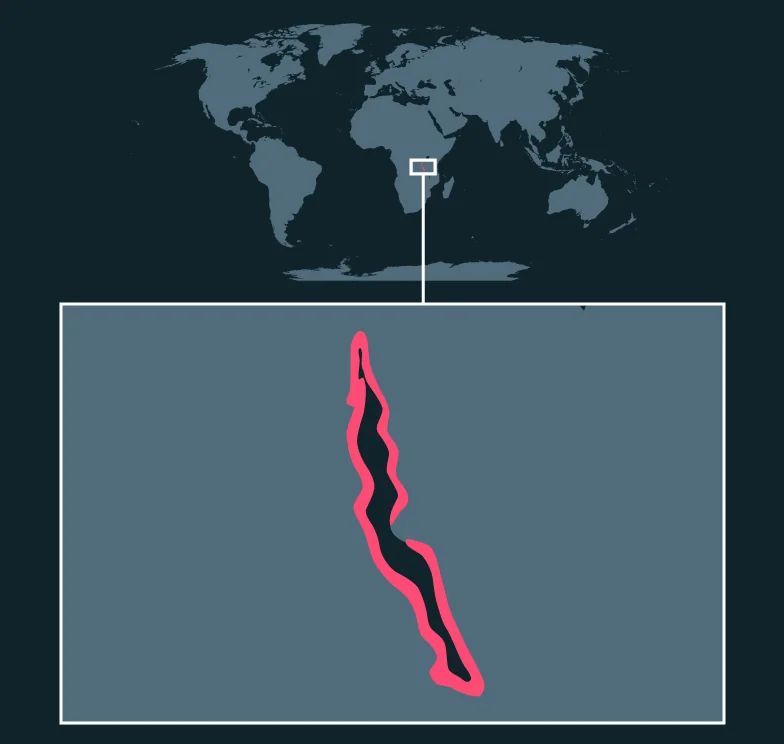
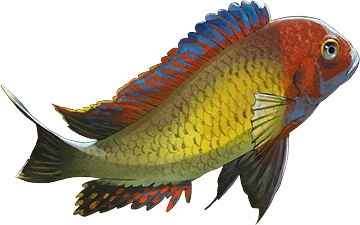
The blunthead cichlid (or Tropheus moori) is a freshwater cichlid endemic to Lake Tanganyika in East Africa, where it inhabits shallow, rocky shorelines with strong water movement and abundant algae growth. Its range is highly localised, with many distinct colour forms restricted to specific stretches of rocky coastline within the lake. They are named for their characteristic rounded, blunt forehead, compact body, and small mouth adapted for grazing algae from rocks. They are best known for their striking colouration, which varies by population and may include deep blues, blacks, yellows, reds, or bold vertical bands, often with high contrast and intensity. Blunthead cichlids are relatively small but robust fish, typically reaching 10cm to 14cm long and weighing 40g to 80g as adults.
Found in Africa
Regions
Biomes

Appearance
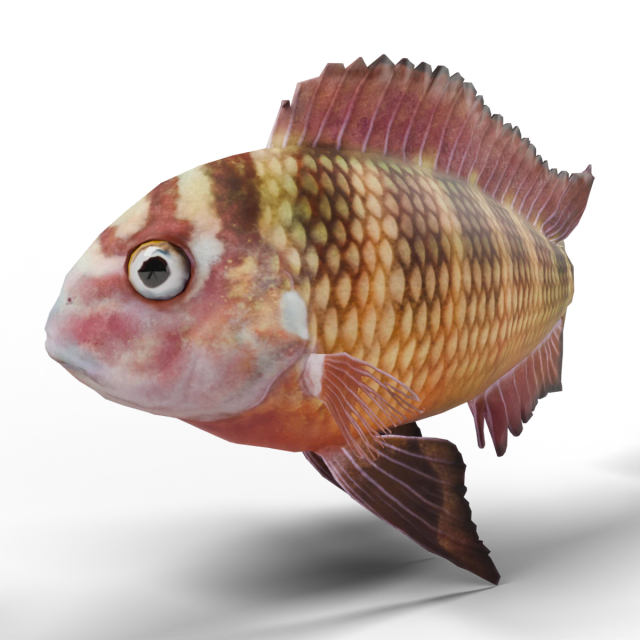
Adult
Colourmorphs
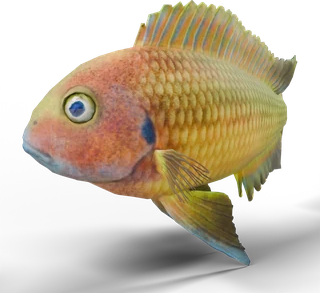 Nkonde 'Yellow Rainbow'
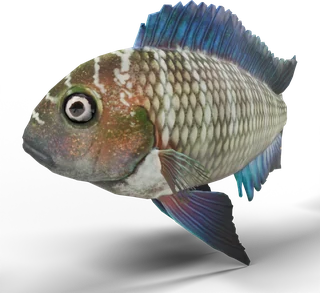 Chaitika 'Blue Rainbow'
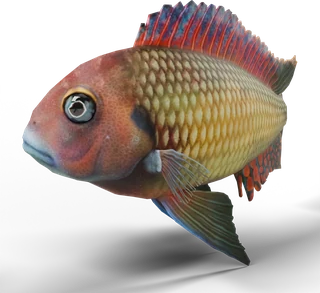 Kasanga 'Red Rainbow'
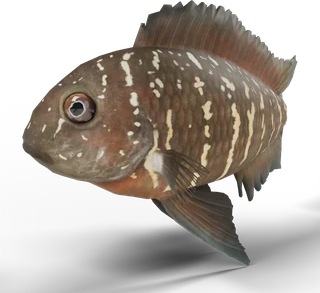 Murago
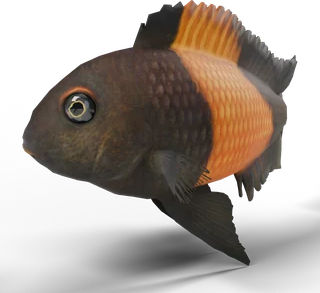 Bemba
BembaHabitat needs
Minimum area
Deep water
50 m² + 15 m² per extra animal
Environment
Temperature
24 to 27°C
Plant coverage
20-60%
Water salinity
Freshwater
Enclosure
Aquarium
Exhibit types
- Small Box Exhibit
- Small Cylinder Exhibit
- Large Box Exhibit
- Large Angled Box Exhibit
- Large Cylinder Exhibit
Diet and enrichment
Diet
- Copepods
- Algae Pellets
Conservation
IUCN Red List
Least concern
Least concern
Critically endangered
The blunthead cichlid is a species with Near Threatened status. Lake Tanganyika is renowned for extraordinary diversity of cichlid fishes but is increasingly under pressure from human impacts. The broader ecosystem is threatened by overfishing, unsustainable fishing practices, habitat degradation from agricultural runoff and sedimentation, as well as the effects of climate change on water temperature and clarity. These pressures reduce algae growth on the rocky substrates, disrupt spawning territories, and cause population declines in colour morphs that occupy very restricted ranges. Lake Tanganyika is working at ecosystem-scale to establish fisheries best practices, patrol breeding habitats, and promote sustainable livelihoods that reduce pressure on wild fish stocks. Freshwater protected areas control or prohibit fishing, allowing endemic cichlids to breed and maintain genetic diversity. Community-based breeding facilities and trade initiatives aim to supply the aquarium market without depleting wild populations, while research programmes monitor the status of endemic species and inform sustainable extraction limits.
Zoopedia sketchbook
Social & reproduction
Keeper notes
Blunthead cichlids live in large social groups along rocky shorelines, where individuals maintain small feeding territories while remaining in close proximity to each other. Social interaction is constant and includes visual displays, chasing, and dominance posturing, which helps establish and maintain hierarchies. Breeding for the blunthead cichlid occurs year-round within its complex social and territorial system along the rocky shores of Lake Tanganyika. Males establish and defend small feeding territories on algae-covered rocks, which they use as display sites to attract females with intense visual signalling, including body posturing, colour intensification, and circular swimming displays. When a receptive female enters a male’s territory, spawning occurs on the rock surface: the female lays a small number of eggs, which she immediately collects into her mouth. Fertilisation then takes place using the ‘egg-spot’ mechanism, where the female attempts to pick up spots on the male’s anal fin, allowing the male to release sperm into her mouth. Maternal mouthbrooding provides high protection but limits the number of offspring. Females typically brood 5 to 20 eggs in their mouth for about 4 to 5 weeks, during which time they do not feed and may retreat from social interactions. Once released, the fry are relatively large and well developed, allowing them to begin grazing on algae soon after independence. Juveniles grow slowly and gradually integrate into the social group, occupying lower-ranking positions until maturity. Sexual maturity is usually reached at around 1 year old, and with their slow growth and low reproductive output, blunthead cichlids rely on high offspring survival rather than high egg numbers, making stable social structure and habitat conditions essential to their life cycle.
Group and breeding
Group
Exhibit colony size
Up to 15
Shoal size
15-40
Lifecycle and breeding
Life expectancy
12 years
Age of sexual maturity
1 year
Mating season
Aseasonal
Dominance
Size determines dominance
Research
Research levels
| Level | Unlocks | Research gate |
|---|---|---|
| Level 1 | Fertility Level 1 (+15% fertility) | |
| Level 2 | Blunthead Cichlid Fact Sheet | |
| Level 3 | Fertility Level 2 (+30% fertility) | Before this level: an Observation Network (Observation Platform) in Great Rift Valley Reserve and this species released in Great Rift Valley Reserve |
Researched by
Vets
Researched at
Habitat or exhibit and Research Centre
Wildlife Reserve
Great Rift Valley Reserve
Every level of this species' research, with its unlock conditions.
Release groups
Valid release groups
| Group | Type | Animals |
|---|---|---|
| Mixed Shoal | Mixed group | 15 to 30 fish |
Release requirements
| Requirement type | Requirement |
|---|---|
| Ecosystems Required | Swamp |
Ecosystems

Release groups, reserve requirements and the roles this species fills.
Animal facts
- Blunthead cichlids are found only in Lake Tanganyika, making them one of the many highly specialised, lake-endemic African cichlids.
- The blunthead cichlid’s diet consists almost entirely of a complex mix of algae and microorganisms scraped from rocks, making them highly specialised herbivores.
- Blunthead cichlids have dozens of striking colour morphs exist (reds, yellows, blacks, banded forms), yet no subspecies are recognised—all belong to the same species.
- Many colour morphs of blunthead cichlids are restricted to very short stretches of shoreline, sometimes just a few kilometres long.
- Scientists study Tropheus to understand rapid evolution, sexual selection, and speciation in African cichlids.
Taxonomy
Class
Order
Family
Genus
Species