Overview
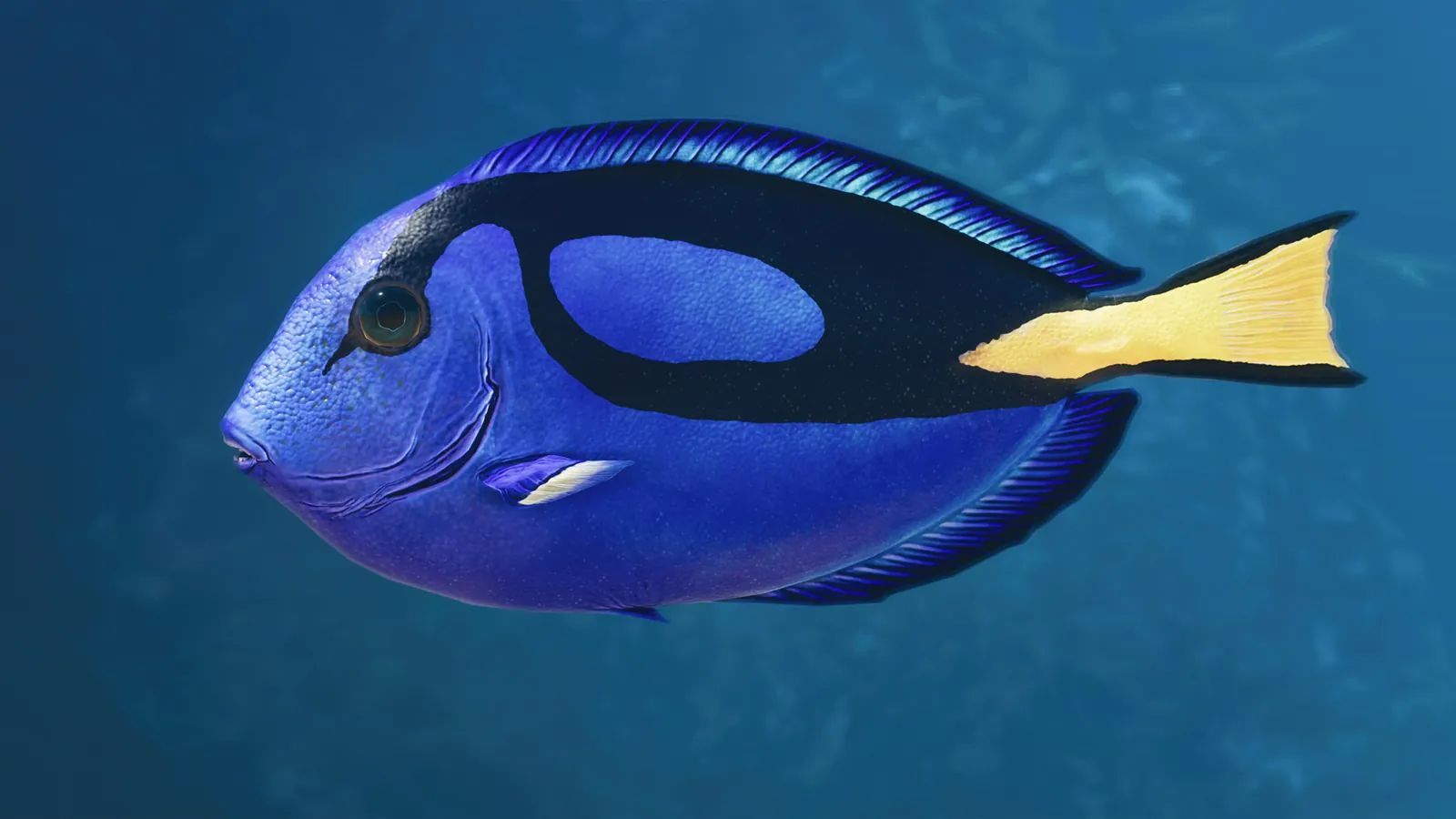
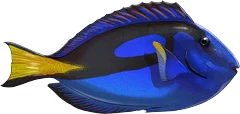
The palette surgeonfish (or Paracanthurus hepatus), also commonly known as the blue tang or regal tang, is a fish found throughout the warm tropical waters of the Indo-Pacific region, ranging from East Africa and Japan to Australia and the Great Barrier Reef. It inhabits coral reefs at depths of around 2m to 40m. It is recognisable by its royal blue body, black markings and yellow tail. Adults typically reach about 25cm to 31cm in length and weigh up to 0.6kg.
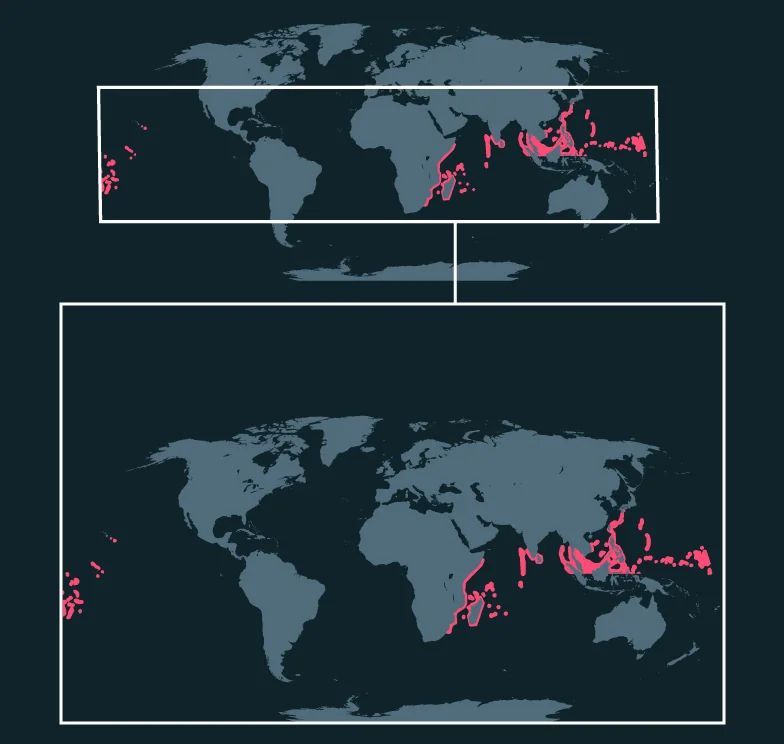
Found in Indo-Pacific reefs and coasts
Regions
Biomes

Appearance
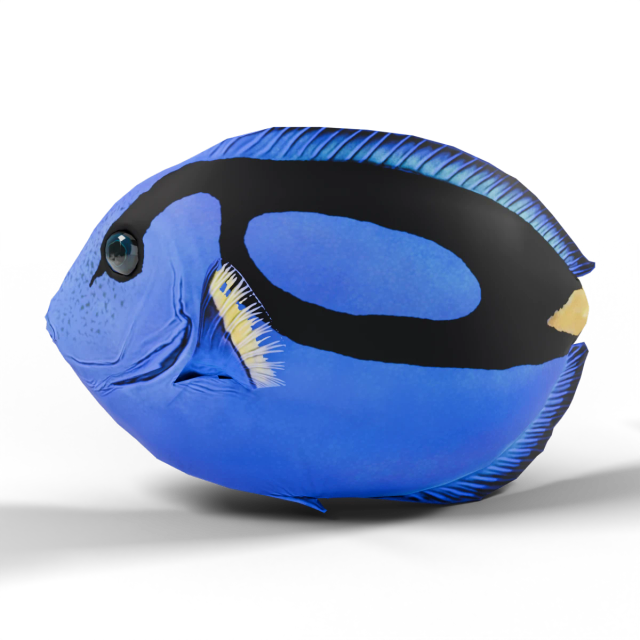
Adult
Habitat needs
Minimum area
Deep water
50 m² + 15 m² per extra animal
Environment
Temperature
23 to 28°C
Plant coverage
20-60%
Water salinity
Saltwater
Enclosure
Aquarium
Exhibit types
- Small Box Exhibit
- Small Cylinder Exhibit
- Large Box Exhibit
- Large Angled Box Exhibit
- Large Cylinder Exhibit
Diet and enrichment
Diet
- Copepods
- Algae Pellets
Conservation
IUCN Red List
Least concern
Least concern
Critically endangered
The palette surgeonfish is a species of Least Concern, but is vulnerable to habitat degradation combined with high juvenile mortality. They are highly sought-after in the marine aquarium trade for their striking colours and fame but are not easily bred in captivity. Most specimens are collected directly from the wild, potentially damaging both fish and coral habitats. Climate change, ocean acidification, and coral bleaching threaten the reef ecosystems they depend on for shelter and food. Scientists, conservation groups, and aquaculture institutions seek to reduce reliance on wild-caught fish, with the first captive breeding success in 2016. Marine protected areas, reef restoration projects, and stricter regulation of the aquarium trade play key roles in mitigating pressures. Public awareness campaigns encourage buying responsibly sourced fish, while international conservation efforts protect coral reef ecosystems more broadly. These combined strategies safeguard the palette surgeonfish and help preserve the tropical reef communities where they serve an important ecological role.
Zoopedia sketchbook
Social & reproduction
Keeper notes
Palette surgeonfish may live solitarily, in pairs, in small groups or larger loose aggregations depending on the reef environment and food availability. The palette surgeonfish reproduces through broadcast spawning year-round, with peaks between April and September. Males court females by circling, darting, and nudging them before pairs or small groups rush upward in the water column to simultaneously release eggs and sperm. Spawning events often occur at dusk or follow lunar cycles. A single female can release up to 40,000 buoyant eggs in one event. These eggs, suspended by oil droplets, are fertilised externally and hatch within 24 to 28 hours. The resulting larvae are planktonic, drifting with ocean currents while feeding on microscopic plankton. As they develop, the larvae begin to show yellow colouration and eventually settle on coral reefs, where the juveniles take shelter among branching corals. As they mature, palette surgeonfish join loose schools on reefs. They become reproductively mature around 9 to 12 months old. Juveniles are mostly bright yellow, gradually transitioning to the iconic blue, black, and yellow pattern of adults.
Group and breeding
Group
Exhibit colony size
Up to 8
Shoal size
16-30
Lifecycle and breeding
Life expectancy
20 years
Age of sexual maturity
1 year
Mating season
Spring, Summer, Autumn
Research
Research levels
| Level | Unlocks | Research gate |
|---|---|---|
| Level 1 | Fertility Level 1 (+15% fertility) | |
| Level 2 | Palette Surgeonfish Fact Sheet | |
| Level 3 | Release groups and release to the wild | |
| Level 4 | Fertility Level 2 (+30% fertility) |
Researched by
Vets
Researched at
Habitat or exhibit and Research Centre
Every level of this species' research, with its unlock conditions.
Release groups
Valid release groups
| Group | Type | Animals |
|---|---|---|
| Mixed Shoal | Mixed group | 20 to 35 fish |
Release groups, reserve requirements and the roles this species fills.
Animal facts
- The palette surgeonfish, like all surgeonfish, has sharp scalpel-like spines near its tail that are used for defense.
- The palette surgeonfish is the only species within the genus Paracanthurus.
- Juvenile palette surgeonfish are bright yellow.
- Palette surgeonfish are omnivorous grazers, feeding on the zooplankton and algae in reef systems.
- Palette surgeonfish can live for up to 30 years in the wild, making them a very long-lived reef fish species.
Taxonomy
Class
Order
Family
Genus
Species



