Overview
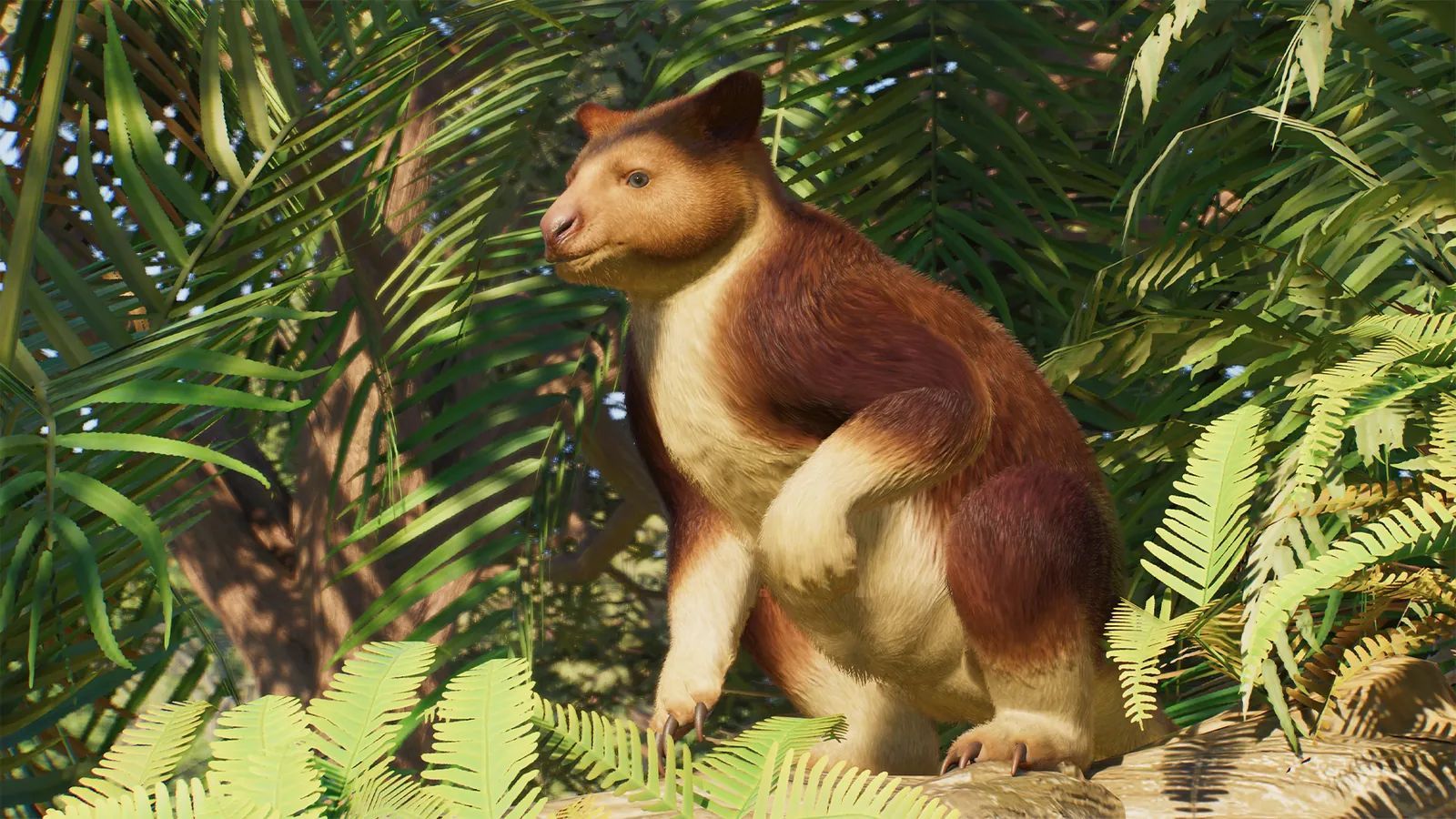
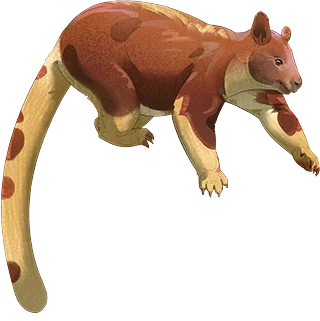
Goodfellow’s tree-kangaroo (or Dendrolagus goodfellowi) is an arboreal marsupial native to the montane and mid-montane rainforests of Papua New Guinea and Indonesia. It occupies dense forests where it moves adeptly through the canopy, although it occasionally descends to the ground. Goodfellow’s tree-kangaroo has a reddish-brown coat with golden-yellow rings on its tail, pale ventral fur, and yellow stripes on its back and cheeks. It has powerful forelimbs, long curved claws, and a strong tail used for balance. The long tail measures 70cm to 80cm alone. Adult males typically grow to 60cm to 77cm in body length (excluding the tail) and weigh between 8kg to 9.5kg, while females are slightly smaller at 55cm to 70cm in body length and 7kg to 8.5kg in weight.
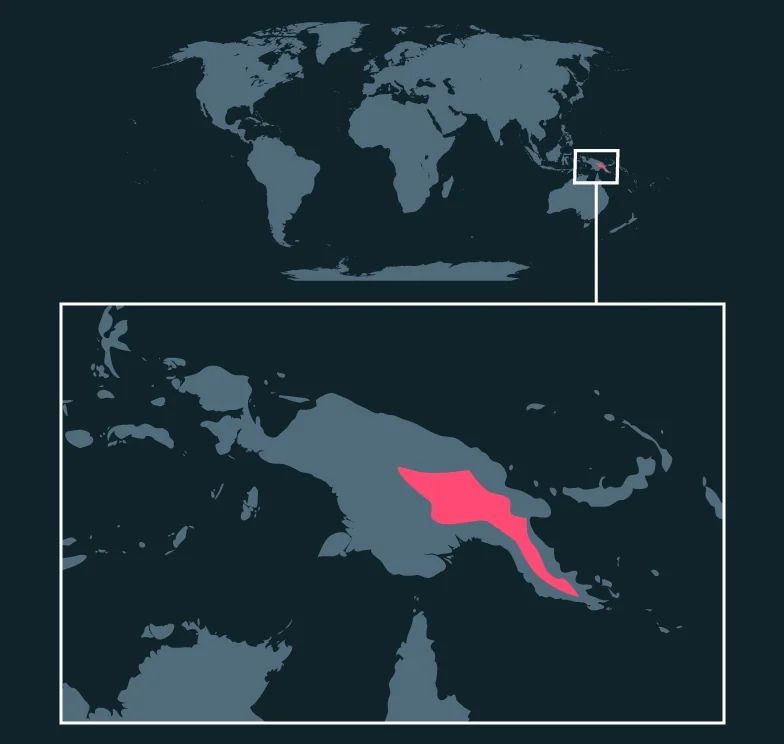
Found in Southeast Asia
Regions
Biomes

Appearance
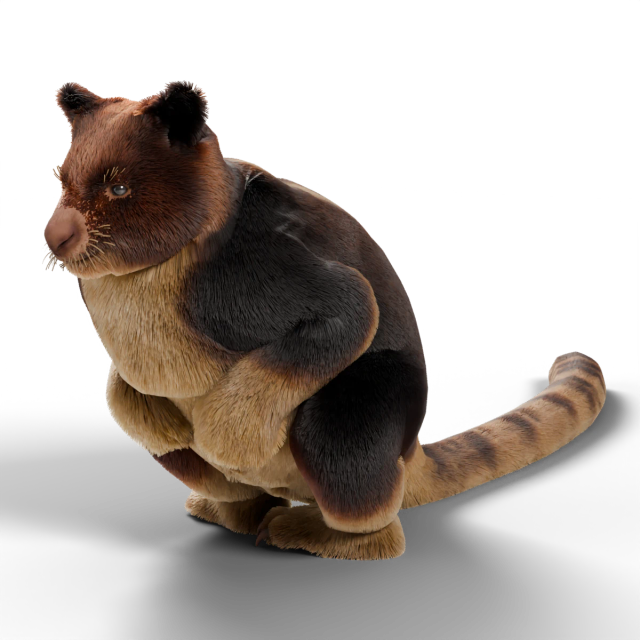
Male
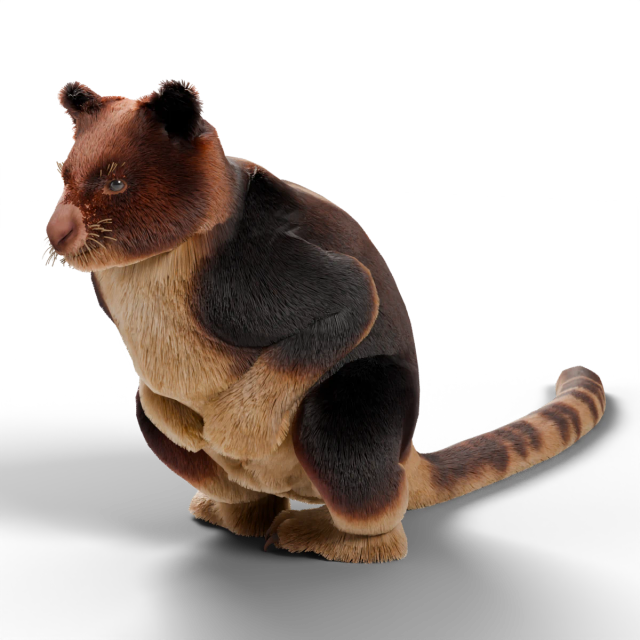
Female
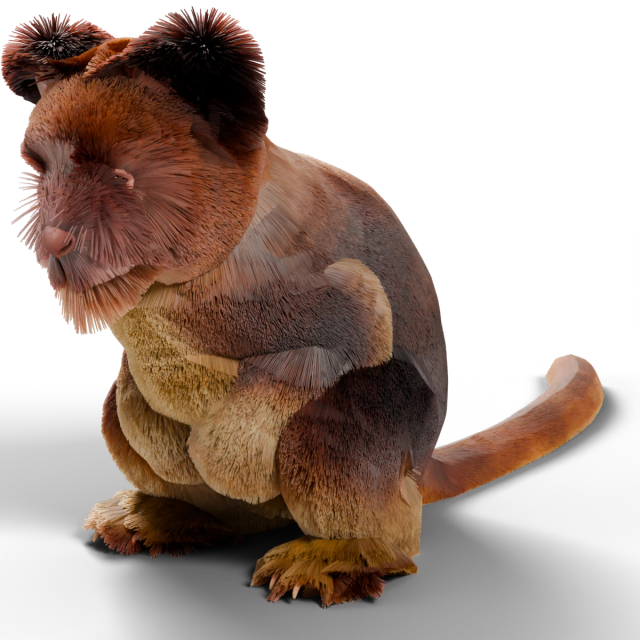
Juvenile
Size & weight
Size
Nose to rump: 60 to 65 cm
Juvenile
Juvenile weight
2.19 kg
Measured as Nose to rump. The person stands 1.75 m tall for scale.
Habitat requirements
Barrier grade
Grade 1 of 5
Minimum height
1 m minimum
Climbing & water
Climb proof
Needed
Water barrier
Not allowed


Habitat needs
Minimum area
Land
200 m² + 50 m² per extra animal
Climbing
20 m² + 10 m² per extra animal
Shelter
7.5 m² per animal
Environment
Temperature
18 to 33°C
Plant coverage
40-100%
Enclosure
Climb-Proof Habitat
Dislikes
Rain and snow
Terrain
- Soil 50-100%
- Rock 0-20%
- Sand 0-50%
- Grass 0-30%
Diet and enrichment
Diet
- Leafy Greens and Vegetables
- Nutritionally Complete Biscuits






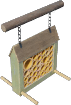
Enrichment items



Water sources

Conservation
IUCN Red List
Endangered
Least concern
Critically endangered
Goodfellow’s tree-kangaroos are an Endangered species. They are threatened by hunting, habitat loss and the fragmentation of forest ecosystems. Expansion of agricultural, mining, and logging operations has caused widespread deforestation in montane and mid-montane rainforests, reducing the availability of crucial continuous canopy habitat. In addition, hunting for meat and traditional medicine pose a major threat, especially as humans expand into previously undisturbed forest regions. Their slow reproduction rate, solitary habits, and limited range make population recovery particularly challenging. Conservation efforts focus on community-led habitat protection, education, and research. Such programmes have worked with over 50 indigenous communities in Papua New Guinea to establish the Yopno-Uruwa-Som Conservation Area with over 760km² protected habitat. It empowers local people to protect forests, manage land sustainably, and monitor wildlife populations. Global captive breeding programmes help maintain a genetically healthy insurance population and raise awareness. Combined in-situ and ex-situ strategies provide a chance at long-term survival of the Goodfellow’s tree-kangaroo, though continued funding and protection remain essential.
Zoopedia sketchbook
Social & reproduction
Keeper notes
Goodfellow’s tree-kangaroos are largely solitary, except for a mother and her joey, and when brief pair bonds form between males and females during breeding. Little is known about the specific mating and reproductive habits of the Goodfellow’s tree-kangaroo. This information is based on captive observations and other species of tree-kangaroo. Tree-kangaroos exhibit a generally solitary lifestyle, with interactions between males and females primarily occurring during mating. Goodfellow’s tree-kangaroos can mate year-round, with the 40 to 60 day oestrus cycles. The species is believed to be polygynous, where dominant males mate with multiple females within their territory. Males track and follow females quietly, engaging in brief chases or displays to demonstrate fitness, but aggressive encounters are rare. Courtship involves subtle behaviours such as scent marking, vocalisations, and gentle grooming. After mating, the animals part ways again. After a gestation period of around 44 to 48 days, a single underdeveloped joey, measuring roughly 2cm, is born. It immediately crawls into the mother’s pouch, where it continues to grow and develop for about 10 to 12 months. During this time, the joey gradually emerges from the pouch and begins to explore its environment, though it remains dependent on maternal care for up to two years. Sexual maturity is reached between 2.5 to 3.5 years of age. As the joey approaches this age, it will leave its mother to establish its own territory.
Group and breeding
Group
Group size
1-2 (up to 1 male, up to 1 female)
Male bachelor group
1
Female bachelor group
1
Offspring dispersal
All offspring
Lifecycle and breeding
Life expectancy
10-20 years
Age of sexual maturity
3 years
Age of sexual sterility
Death
Gestation or incubation
9.8 months
Interbirth period
14.2 months
Litter size
1
Mating system
Polygynous
Mating season
Aseasonal
Reproduction in captivity
Easy
Research
Research levels
| Level | Unlocks | Research gate |
|---|---|---|
| Level 1 | Thriving Requirement 1: at least 2 objects or plants with the Trees tag; Goodfellow's Tree-Kangaroo Fact Sheet | |
| Level 2 | Thriving Requirement 2: Heavy Soil terrain; Fertility Level 1 (+15% fertility) | |
| Level 3 | Thriving Requirement 3: Food Grade 2; Release groups and release to the wild | |
| Level 4 | Thriving Requirement 4: at least 50% native plants | |
| Level 5 | Thriving Requirement 5: Suspended Puzzle Feeder, at least 2; Fertility Level 2 (+30% fertility) |
Researched by
Vets
Researched at
Habitat or exhibit and Research Centre
Every level of this species' research, with its unlock conditions.
Release groups
Valid release groups
| Group | Type | Animals |
|---|---|---|
| Maternal Family Group | Female group | 1 female |
| Solitary Male | Solitary male | 1 male |
| Breeding Partners | Breeding partners | 1 male, 1 female |
Release groups, reserve requirements and the roles this species fills.
Animal facts
- Their long, strong tail helps the Goodfellow’s tree-kangaroo to balance and steer the direction of their jumps.
- Goodfellow’s tree-kangaroos are adapted for arboreal life, with curved claws and strong forelimbs, and are rarely seen on the ground.
- Goodfellow’s tree-kangaroos can jump from up to 10m high to the ground without injuring themselves.
- As few as 55 Goodfellow’s tree-kangaroos are estimated to survive in the population on Papua New Guinea.
- Goodfellow’s tree-kangaroos click their tongues to communicate with each other.
Taxonomy
Class
Order
Family
Genus
Species