Overview
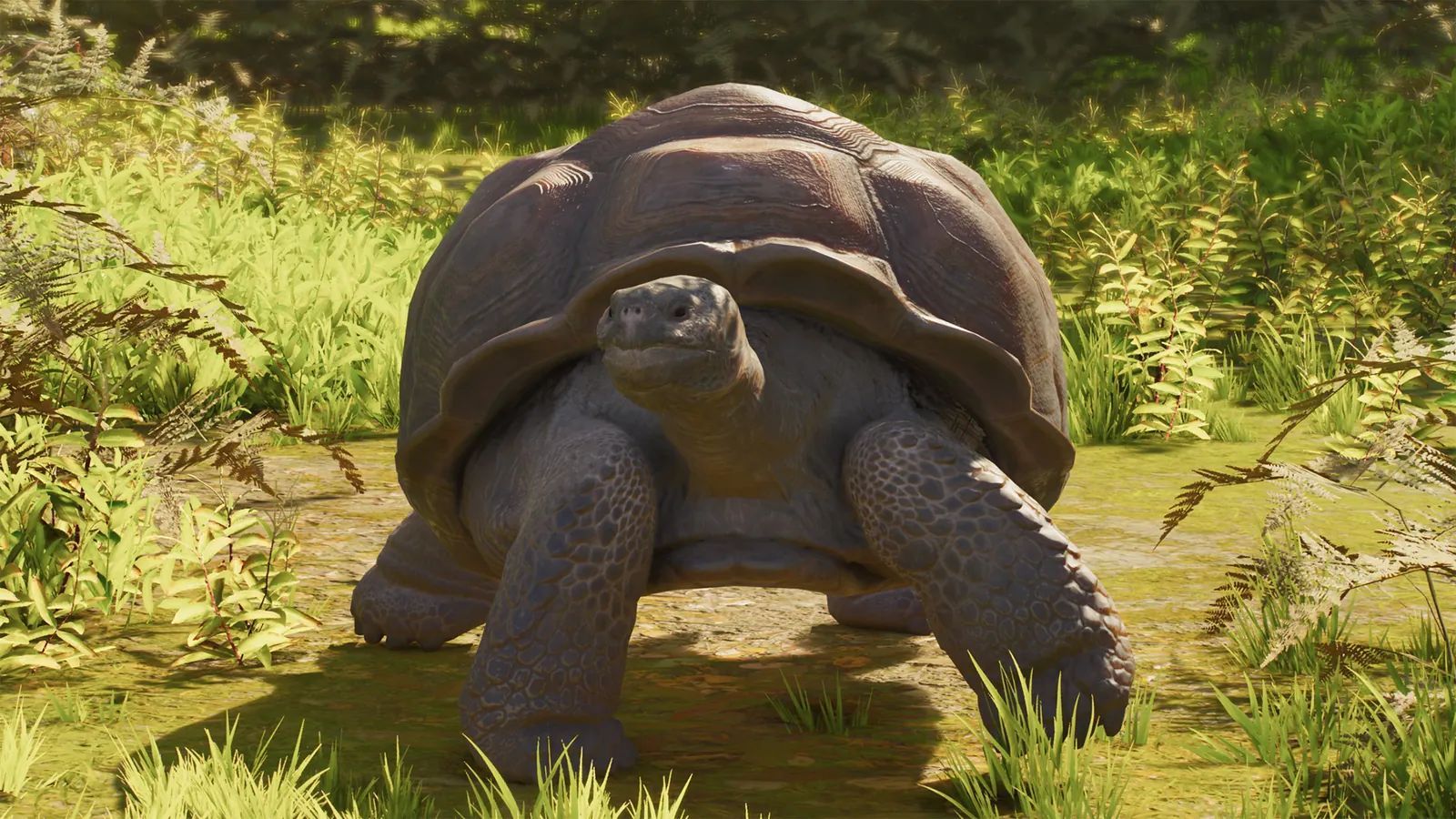
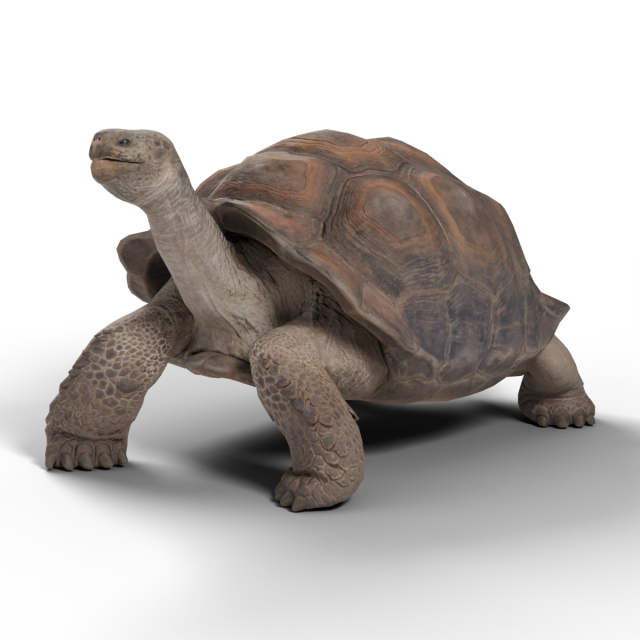
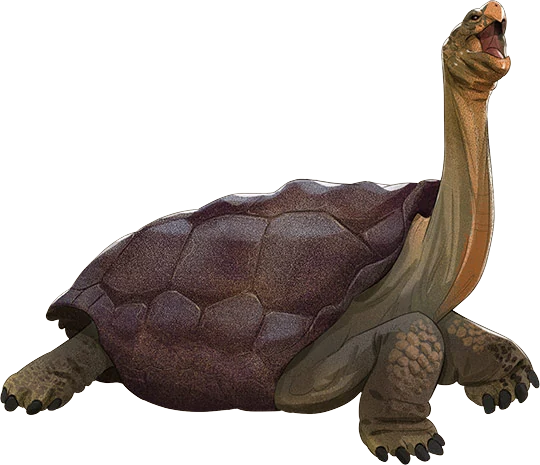
The Galápagos giant tortoise (or Chelonoidis nigra) is a species of reptile endemic to the Galápagos Islands and does not appear anywhere else in the world. They come in two types – saddleback shelled and dome shelled – and both variants have a dull grey-brown shell and scaly, grey coloured skin. Saddleback shell tortoises have long necks and live in dry lowland areas, while dome shell tortoises have short necks and live in humid highland areas. Both can grow to extremely large sizes, with the average male weighing between 272kg and 317kg, and the average female weighing between 136kg and 181kg.
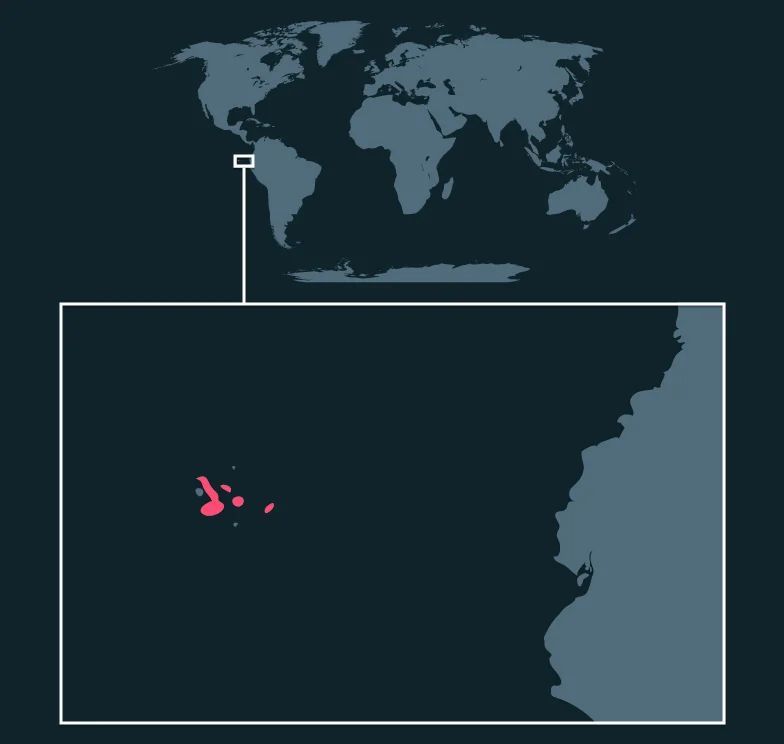
Found in South America
Regions
Biomes

Appearance
Male
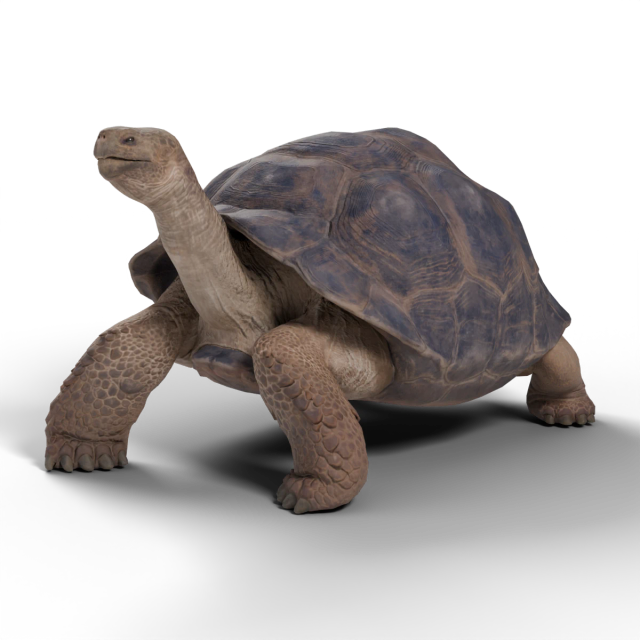
Female
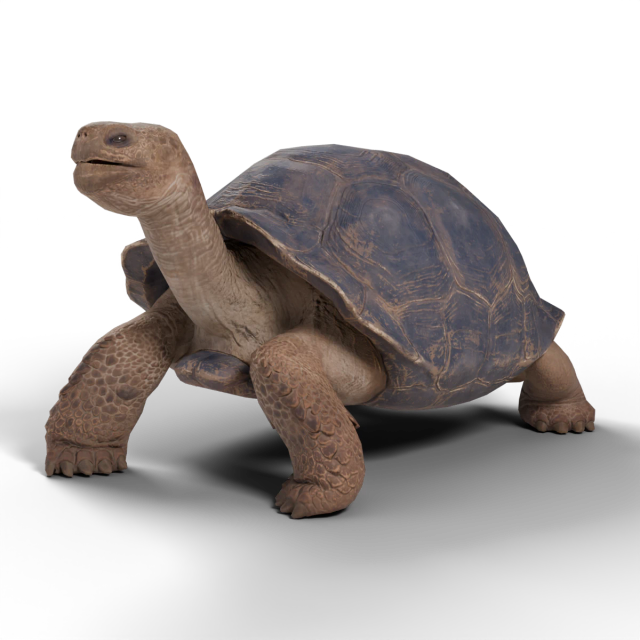
Juvenile
Size & weight
Size
Length: 1.15 to 1.3 m
Juvenile
Juvenile weight
7.1 kg
Measured as Length. The person stands 1.75 m tall for scale.
Habitat requirements
Barrier grade
Grade 1 of 5
Minimum height
1 m minimum
Climbing & water
Climb proof
Not needed
Water barrier
Not allowed


Habitat needs
Minimum area
Land
230 m² + 5 m² per extra animal
Shelter
10 m² per animal
Environment
Temperature
18 to 33°C
Plant coverage
0-50%
Enclosure
Habitat
Terrain
- Short Grass 20-80%
- Sand 20-80%
- Soil 0-30%
- Rock 0-40%
- Waterlogged 0-30%
Diet and enrichment
Diet
- Leafy Greens and Vegetables
- Herbivore Pellets




Enrichment items



Water sources

Conservation
IUCN Red List
Vulnerable
Least concern
Critically endangered
Wild population
20,000
20,000 - 25,000 in the wild. Rank 26 of 58 species with a known count, smallest first.
While some subspecies of the Galápagos giant tortoise are Extinct, all surviving subspecies are Critically Endangered, Endangered, or Vulnerable. In the past, overexploitation caused the number of tortoises to suffer a very sharp decline. They were hunted for their meat and oil, while their habitats were destroyed to create farmland. Seafarers would also often stock their boats with giant tortoises as a food supply as they provided plenty of meat and required very low maintenance. A current problem they face is their habitat and nests being destroyed by introduced feral goats and rats. However, captive breeding and rewilding has brought the species back from the brink of extinction: thousands of tortoises have been released into the wild over the past 40 years. Efforts to remove non-native goats and rats help protect their habitat and natural nesting sites. There are discussions about creating subspecies hybrids to prevent complete loss of genetically distinct groups and prevent genetic bottlenecks.
Zoopedia sketchbook
Social & reproduction
Keeper notes
Giant Galápagos tortoises are solitary but do tolerate each other. Saddleback males are particularly aggressive towards each other during the mating season. During the mating season, males and females will gather in the humid highlands of the islands; the former tracking the latter by their scent, warding off any rival males by biting, or with mating displays in which they extend their neck and stand as tall as they can. When a male does encounter a female, he will ram her with his shell, chase her and bite her legs – in return, she will either run away or allow him to mate with her, which she does by laying low on the ground and withdrawing her legs. The male may continue to ram her with his shell to get her into the right position, and will then mount her. Thereafter, the female will begin a repetitive nest building behaviour that involves digging a 30cm deep hole with her back legs; she repeats this until she is happy and lays a clutch of 4 to 16 eggs inside. A female will lay between 1 and 4 clutches per breeding season, covering the nests over with a muddy plug made of soil and urine, before leaving the eggs to incubate in the sun. After 4 to 8 months, the eggs will hatch, and the hatchlings will spend several days or weeks digging their way out before living completely independently. Galápagos giant tortoises reach sexual maturity between 20 and 25 years old.
Group and breeding
Group
Group size
1-4 (up to 1 male, up to 3 females)
Male bachelor group
1-2
Female bachelor group
1-4
Offspring dispersal
Male offspring
Lifecycle and breeding
Life expectancy
100-170 years
Age of sexual maturity
25 years
Age of sexual sterility
Death
Gestation or incubation
2 months
Interbirth period
22 months
Clutch size
2-6
Nest Type
Buried Nest
Mating system
Polygynous
Mating season
Spring
Reproduction in captivity
Very Easy
Dominance
Largest males
Research
Research levels
| Level | Unlocks | Research gate |
|---|---|---|
| Level 1 | Thriving Requirement 1: at least 4 objects or plants with the Shrub tag; Galápagos Giant Tortoise Fact Sheet | |
| Level 2 | Thriving Requirement 2: Waterlogged terrain; Fertility Level 1 (+15% fertility) | |
| Level 3 | Thriving Requirement 3: Food Grade 2 | |
| Level 4 | Thriving Requirement 4: at least 10 objects or plants with the Grass tag | |
| Level 5 | Thriving Requirement 5: Water Surface Area; Fertility Level 2 (+30% fertility) |
Researched by
Vets
Researched at
Habitat or exhibit and Research Centre
Every level of this species' research, with its unlock conditions.
Release groups
Valid release groups
| Group | Type | Animals |
|---|---|---|
| Mixed Group | Mixed group | 1 male, 4 females |
| Solitary Male | Solitary male | 1 male |
| Solitary Female | Solitary female | 1 female |
Release groups, reserve requirements and the roles this species fills.
Animal facts
- Galápagos giant tortoises are found on many different islands in the Galápagos chain. It is believed that they travelled to various islands by passively floating there; their shells are buoyant and their long necks allow tortoises to breathe air as they float.
- The tortoise's shell is made up of conjoined protective keratin plates that are fused with the ribs.
- There are multiple subspecies of Galápagos giant tortoises across the islands. The size and appearance of the tortoises is often different depending on which island they are from.
- Galápagos tortoises have a mutualistic relationship with finches and mockingbirds on the islands, allowing these birds to remove parasites from where their legs meet their shell.
- The Galápagos Islands were named after the saddle-like appearance of tortoises by the Spanish sailors who discovered the islands in 1535, or so the story goes. Whilst 'Galápago' is an old Spanish word for 'saddle' it has an even older meaning which is literally 'tortoise'!
Taxonomy
Class
Order
Family
Genus
Species