
Overview
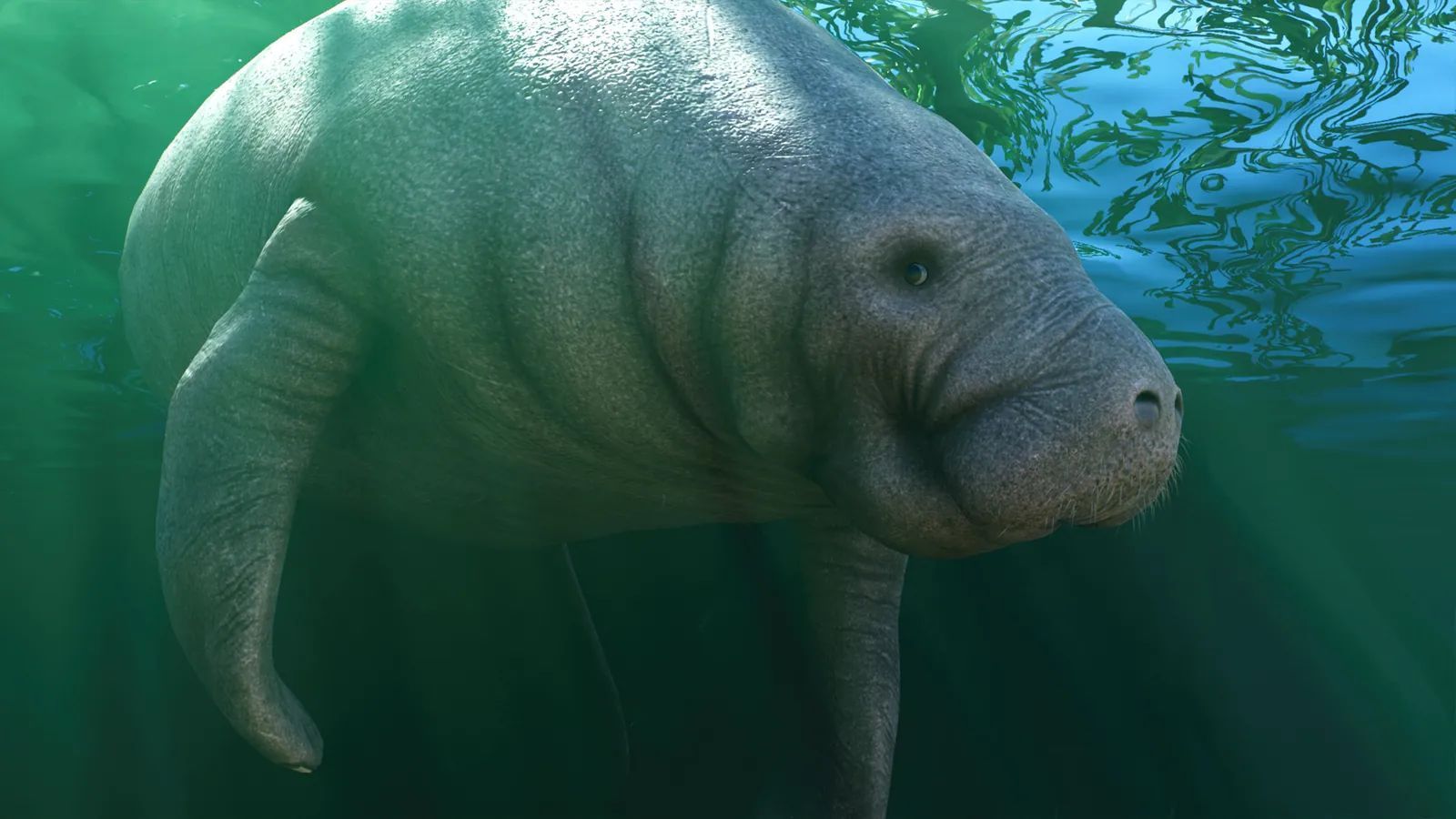
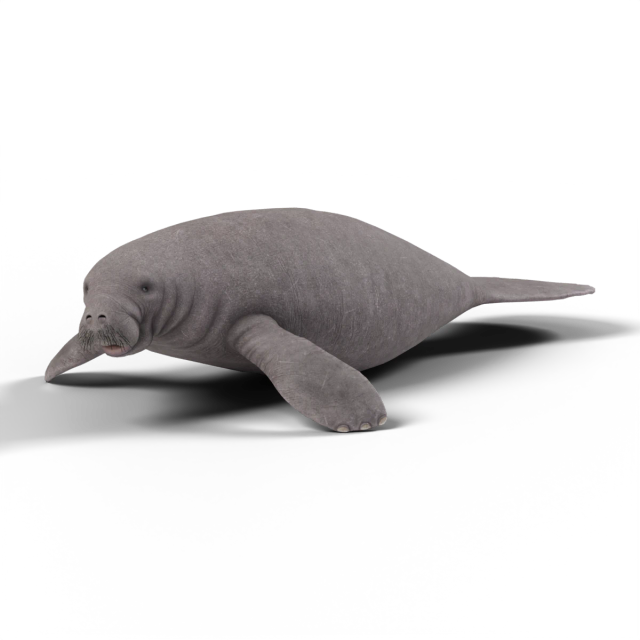
The West Indian manatee (or Trichechus manatus) is a large marine mammal found in shallow coastal waters, rivers, and estuaries throughout the southeastern United States, the Caribbean, and parts of Central and South America. It prefers warm, calm environments with abundant aquatic vegetation. West Indian manatees have a rounded, seal-like body covered in tough, grey-brown skin, with small eyes, a broad, paddle-shaped tail, and flipper-like forelimbs. Adult West Indian manatees typically measure between 2.7m to 4m in length and weigh 350kg to 600kg. Females are larger than males.
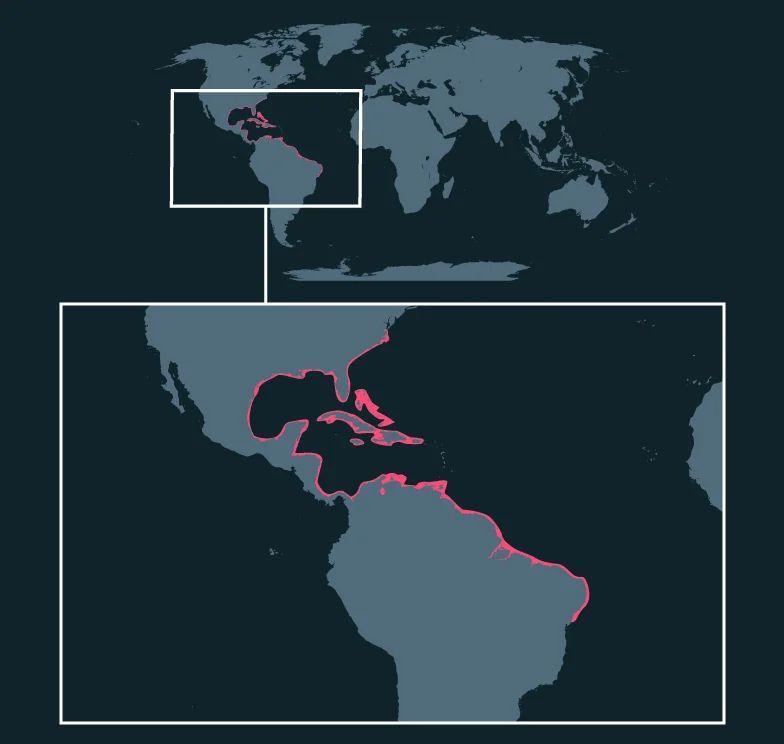
Found in Atlantic Ocean coasts of North, Central and South America
Regions

Appearance
Male
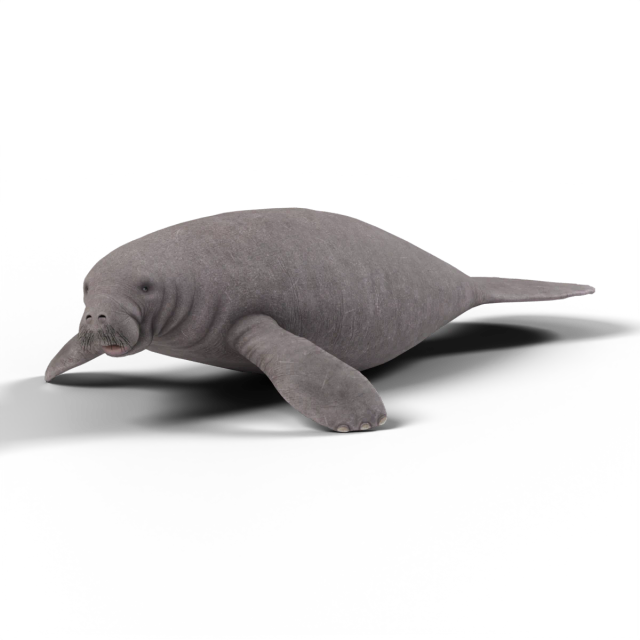
Female
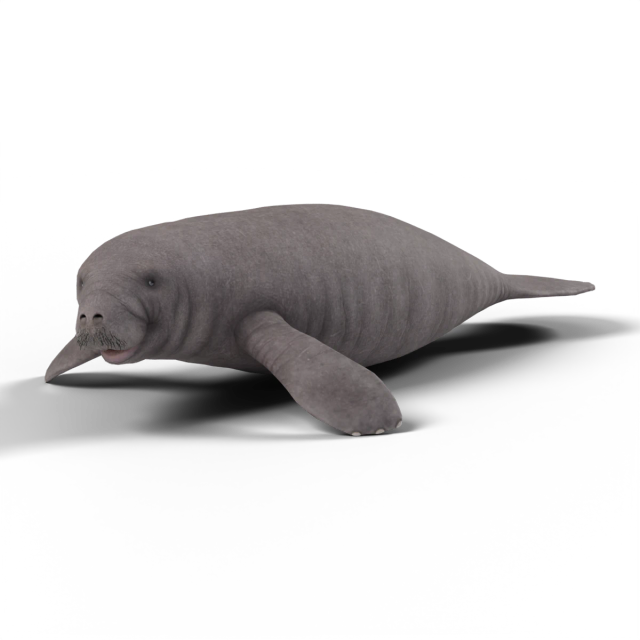
Juvenile
Size & weight
Size
Length: 3 to 3.2 m
Juvenile
Juvenile weight
35 kg
Measured as Length. The person stands 1.75 m tall for scale.
Habitat requirements
Barrier grade
Grade 2 of 5
Minimum height
1 m minimum
Climbing & water
Climb proof
Not needed
Water barrier
Not allowed

Habitat needs
Minimum area
Water
150 m² + 25 m² per extra animal
Deep water
20 m² + 5 m² per extra animal
Environment
Temperature
23 to 30°C
Plant coverage
20-85%
Water salinity
Any Salinity
Enclosure
Aquarium
Dislikes
Snow
Terrain
- Sand 30-100%
- Soil 0-50%
- Rock 0-30%
Diet and enrichment
Diet
- Leafy Greens and Vegetables
- Hay









Conservation
IUCN Red List
Vulnerable
Least concern
Critically endangered
Wild population
8,197
8,197 - 11,328 (estimated) in the wild. Rank 17 of 58 species with a known count, smallest first.
West Indian manatees are considered Vulnerable, the subspecies are Endangered. One of the most significant threats is boat collision, as they often swim near the surface in areas with heavy boat traffic. Habitat loss, especially the destruction of warm-water refuges like natural springs that manatees rely on in colder months, is another issue. Pollution and entanglement in fishing gear may kill manatees via impaction or drowning. Historically, manatees were also hunted for their meat and hide. Their slow reproductive rate makes recovery from decline difficult. Manatees are protected under laws such as the U.S. Marine Mammal Protection Act and the Endangered Species Act, which prohibit harassment, hunting, or harm to the animals. In key manatee habitats, boat speed limits have been established, with further awareness campaigns targeted at boaters and the public. Rescue and rehabilitation programmes have successfully treated and released injured manatees. Additionally, efforts to preserve and restore aquatic vegetation and protect warm-water habitats are helping to support manatee survival.
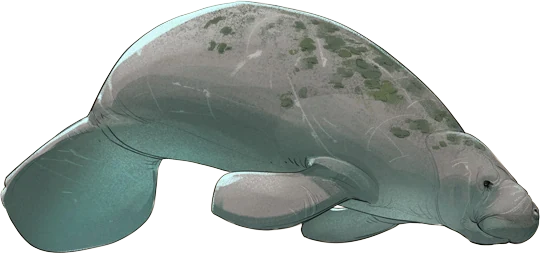
Zoopedia sketchbook
Social & reproduction
Keeper notes
Manatees are semi-social. They are likely to gather in groups for feeding and mating, and will interact with others when they meet them, but generally males are solitary and females live alongside their most recent single calf. West Indian manatees mate year-round, with peaks in the summer. A fertile female manatee will attract males, and groups of up to 12 males may form around one female, following her consistently while she is fertile. These males will compete over mating rights, with larger and older males more likely to succeed. After mating, the female is pregnant for 12 to 14 months, giving birth to a single calf underwater. Twins are very rare, but possible. On average, newborn manatees measure 1.1m and weigh 32kg. Calves remain with their mothers for a long time and bond closely. They nurse for up to two years, although the young may start nibbling on plants within a few weeks. While with their mothers, the calves learn how to forage for food and avoid threats. At 2 years old, manatees leave their mothers to become independent. The mothers are then ready to mate again, while the calves will not reach sexual maturity until 3 to 5 years old. Males may only successfully mate at 5 to 7 years old, when they become strong enough to compete for mating rights.
Group and breeding
Group
Group size
1-8 (up to 7 males, up to 7 females)
Male bachelor group
1-8
Female bachelor group
1-8
Offspring dispersal
None
Lifecycle and breeding
Life expectancy
30-50 years
Age of sexual maturity
7 years
Age of sexual sterility
40 years
Gestation or incubation
13 months
Interbirth period
23 months
Litter size
1
Mating system
Promiscuous
Mating season
Summer
Reproduction in captivity
Average
Dominance
Older males are dominant in mating herds
Research
Research levels
| Level | Unlocks | Research gate |
|---|---|---|
| Level 1 | Thriving Requirement 1: Water Hoop, at least 2; West Indian Manatee Fact Sheet | |
| Level 2 | Thriving Requirement 2: at least 12 objects or plants with the Seagrass tag; Fertility Level 1 (+15% fertility) | |
| Level 3 | Thriving Requirement 3: Food Grade 2; Release groups and release to the wild | |
| Level 4 | Thriving Requirement 4: at least 50% native plants | |
| Level 5 | Thriving Requirement 5: Deep Water Surface Area; Fertility Level 2 (+30% fertility) |
Researched by
Vets
Researched at
Habitat or exhibit and Research Centre
Every level of this species' research, with its unlock conditions.
Release groups
Valid release groups
| Group | Type | Animals |
|---|---|---|
| Maternal Family Group | Female group | 1 female |
| Solitary Male | Solitary male | 1 male |
| Breeding Partners | Breeding partners | 1 male, 1 female |
Release groups, reserve requirements and the roles this species fills.
Animal facts
- West Indian manatees are colloquially called ‘sea cows’ in some languages because of their slow movements and plant-based diet.
- The teeth of the West Indian manatee never stop growing and are replaced from the back as they are ground down from grazing at the front of the mouth.
- The closest living relative of manatees are elephants.
- Manatees communicate with trills and chirps, especially mothers and their calves.
- Manatees were mistaken for mermaids by early sailors. Christopher Columbus wrote that the manatees, or ‘mermaids’, he saw were ‘not half as beautiful as they are painted’.
Taxonomy
Class
Order
Family
Genus
Species