Overview
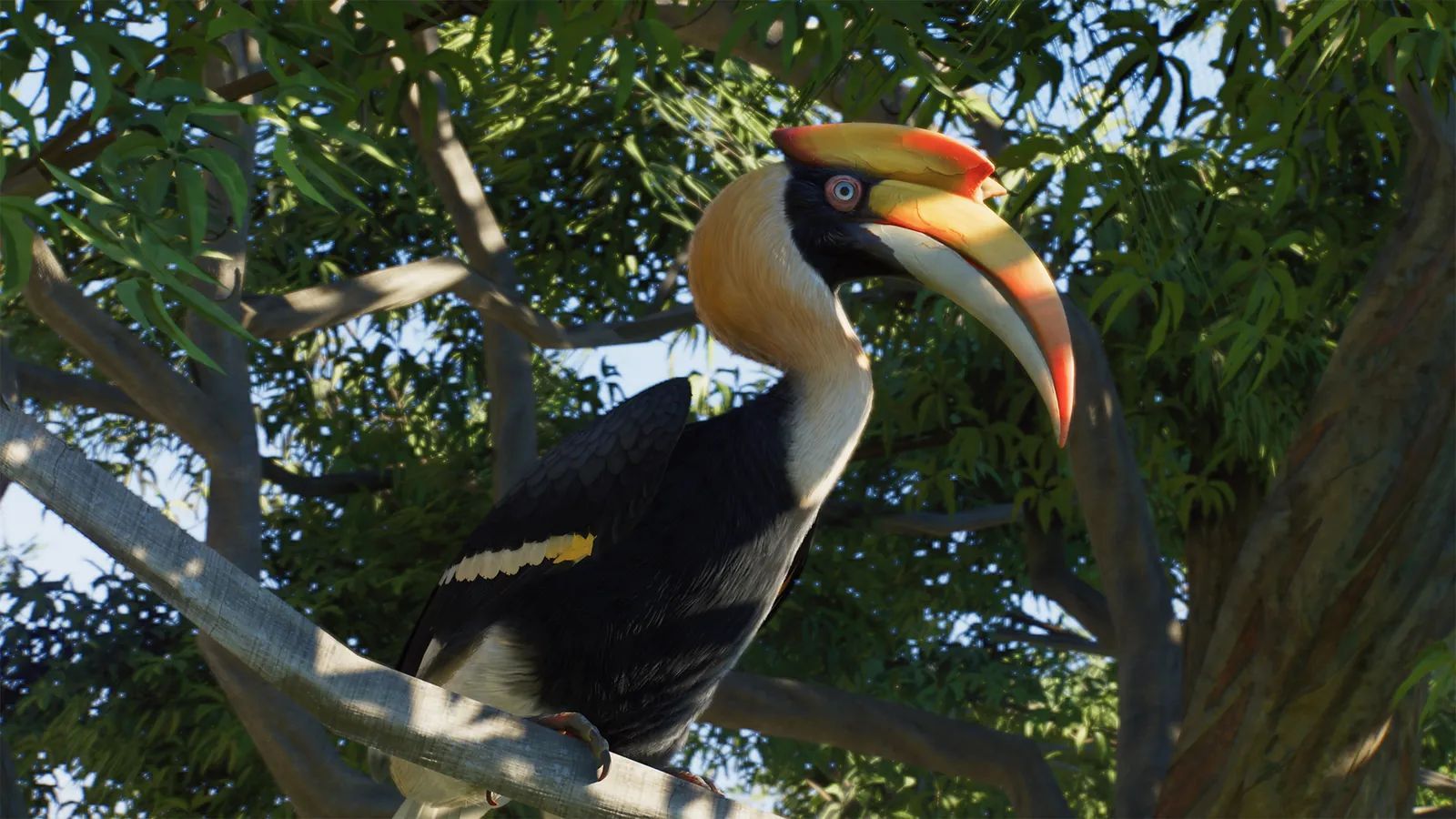
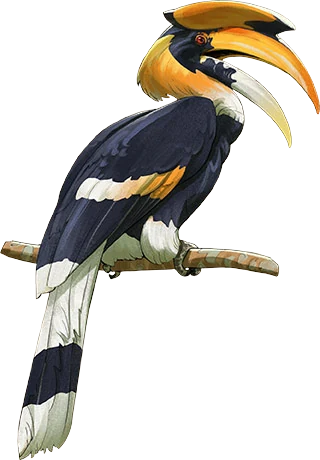
The great hornbill (or Buceros bicornis) is a large bird ranging from Southwest and Northern India and Bhutan through Myanmar, Thailand, Malaysia, and into Sumatra, where it lives in montane and lowland rainforests. The hornbill is instantly recognisable by its massive yellow and black bill topped with a prominent casque. Both sexes have predominantly black plumage with white on the neck, abdomen, thighs, and wing markings, as well as a long white tail banded with black. Males and females are similar in appearance, but males possess a more prominent casque with black highlights, and have red eyes surrounded by black skin, while females have smaller casques with reddish highlights, and bluish-white eyes surrounded by pink skin. Great hornbills measure 95cm to 120cm in length, with males generally being larger and heavier at 2.6kg to 3.4kg, compared to females weighing 2.1kg to 3.3kg.
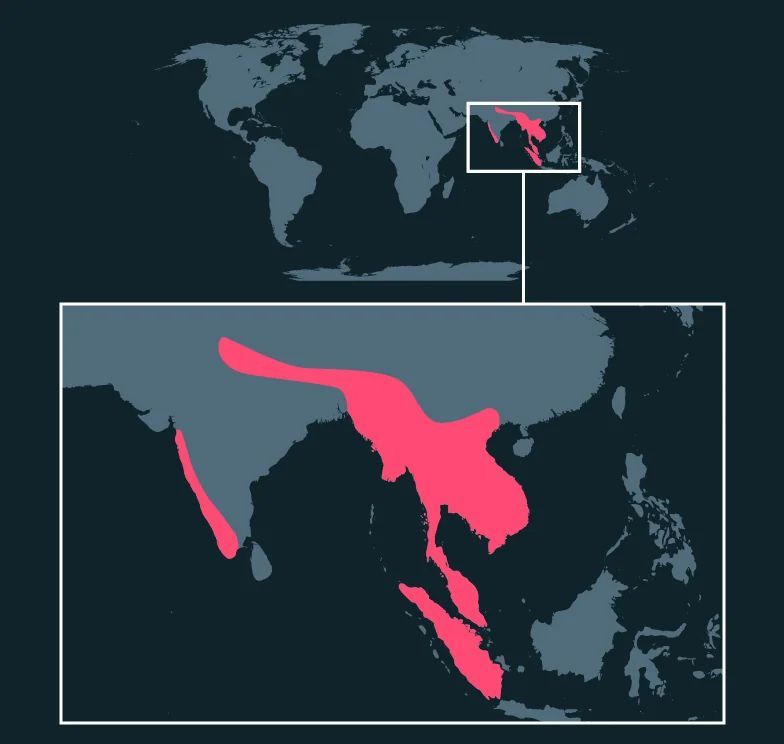
Found in Southeast Asia
Regions
Biomes

Appearance
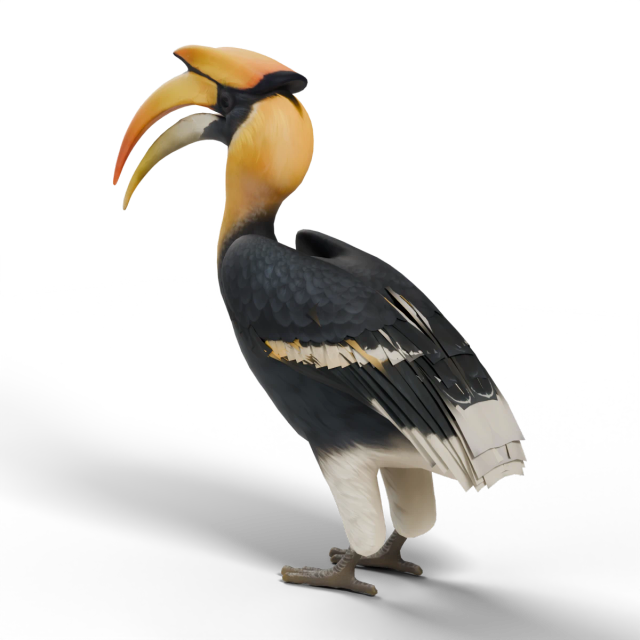
Male
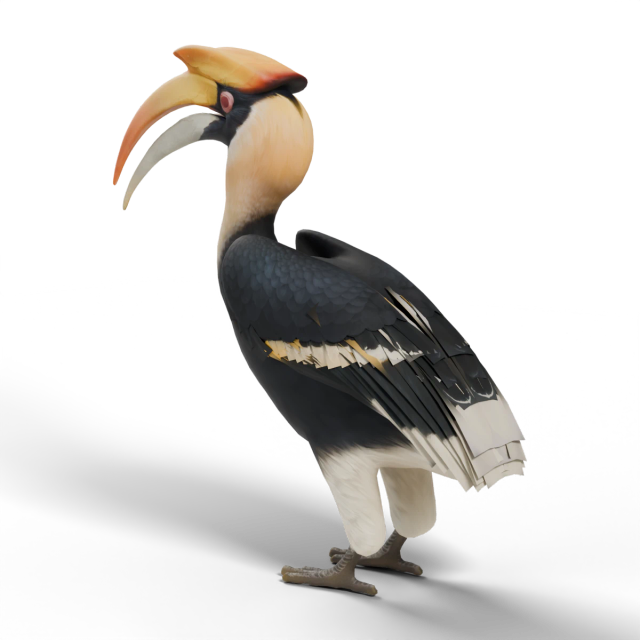
Female
Habitat requirements
Barrier grade
Grade 2 of 5
Minimum height
1 m minimum
Climbing & water
Climb proof
Not needed
Water barrier
Not allowed
Barriers at this grade
Barrier types with resistance grade 2.



Habitat needs
Minimum area
Land
80 m² + 40 m² per extra animal
Flying
50 m² + 20 m² per extra animal
Shelter
5 m² per animal
Environment
Temperature
18 to 33°C
Plant coverage
40-100%
Enclosure
Roofed Habitat
Dislikes
Rain and snow
Terrain
- Grass 0-40%
- Sand 0-5%
- Soil 40-100%
- Rock 0-20%
- Waterlogged 0-10%
Diet and enrichment
Diet
- Nutritionally Complete Pellets
- Fruit and Vegetables





Enrichment items



Water sources

Conservation
IUCN Red List
Vulnerable
Least concern
Critically endangered
Wild population
13,000
13,000 - 27,000 in the wild. Rank 23 of 58 species with a known count, smallest first.
As a Vulnerable bird, the great hornbill is under threat from habitat loss and hunting. Deforestation across Southeast Asia has dramatically reduced mature, old-growth forest habitats, which they depend on; and forest habitat is further fragmented by human expansion, making it difficult to find nesting cavities and foraging opportunities. Hornbills are also targeted by hunters for their meat, casques and feathers, which are used for food or in rituals and as traditional ornaments. Due to its low reproductive rate, the great hornbill recovers very slowly from these pressures. National parks and wildlife sanctuaries in Southeast Asia safeguard critical habitats, while community-based conservation programmes encourage locals to protect nesting sites and monitor populations. Artificial nest boxes have been installed in some regions to compensate for the loss of natural cavities, with promising breeding results. Continued habitat protection and strong community engagement remain essential for the survival of this iconic species.
Zoopedia sketchbook
Social & reproduction
Keeper notes
Great hornbills live in small groups of monogamous pairs and their offspring. Great hornbills are monogamous and remain mate-bonded for life, or at least multiple seasons on end. Mating takes place in the dry season. Courtship between a potential pair often begins with aerial displays and loud duets, and the male offering food to the female. Once bonded, the pair typically selects a large, natural cavity high in a mature tree. After mating, the female will seal herself into the cavity with a mixture of mud, droppings, and fruit pulp, leaving only a narrow opening for the male to feed her and their future offspring for several months. Inside the cavity, the female lays 1 or 2 eggs, incubating them for 38 to 40 days until they hatch, followed by 5 more weeks of early chick rearing. During this time, the male forages for figs and other food, usually fruit and opportunistically small birds, reptiles or mammals, and shares it with his family in the nest. After this period, the female breaks the seal and leaves the cavity, helping her mate to forage and provide for the chicks. The chicks start leaving the nest after their 7th week, but will be cared for by their parents until around 15 weeks old. The young hornbills at this point become independent from their parents, but won’t reach sexual maturity until 4 or 5 years old. Males generally breed later than females, as they may not successfully bond with a female until their casques are fully developed.
Group and breeding
Research
Research levels
| Level | Unlocks | Research gate |
|---|---|---|
| Level 1 | Thriving Requirement 1: at least 6 objects or plants with the Climbable tag | |
| Level 2 | Thriving Requirement 2: at least 3 objects or plants with the Fruit Bearing Tree tag; Great Hornbill Fact Sheet | |
| Level 3 | Release groups and release to the wild | |
| Level 4 | Thriving Requirement 3: Food Grade 2; Fertility Level 1 (+15% fertility) | Before this level: an Observation Network (Observation Platform) in Sumatra Reserve and this species released in Sumatra Reserve |
| Level 5 | Thriving Requirement 4: at least 50% native plants | |
| Level 6 | Thriving Requirement 5: Mirror Mobile, at least 2; Fertility Level 2 (+30% fertility) |
Researched by
Vets
Researched at
Habitat or exhibit and Research Centre
Every level of this species' research, with its unlock conditions.
Release groups
Valid release groups
| Group | Type | Animals |
|---|---|---|
| No entries. | ||
Release groups, reserve requirements and the roles this species fills.
Animal facts
- The large yellow casque of the great hornbill is made of hollow keratin and is thought to play a role in attracting mates, amplifying calls, and in head-butting fights between males.
- Great hornbills hold symbolic significance in many indigenous cultures of India and Southeast Asia, often featuring in traditional stories, dances, and rituals.
- When flying, great hornbills produce a distinctive whooshing sound that can be heard from a distance, sometimes compared to a steam engine.
- Great hornbills are primarily frugivores, with figs making up a large part of their diet, but they also eat small mammals, birds, reptiles, and insects.
- Great hornbills rub their bills and casques against an oil gland near their tails, giving them a shiny yellow finish.
Taxonomy
Class
Order
Family
Genus
Species