Overview
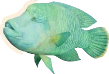
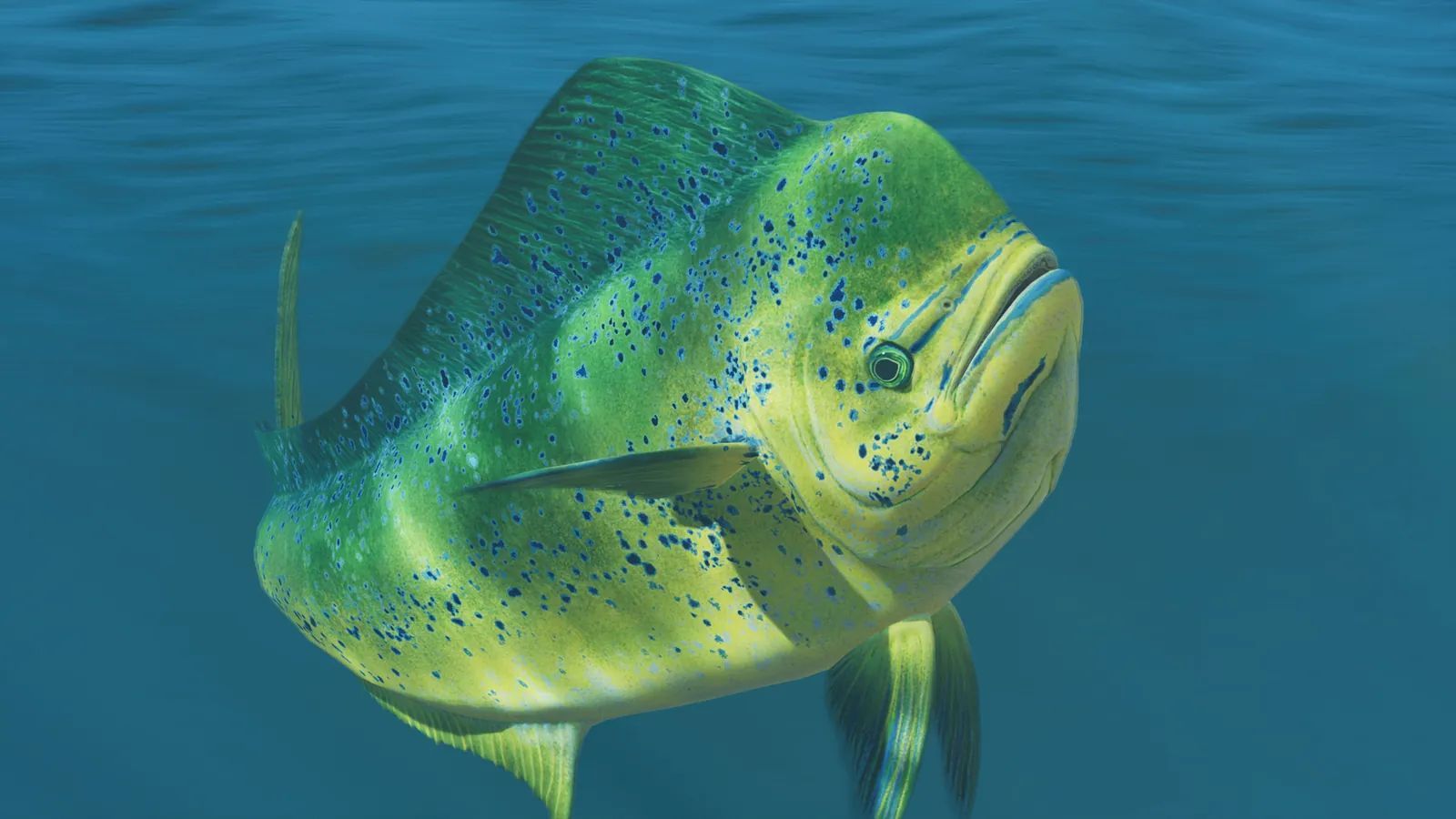
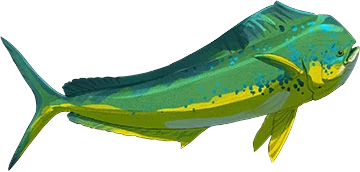
The dolphinfish (or Coryphaena hippurus), also known as the mahi-mahi, is a brightly coloured pelagic fish found in warm oceanic waters around the world, typically inhabiting tropical and subtropical regions of the Atlantic, Pacific, and Indian Oceans. It prefers open waters near the surface, often swimming beneath floating debris or seaweed lines where food is abundant. The dolphinfish is easily recognised by its colouration; golden-yellow on the sides with vibrant blues and greens on the back. It has a long, slender body with a sharply sloping forehead. Adult males, called bulls, have a more pronounced forehead than females. They are fast-growing fish, with an average length of 1.5m and an average weight of 22kg.
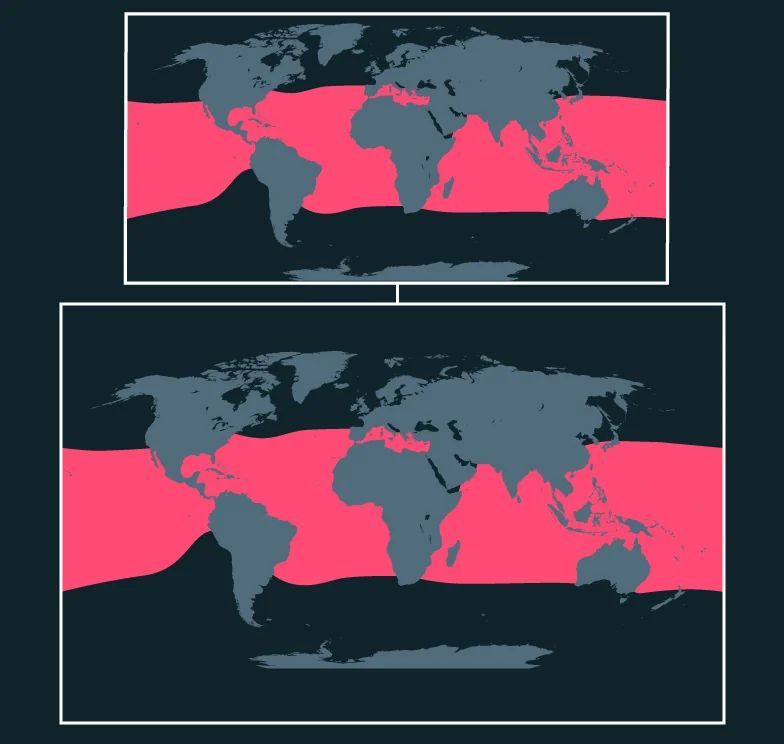
Found in Atlantic Ocean, Indian Ocean, Pacific Ocean
Regions
Biomes

Appearance
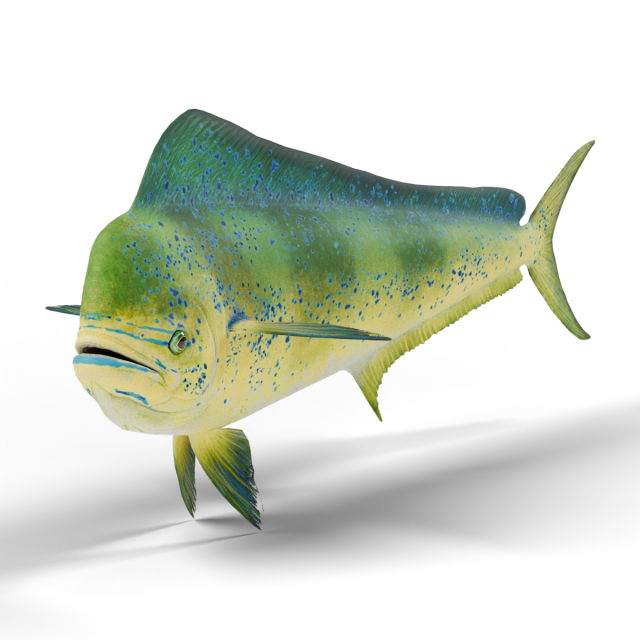
Male
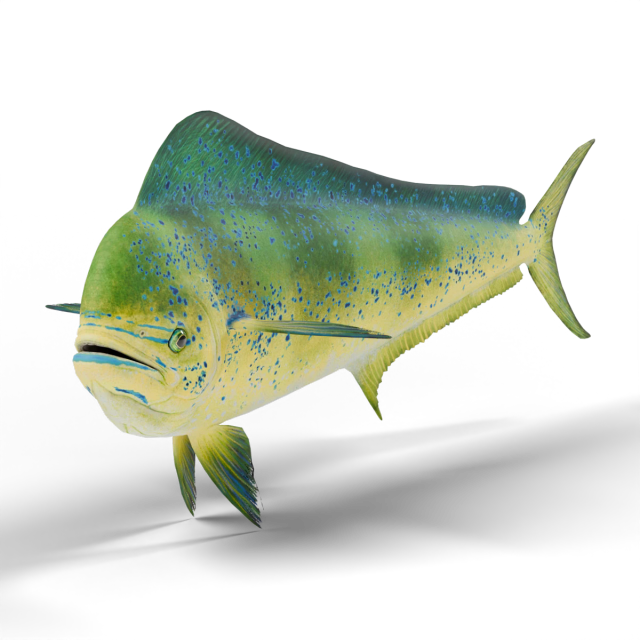
Female
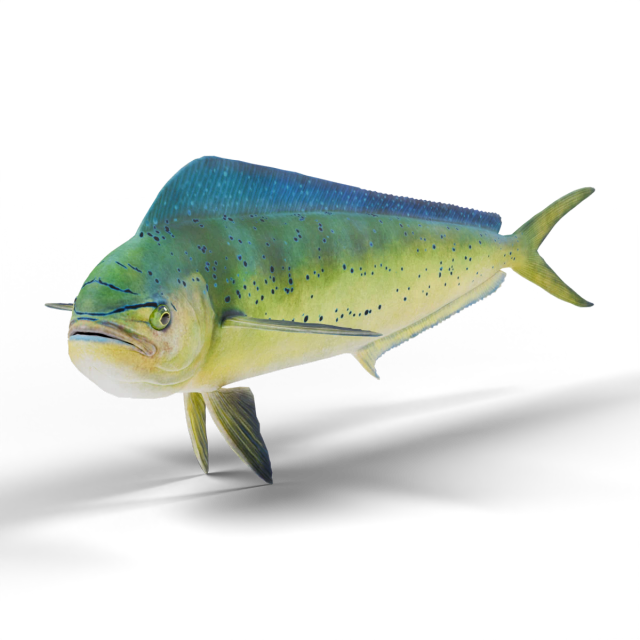
Juvenile
Habitat requirements
Barrier grade
Grade 2 of 5
Minimum height
1 m minimum
Climbing & water
Climb proof
Not needed
Water barrier
Not allowed

Habitat needs
Minimum area
Deep water
400 m² + 50 m² per extra animal
Environment
Temperature
24 to 28°C
Plant coverage
0-80%
Water salinity
Saltwater
Enclosure
Aquarium
Terrain
- Sand 30-100%
- Rock 0-20%
- Soil 0-70%
Thriving Relationships
Global Pelagic Shoals: sharing a habitat with one of these species fulfils a Thriving requirement.
Diet and enrichment
Diet
- Fish Pellets
- Small Whole Fish


Enrichment items



Conservation
IUCN Red List
Least concern
Least concern
Critically endangered
The dolphinfish is considered a species of Least Concern that is popular as both a commercial and recreational fish. Overfishing, compounded by its migratory nature and fast growth, makes accurate stock assessment difficult, and bycatch is another concern. Data on population size, fishing mortality, movement and spawning aggregations are sparse, meaning fishery managers often must make decisions with significant uncertainty. Warming oceans and shifts in prey or current patterns may further stress dolphinfish stocks, though the extent of these effects is not yet fully quantified. Management plans have introduced catch limits, minimum conservation reference size and technical rules to reduce harmful fishing practices. Fishermen are being trained in best practices, bycatch-reduction, and are adopting monitoring systems for more reliable data collection. Some producers have developed a Code of Conduct to coordinate sustainability efforts, share data, and align management across national boundaries. Overall, while dolphinfish are not currently endangered, sustainability requires both local regulation and international cooperation.
Zoopedia sketchbook
Social & reproduction
Keeper notes
Dolphinfish are generally social and schooling fish, especially when they are young or of similar size. Juveniles and smaller adults often travel in large, fast-moving schools, which helps them hunt efficiently and avoid predators. As dolphinfish grow larger, they tend to become less social; mature males are often alone or in pairs with females rather than in big groups. Spawning occurs in warm tropical and subtropical waters throughout much of the year, though it tends to peak in warmer seasons or regions. Courtship typically occurs near the ocean surface, where males and females engage in close swimming displays. Males, distinguished by their more prominent foreheads, may pursue and circle females, displaying their vibrant colouration during courtship. Dolphinfish are pelagic spawners, meaning females release eggs directly into open water, where males fertilise them externally. A single large female can produce hundreds of thousands of eggs per spawning event, and spawning can occur several times per year. The fertilised eggs float freely in the plankton-rich surface layer, hatching within 2 to 3 days. The larvae are extremely vulnerable, but they grow rapidly and reach juvenile size in just a few weeks. Young dolphinfish often seek shelter among floating seaweed or debris, forming small schools that provide protection and feeding opportunities. Growth is fast, with individuals capable of reaching sexual maturity within 4 to 5 months and attaining over a metre in length within their first year. The dolphinfish exhibits a rapid and prolific reproductive cycle that reflects its short lifespan and fast growth rate.
Group and breeding
Group
Group size
1-4 (up to 3 males, up to 3 females)
Male bachelor group
1-4
Female bachelor group
1-4
Offspring dispersal
None
Lifecycle and breeding
Life expectancy
2-5 years
Age of sexual maturity
1 year
Age of sexual sterility
Death
Interbirth period
6 months
Litter size
1-5
Mating system
Promiscuous
Mating season
Summer
Reproduction in captivity
Difficult
Research
Research levels
| Level | Unlocks | Research gate |
|---|---|---|
| Level 1 | Thriving Requirement 1: at least 10 objects or plants with the Rocks tag; Dolphinfish Fact Sheet | |
| Level 2 | Thriving Requirement 2: Deep Water Surface Area; Fertility Level 1 (+15% fertility) | |
| Level 3 | Thriving Requirement 3: Food Grade 2; Release groups and release to the wild | |
| Level 4 | Thriving Requirement 4: Coarse Sand terrain | |
| Level 5 | Thriving Requirement 5: Global Pelagic Shoals Social Group; Fertility Level 2 (+30% fertility) |
Researched by
Vets
Researched at
Habitat or exhibit and Research Centre
Every level of this species' research, with its unlock conditions.
Release groups
Valid release groups
| Group | Type | Animals |
|---|---|---|
| Mixed Group | Mixed group | 2 males, 2 females |
| Solitary Male | Solitary male | 1 male |
| Solitary Female | Solitary female | 1 female |
| Breeding Partners | Breeding partners | 1 male, 1 female |
Release groups, reserve requirements and the roles this species fills.
Animal facts
- Despite the name ‘dolphinfish’, they are not related to dolphins and are named for their tendency to swim alongside boats like dolphins do.
- The term mahi-mahi comes from Hawaiian and translates to ‘strong strong’, reflecting their strength, speed, and fighting ability when hooked.
- Dolphinfish can swim up to 92km/h, making them one of the fastest fish in the ocean.
- Dolphinfish only live about 4 to 5 years, but they grow extremely fast, reaching over a metre in length within their first year.
- Anglers prize dolphinfish for their fight, appearance and taste. Dolphinfish is a popular ingredient in cuisines worldwide.
Taxonomy
Class
Order
Family
Genus
Species