Overview
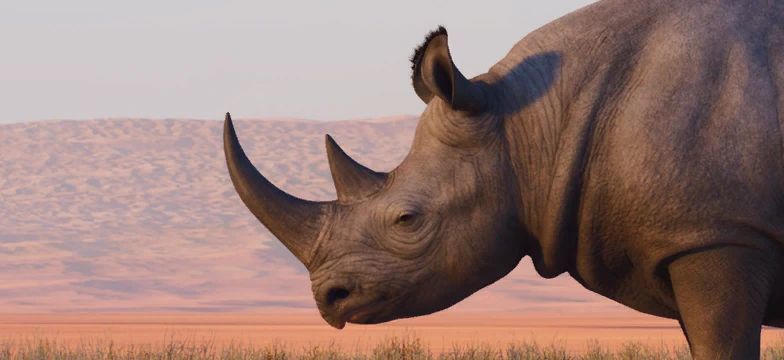
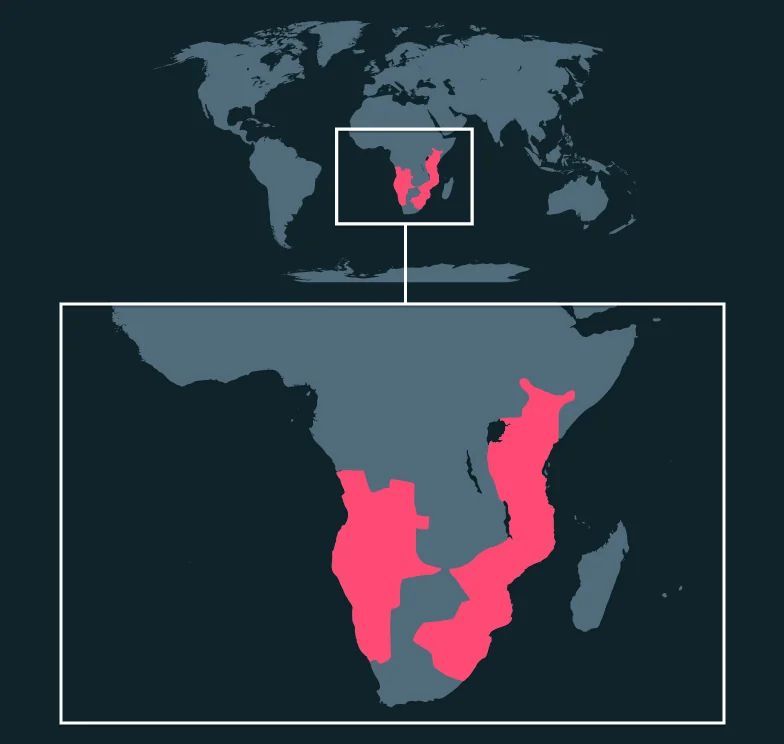
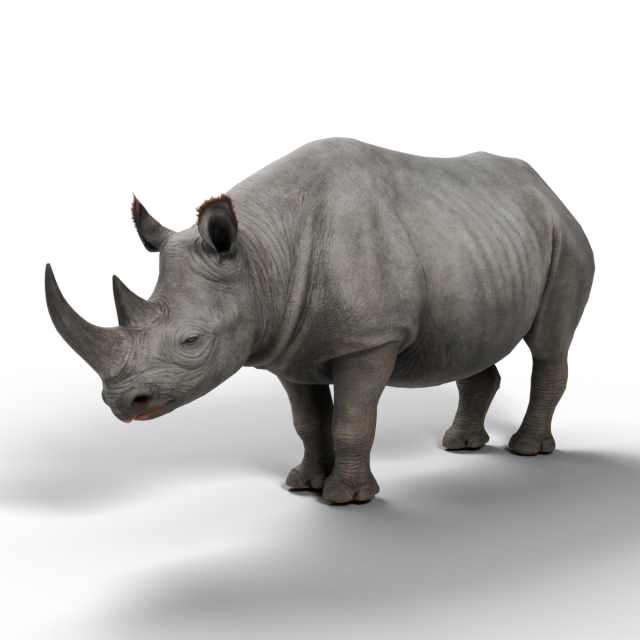
The black rhinoceros (or Diceros bicornis), also known as the hook-lipped rhinoceros, is a large ungulate native to the grasslands and scrublands of Southern and Eastern Africa. Black rhinos have two horns on their face, with the anterior horn being much longer than the posterior horn. They have thick, grey skin, stocky limbs, small eyes, and oval-shaped ears. The black rhinoceros stands 1.40m to 1.80m tall at the shoulder, is 3m to 3.75m long, and weighs between 800kg and 1400kg. Males and females are similar in size.
Found in Africa
Regions
No entries.
Biomes
No entries.
Appearance
Male
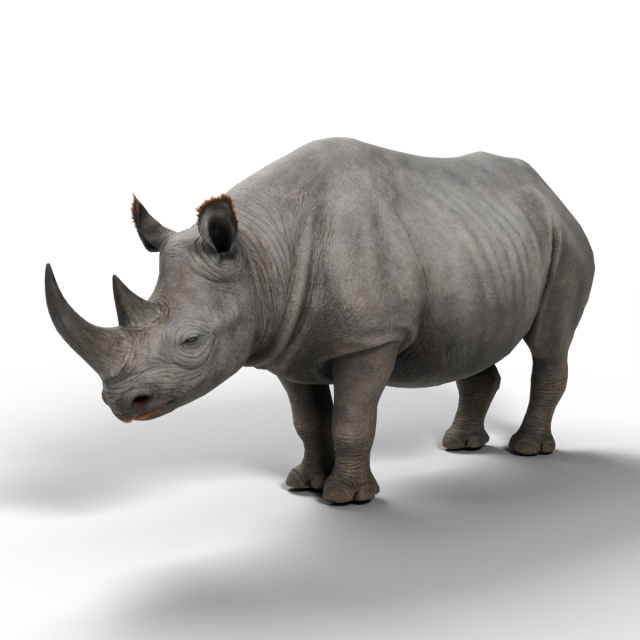
Female
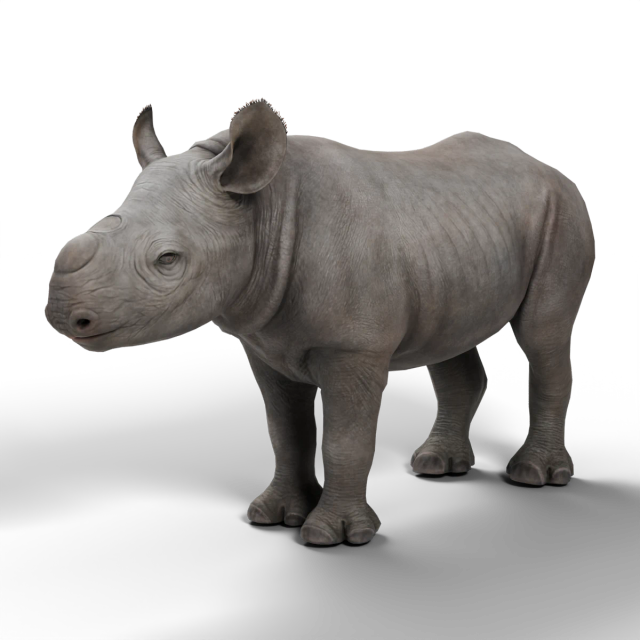
Juvenile
Size & weight
Size
Shoulder height: 1.55 to 1.6 m
Juvenile
Juvenile weight
130 kg
Measured as Shoulder height. The person stands 1.75 m tall for scale.
Habitat requirements
Barrier grade
Grade 4 of 5
Minimum height
2 m minimum
Climbing & water
Climb proof
Water barrier
Habitat needs
Terrain
- Grass 10-60%
- Sand 10-40%
- Soil 10-60%
- Rock 0-20%
- Waterlogged 10-40%
Diet and enrichment
Diet
- Leaves and Branches
- Hay
Feeders
No entries.
Enrichment items
No entries.
Water sources
No entries.
Conservation
IUCN Red List
Critically endangered
Least concern
Critically endangered
Wild population
3,150
3,150 in the wild. Rank 12 of 58 species with a known count, smallest first.
Black rhinoceroses, once widespread, are Critically Endangered, with several subspecies gone extinct. They face multiple issues, most significantly poaching for their horns as traditional medicine or as a status symbol. Poaching pressure caused black rhino populations to drop by more than 90% between the 1970s and 1990s. Additionally, like many savannah species, human development converted much of their habitat into farmland or settlements. Armed conflict across their range makes legislation and conservation enaction difficult. Major conservation efforts launched across Africa include anti-poaching patrols, stronger law enforcement, and the use of GPS tracking and drones to protect rhinoceroses in the wild. Several translocation and reintroduction programs have also been carried out, moving animals from high-risk areas to more secure reserves or former ranges. Community-based projects support rhino ecotourism and education, helping people benefit from protecting rather than hunting these iconic animals. Consequently, black rhino numbers have slowly increased in recent years, but they remain highly vulnerable and in need of continued protection.
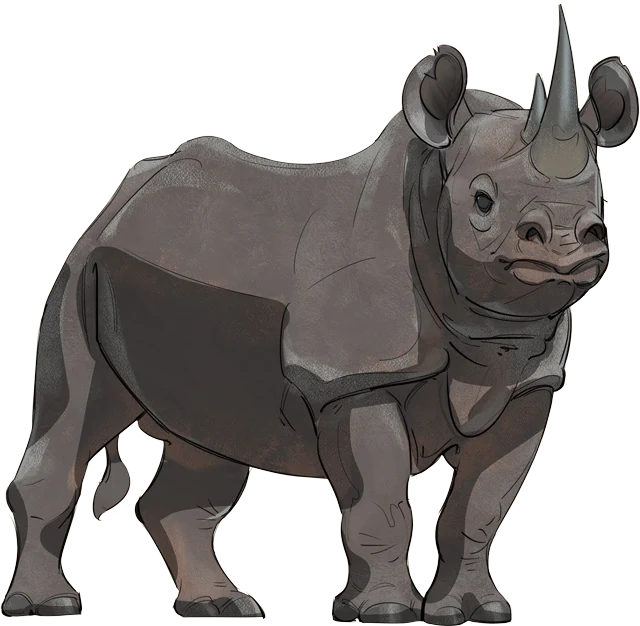
Zoopedia sketchbook
Social & reproduction
Keeper notes
Black rhinoceroses are generally solitary, except for mothers and their calves. Fleeting, loose bonds may form between individuals when they encounter each other. Both males and female black rhinoceroses have territories which often overlap. Breeding happens year round for this species, though births tend to occur towards the end of the rainy season. Male black rhinos track fertile females through their excrement. When they meet, encounters can be aggressive. Males will be aggressive towards other males when competing over a female, and females may fight males when fending off unwanted advances. A male and a female form a consortship for up to 2 weeks before mating. They spend this bonding time by eating, sleeping, and travelling together. The male will attempt to initiate copulation, but if the female is not ready, she will avoid this by aggressively charging at the male. If she is in oestrus, she will allow him to mount her. Copulation lasts 20 to 40 minutes, and, afterwards, the pair will part ways. Pregnancies in black rhinos last 15 months, after which the female gives birth to a single calf. Newborn rhinos feed exclusively from their mothers for approximately a month, and then begin eating soft grasses and drinking water in addition to their mother’s milk. Calves are weaned by 18 months old, but remain with their mothers until they are between 2 to 4 years old. By this age, they will distance themselves from their mothers to establish their own territories. Young rhinos may join a loosely bonded group of other adolescent individuals or roam around by themselves. Male black rhinoceroses reach sexual maturity at 7 or 8 years old, females a bit earlier at 5 to 7 years old.
Group and breeding
Research
Research levels
| Level | Unlocks | Research gate |
|---|---|---|
| No entries. | ||
Every level of this species' research, with its unlock conditions.
Release groups
Valid release groups
| Group | Type | Animals |
|---|---|---|
| No entries. | ||
Release groups, reserve requirements and the roles this species fills.
Animal facts
- Black rhinos growl and scream when they are scared or in conflict situations.
- Black rhinos have mutualistic relationships with birds such as oxpeckers and egrets that remove parasites from their skin.
- Black rhinos mainly feed on browse (leaves from shrubs, bushes, and trees) and have tough, prehensile lips that are adapted to this kind of foraging.
- Of the 8 subspecies of the black rhino, only three remain extant: the Eastern black rhino, South-central black rhino, and South-western black rhino. A fourth subspecies, the Ugandan black rhino, may survive in reserves outside of Uganda.
- Black rhinos can be extremely aggressive towards each other: 50% of male and 30% of female black rhinos that die naturally are thought to have died from conflict related injuries.
Taxonomy
Class
Order
Family
Genus
Species